The tension is palpable. The smell of freshly cut grass, the roar of the crowd, and the high stakes of October baseball – it all culminates in Game 4 of the NLDS, a pivotal matchup that could see one team advance and the other’s season come to a crushing halt. The Milwaukee Brewers, holding a 2-1 series lead, are on the cusp of eliminating the Chicago Cubs, who are fighting for their postseason lives at home. While the series thus far has been characterized by explosive first-inning offense, a closer look at the probable pitchers, historical data, and current team dynamics suggests that betting the Under 7 runs in this contest is not just a gamble, but a calculated and smart decision.
Let’s dissect every angle to understand why.
The Pitching Showdown: A Rematch with Different Stakes
The most crucial element in any baseball game, especially in the postseason, is the starting pitching. Game 4 features a fascinating rematch of Game 1 starters: Freddy Peralta for the Brewers and Matthew Boyd for the Cubs.
Milwaukee Brewers: Freddy Peralta – The Ace Looking for Redemption
Postseason Stats: 1-0 W-L, 5.2 IP, 3.18 ERA, 3.00 SO/BB, 1.24 WHIP (from Game 1) Regular Season vs. Cubs: 3-1 W-L, 3.43 ERA in four starts. Career vs. Cubs: 9-3 W-L, 3.21 ERA in 22 appearances (17 starts).
Freddy Peralta is the Brewers’ ace, a right-hander known for his swing-and-miss stuff and ability to dominate. In Game 1, he was effective, allowing only two runs on four hits over 5 2/3 innings in a decisive 9-3 Brewers victory. While the final score was high, Peralta largely did his job.
Strengths:
- Strikeout Prowess: His 3.00 SO/BB ratio in the postseason (and historically strong ratios) indicates his ability to miss bats and limit free passes, crucial for keeping runners off base.
- Experience vs. Cubs: Peralta has a strong career record against the Cubs, suggesting he understands how to navigate their lineup.
- Rest: Coming into this game on four days’ rest, Peralta should be fresh and ready to deliver a strong outing.
Weaknesses/Concerns:
- Home Run Ball: While not overly prevalent, Peralta can occasionally be susceptible to the long ball if he makes a mistake. Michael Busch’s first-inning heroics have been a theme, and the Cubs will be looking to capitalize early.
- Postseason Pressure: While he performed well in Game 1, the added pressure of an elimination game on the road could test his composure.
Chicago Cubs: Matthew Boyd – A Chance at Forgiveness
Postseason Stats: 0-1 W-L, 0.2 IP, 5.40 ERA, 1.50 SO/BB, 2.00 WHIP (from Game 1) Regular Season vs. Brewers: 1-1 W-L, 7.84 ERA in two starts. Career vs. Brewers: 2-2 W-L, 9.00 ERA in five starts.
Matthew Boyd’s Game 1 outing was, to put it mildly, a disaster. He allowed six runs (two earned) on four hits in just two-thirds of an inning, pitching on three days’ rest for the first time that season. However, there’s reason to believe this performance was an anomaly rather than a true reflection of his capabilities.
Strengths:
- Rest: Boyd will also be pitching on four days’ rest, giving him a full recovery period. This is significant given his struggles on short rest in Game 1.
- Motivation: Coming off such a poor outing in a crucial series opener, Boyd will be immensely motivated to deliver a quality start and silence his critics. He’s pitching for his team’s season.
- “Unearned Runs” Factor: While he allowed six runs, only two were earned in Game 1. This suggests some defensive miscues played a role, and a cleaner defensive effort behind him could lead to a better statistical line.
Weaknesses/Concerns:
- Recent Form vs. Brewers: His regular and postseason numbers against Milwaukee are concerning. The Brewers have clearly had his number.
- Psychological Impact: The confidence hit from such a short, brutal start in Game 1 could linger, though the adrenaline of an elimination game might counteract it.
- Control Issues: His 2.00 WHIP in the postseason indicates he allowed too many baserunners in his limited Game 1 action.
Offense vs. Defense: A Closer Look at Both Squads
Milwaukee Brewers: A Balanced Attack
The Brewers demonstrated their offensive firepower in Game 1 with six first-inning runs, and they’ve generally found ways to score.
Strengths:
- Timely Hitting: They’ve shown a knack for capitalizing on opportunities, particularly in the early innings.
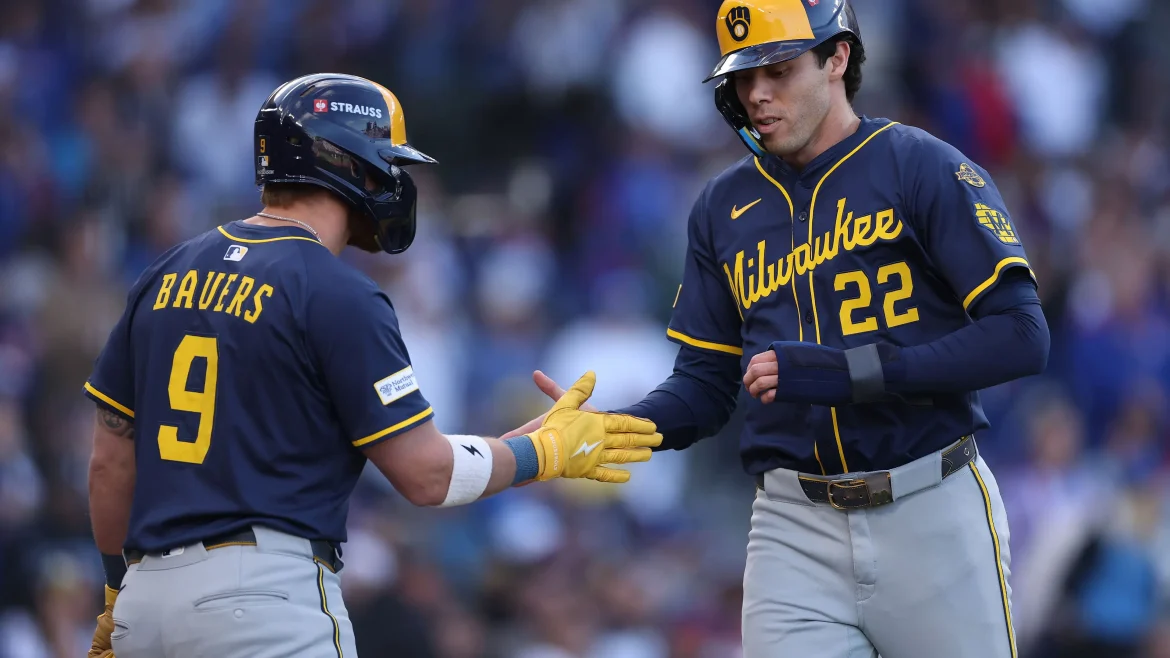
- Power Threats: Players like Jake Bauers, who homered in Game 3, provide pop in the lineup.
- Aggressiveness: Their ability to jump on pitchers early has been a key factor in their series lead.
Weaknesses/Concerns:
- Cooling Off: After their Game 1 explosion, their scoring has been more measured. While they scored three in the first of Game 2 and one in Game 3, they only managed a total of three runs after the first inning in Game 3.
- Boyd’s Improvement: If Boyd can settle down, the Brewers could struggle to find consistent offense against him given his motivation.
- Jake Bauers vs. Boyd: Bauers, a key power hitter, is only 1-for-11 in his career against Boyd. This specific matchup bodes well for the Under.
Chicago Cubs: Clutch Hitting and First-Inning Magic
The Cubs have relied heavily on their first-inning offense, largely spearheaded by Michael Busch.
Strengths:
- Michael Busch: He’s been an absolute force, leading off two games with homers and driving the first-inning offense. His 34 regular-season homers and 3 postseason dingers speak for themselves.
- Home Crowd Advantage: Playing at home in an elimination game will provide a massive energy boost, potentially inspiring clutch hits.
- Resilience: They’ve shown the ability to bounce back, as evidenced by their Game 3 win after dropping the first two.
Weaknesses/Concerns:
- Over-reliance on First Inning: While impressive, their inability to sustain offense beyond the first inning in many games is a significant concern for bettors hoping for high scores. Cubs manager Craig Counsell explicitly stated, “I’m going to tell our guys it’s the first inning every inning,” highlighting this issue.
- Peralta’s Dominance: Peralta has historically handled the Cubs well, and if he’s on his game, their offense could be stifled.
- Injuries: While not impacting current starters, the Cubs’ IL is significant, suggesting less depth if they need to dip further into their roster.
Key Statistics, Trends, and Situational Factors Supporting the Under 7
- Elimination Game Mentality: In postseason elimination games, especially those featuring a strong starting pitcher for the leading team (Peralta), games often tighten up. Teams become more conservative with baserunners, and managers are quicker to pull struggling starters or insert relievers, aiming to limit damage.
- Boyd’s Motivation + Rest: The narrative surrounding Boyd in Game 1 makes this game a proving ground. With full rest and the weight of the season on his shoulders, it’s highly improbable he will repeat his two-thirds of an inning performance. Even if he gives up a few runs early, his increased stamina and focus should lead to a longer, more effective outing than his Game 1 disaster.
- Bullpen Usage: Both teams have used their bullpens in this series. In a high-stakes Game 4, managers won’t hesitate to go to their top relievers earlier. Both bullpens are capable of shutting down offenses, particularly in high-leverage situations.
- Cubs’ Offensive Pattern: The Cubs’ reliance on the first inning is a clear trend. While they excel early, their offense tends to quiet down. If Peralta can navigate the first two innings cleanly, the chances of a high-scoring game diminish significantly.
- Pitcher vs. Hitter Head-to-Head: Jake Bauers’ struggles against Boyd (1-for-11 career) are a micro-trend that supports a lower scoring Brewers’ output against the Cubs’ starter.
Evaluating the Outcomes: Why the Under Shines
- Scenario 1: Pitchers’ Duel (Low Score): This is the ideal outcome for the Under. Both Peralta and Boyd deliver strong, extended starts, limiting both teams to 2-3 runs each. Bullpens hold strong. This is very plausible, especially with Boyd’s motivation and full rest.
- Scenario 2: One Pitcher Struggles Early, Other Dominates: If Boyd struggles again, the Brewers could get an early lead. However, if Peralta holds the Cubs in check, the Brewers’ offense would need to score significantly more than their recent outings (post-first inning) to push the total over 7. Conversely, if Peralta has an off night and Boyd is sharp, the Cubs could score, but it’s less likely they’d explode against Peralta and sustain offense against the Brewers’ bullpen to hit a high total on their own.
- Scenario 3: Both Pitchers Struggle (High Score): This is the least likely scenario for the Under, but even then, for the total to go over 7, both offenses would need to perform consistently throughout the game, which has not been the pattern for the Cubs, and only partially for the Brewers after Game 1. The quick hooks for starters and strong bullpens tend to cap scoring.
Given the pressure of the elimination game, the motivation of Matthew Boyd, Freddy Peralta’s historical success against the Cubs, and the Cubs’ tendency for early scoring rather than sustained offense, the probability of a combined score exceeding 7 runs feels lower than what the betting line implies.
Conclusion: Seize the Opportunity on the Under
While the NLDS has delivered some exciting, high-scoring first innings, the underlying data points to a different narrative for Game 4. The stage is set for a tighter, more defensively oriented contest. Freddy Peralta, the Brewers’ ace, will be aiming to close out the series, and Matthew Boyd, fueled by redemption, will be pitching with his team’s season on the line and with adequate rest.
The trends of both teams’ offenses, particularly the Cubs’ over-reliance on early-game heroics, coupled with key player matchups and the intense atmosphere of an elimination game, all converge to make Under 7 runs a highly attractive and intelligent wager. Don’t be swayed by the early-series fireworks; look deeper into the dynamics of this crucial matchup. This is where smart bettors find their edge.