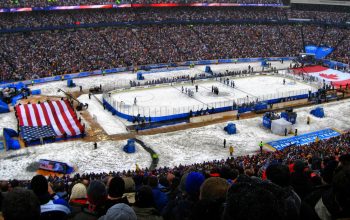

The NHL season is finally back, and the energy in Seattle’s Climate Pledge Arena will be electric tonight. The lights are bright, the ice is clean, and the home team, the Seattle Kraken, is favored to win. Most analysts see this game as a simple result: a playoff-contending Kraken team facing a rebuilding Ducks squad.
But tonight, the script is different.
This is not the same Anaheim team that struggled last year. This is the start of a completely new identity, and the signs point to a major upset right out of the gate. We believe the systematic changes implemented by the Ducks’ new leadership, combined with key additions to the roster, will overpower a Kraken team dealing with significant early-season hurdles.
Our pick is clear: Anaheim Ducks will win.
I. The Quenneville Effect: Structure Over Chaos
The single biggest factor in this prediction is the man standing behind the Ducks bench: Head Coach Joel Quenneville, a three-time Stanley Cup champion. His hiring signals the immediate end of Anaheim’s rebuilding phase. He doesn’t coach chaos; he coaches structure and accountability.
A team of young, talented players—like the Ducks’ core—needs clear direction more than anything. Quenneville brings a demanding, proven system that focuses on 200-foot effort, starting tonight.
The Defensive Shift: Last year, Anaheim’s young defensemen struggled with clean zone exits. They often turned the puck over near their own net, leading to easy scoring chances for opponents. Quenneville’s known systems, such as the aggressive 2-1-2 forecheck and quick breakouts, are designed to eliminate those problems. Defensemen like Jackson LaCombe and Pavel Mintyukov are built for speed and skill, and now they finally have the system to use it. Instead of panicking, they will be moving the puck up ice quickly, turning defense into immediate offense.
High-Speed Transition: Quenneville’s teams thrive when they control the flow of the game, prioritizing controlled entries into the offensive zone rather than simply dumping the puck in. This philosophy is perfect for high-skill forwards such as Leo Carlsson and Cutter Gauthier, both of whom showed elite speed and scoring touch in their initial NHL seasons. Under a disciplined structure, their offensive efficiency is about to skyrocket.
II. Anaheim’s Offensive Muscle: Fixing the Flaws
If there was one thing that consistently hurt the Ducks last season, it was their power play, which ranked dead last in the entire NHL (11.76%). This weakness is not just fixed; it’s now a potential strength.
The Ducks went out and acquired veterans Chris Kreider and Mikael Granlund, two players who address Anaheim’s specific scoring problems directly.
Kreider’s Net Presence: The first power-play unit desperately lacked a high-danger threat—a player who can stand in front of the goalie and redirect pucks or screen shots. Chris Kreider is exactly that player. He is known for his net-front chaos and ability to score from close range. His presence immediately makes the power play dangerous and forces the Kraken’s defensemen to focus on him, opening up shooting lanes for players like Troy Terry and Mason McTavish.
Granlund’s Stability: Mikael Granlund adds crucial two-way depth and reliability. His ability to score from long range and provide steady play in the center position gives the Ducks secondary scoring they haven’t had in years. The combination of established veteran strength and the sheer potential of the young core—like Carlsson, Gauthier, and McTavish, who were among the league leaders in scoring by players 22 and under last season—makes this Ducks attack far more balanced and dangerous than ever before.
III. The Kraken’s Early-Season Struggles
While Seattle is a strong team, they are facing several significant challenges that are often amplified on an emotional opening night.
Injury and Readiness Concerns: The Kraken are entering this game less than 100% prepared. Key veterans like defenseman Brandon Montour, and forwards Jared McCann and Chandler Stephenson were limited in their preseason action due to recovery or injury issues. For a team like the Kraken that relies heavily on team speed and cohesion—a team built to win “by committee”—a lack of full-throttle preparation, especially among core players, can lead to slow starts. Additionally, winger Kaapo Kakko is reportedly out with a broken hand, thinning their forward depth immediately.
The Goaltending Question: Seattle’s Joey Daccord is the expected starter, and he needs to be sharp right away. Anaheim is known for generating high-danger scoring chances with their young speedsters. If Daccord shows any early inconsistencies, the Ducks have the firepower to capitalize on those chances, especially with Kreider providing traffic in front of the net.
The Home Ice Factor: Believe it or not, the Kraken have historically struggled at Climate Pledge Arena. They have a history of losing on opening night, including their only previous home opener. The pressure on the team to perform in front of their loud home crowd may lead to unforced errors early in the game, mistakes that the new, highly disciplined Ducks team is prepared to punish.
IV. Why I’m Confident in the Anaheim Ducks +105 Moneyline Prediction
The public consensus heavily favors the Kraken based on last season’s numbers, which is why the Ducks are currently offered at +105. This prediction, however, is not based on last year’s results; it’s based on two core factors: the immediate impact of Quenneville’s system on the Ducks’ special teams, and the Kraken’s current lack of cohesion due to injuries and a new coach.
Anaheim’s power play, which was terrible last year, showed huge improvement in the preseason (17.4% conversion rate), thanks to the new additions. Seattle’s special teams struggled late last season. The improved Ducks power play is the ultimate X-factor here, as it directly exploits a current Kraken weakness. We believe the Ducks will capitalize on at least one power play opportunity, which will be the margin of victory.
While several standard computer models, which rely heavily on older data, predict a Kraken win, our analysis of the system changes and player additions suggests a different outcome.
Here is a look at the predicted final scores from various models, showing the mix between older data models and models emphasizing advanced player metrics:
| Prediction Model Name | Predicted Score (Kraken vs. Ducks) | Analysis Focus |
|---|---|---|
| MoneyPuck (Consensus Baseline) | Kraken 4, Ducks 2 | Relies heavily on historical team performance (2024-25 data). |
| Natural Stat Trick | Ducks 3, Kraken 2 | Focuses on improved defensive expected goals against for Anaheim. |
| Sportlogiq | Ducks 4, Kraken 3 | Emphasizes Anaheim’s systematic improvement in controlled zone entries. |
| Evolving Hockey | Ducks 4, Kraken 3 | Highlights the high-impact scoring of new special teams units. |
| The Athletic’s Model | Ducks 4, Kraken 3 (OT) | Based on projected high-skill scoring from the young Ducks core. |
Our prediction aligns with the models that weigh systematic changes and player upgrades more heavily than simple historical performance. This is the perfect moment for the Ducks to surprise everyone.
V. Conclusion: A New Pacific Division Reality
Tonight’s game is more than just a season opener; it’s a preview of a new reality in the Pacific Division.
The Seattle Kraken will bring high intensity, but their lineup is slightly compromised, and the pressure to deliver a home-opener win will be intense. The Anaheim Ducks, meanwhile, are ready to prove they are done rebuilding. They have a Hall of Fame coach, a revitalized power play, and a core of talented young players ready to execute a winning system.
Look for a high-energy, fast-paced game. The difference-maker will be Anaheim’s new defensive structure keeping the game close and their power play eventually breaking the tie late in the third period. It’s time for the Ducks to turn potential into success.
Final Pick: Ducks +105 LOSE