
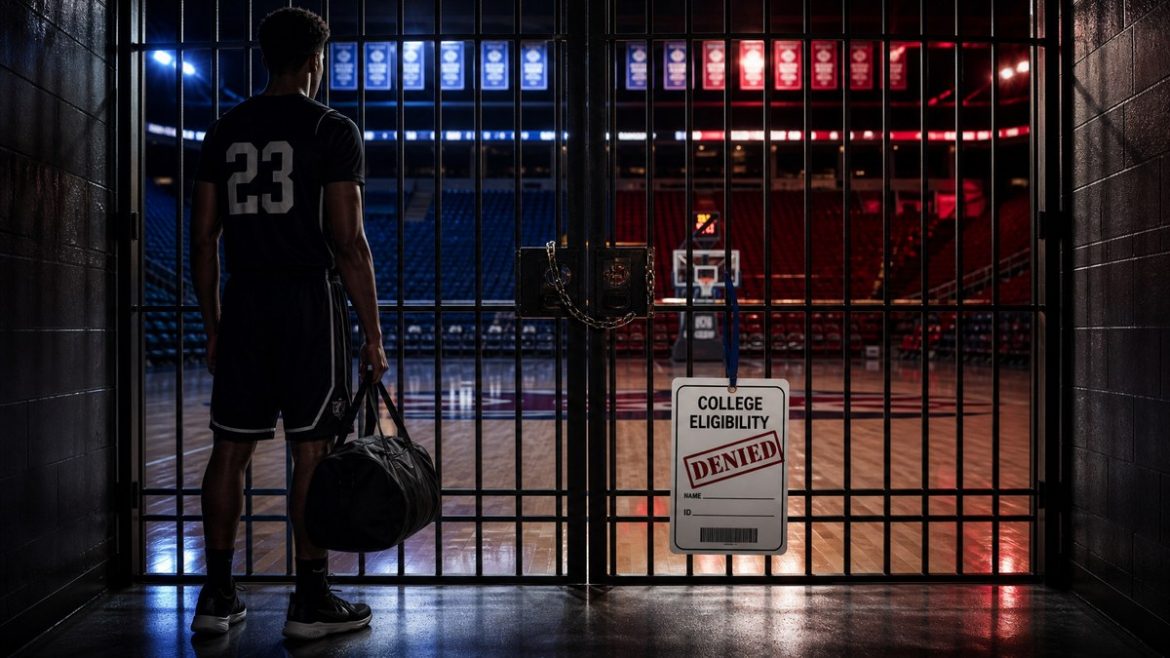
The SEC has joined the Big Ten in barring athletes who have competed professionally from returning to college competition, according to multiple reports published Tuesday and Wednesday. The policy includes basketball players and establishes a conference-level limit as college sports officials confront increasingly complicated questions about the boundary between college and professional participation.
SEC aligns with Big Ten on professional athlete eligibility
The SEC’s action places two of the most prominent conferences in college sports on the same side of an emerging eligibility issue. Under the approach described in reports, athletes who have moved into the professional ranks will not be permitted to reverse course and compete for a conference school.
The policy is broader than a basketball-only measure, but its effect on basketball is particularly significant. Players have more professional pathways available to them than in the past, including domestic developmental competition and established leagues outside the United States. That changing landscape has produced new questions about whether an athlete who has begun a professional career should later be allowed to enter or resume college competition.
The SEC and Big Ten have now answered that question for their own members. Their position creates a firm separation between athletes using the opportunities available within college sports and those who have already competed as professionals.
Neither conference’s stance, however, amounts to a universal NCAA rule. It is a participation standard adopted at the conference level, meaning the broader national landscape could remain uneven if other leagues choose different policies or wait for additional NCAA guidance.
College basketball faces a changing eligibility landscape
Basketball sits near the center of the discussion because player movement between different levels of the sport is not always linear. Some players spend one season in college before turning professional, while others pursue professional opportunities without first playing for an NCAA program. International prospects may begin competing in club systems at a young age, under structures that differ from the traditional American college model.
The SEC and Big Ten policies provide their schools with a clearer answer when evaluating a player who has already crossed into professional competition. Even if a player seeks NCAA clearance, a conference can impose an additional participation requirement on its member institutions.
That distinction is important. NCAA eligibility and conference eligibility are related, but they are not necessarily identical. A national eligibility decision does not prevent a conference from setting a more restrictive standard for the schools under its authority, provided the policy is applied within the conference’s governing framework.
For basketball programs, the practical result is that roster planning must account for more than a prospective player’s remaining seasons of college eligibility. Coaches and compliance departments also must determine whether the player’s previous experience falls within the conference’s definition of professional participation.
Conference rule separates NIL activity from professional competition
The decision arrives during an era in which college athletes can receive substantial compensation while retaining collegiate status. Name, image and likeness arrangements have changed the economics of college sports, but compensation through NIL activity does not, by itself, mean an athlete has competed for a professional team.
The conference policies address a different question: whether someone who has participated in the professional ranks can later return to the college level. That is separate from an athlete earning endorsement income, receiving permissible benefits or moving between NCAA schools through the transfer process.
Maintaining that distinction will be an important part of administering the rule. Schools already review contracts, playing history, amateur certification and other documentation when determining whether a recruit can compete. The new conference restriction gives SEC and Big Ten compliance offices another standard to apply during those reviews.
The need for detailed evaluations could be especially relevant with international basketball players. Development systems vary by country, and athletes can be associated with professional clubs under a range of financial and competitive arrangements. Determining whether a player actually competed as a professional can require more analysis than simply identifying the team on a résumé.
SEC policy will affect recruiting and roster construction
The immediate impact will be felt in recruiting. SEC basketball staffs will need to screen prospects with professional backgrounds before devoting roster space and scholarship resources to them. Big Ten programs face the same restriction under their conference’s policy.
That process is likely to begin well before a player signs with a school. Coaches typically work with athletic department compliance officials to examine a prospect’s eligibility history, and professional experience will now be a decisive factor rather than merely one part of a broader NCAA review.
The rule also removes one possible roster-building route. SEC and Big Ten teams will not be able to add players who attempt to return from professional competition, even if those players otherwise have an argument for remaining college eligibility. Programs can continue to recruit high school players, junior college players, international prospects who meet applicable eligibility standards and athletes transferring from other NCAA institutions.
For players, the decision adds another consideration to the choice to turn professional. Entering the professional ranks has long carried eligibility consequences, but recent challenges and changing interpretations have created uncertainty around whether every such decision is final. The SEC and Big Ten are seeking to eliminate that uncertainty within their conferences.
Different conference standards could shape player options
The SEC’s decision does not automatically require other conferences to follow. Unless the NCAA adopts a uniform national restriction, leagues may retain room to establish their own standards. That could create different options for athletes depending on which school or conference is recruiting them.
A player denied an opportunity at an SEC or Big Ten school because of professional experience could potentially explore an institution operating under a different conference policy, subject to NCAA rules and that school’s own eligibility review. Whether other major conferences adopt matching restrictions will therefore determine how broad the prohibition becomes.
Uniformity has become a recurring concern across college sports. Transfer regulations, athlete compensation, roster limits and enforcement standards have all required coordination among the NCAA, conferences and individual institutions. Eligibility after professional participation now joins that list.
By acting independently, the SEC and Big Ten have established a clear standard for a large group of nationally prominent athletic programs. Their combined influence could also increase pressure on other conferences and NCAA officials to clarify their positions.
What the SEC and Big Ten decisions mean next
The next phase will be implementation. Schools will need guidance on definitions, documentation and review procedures, particularly in cases involving international clubs or developmental leagues. Consistent enforcement across member institutions will be essential to avoid disputes over whether similar playing histories are being treated differently.
Further clarification also could determine how the conferences handle unusual cases, including athletes whose professional involvement was brief or whose status within a professional organization was unclear. The reports announcing the SEC’s action establish the central prohibition, but individual eligibility cases often depend on specific facts.
For now, the policy delivers an unambiguous message to basketball players and other athletes considering a professional move: within the SEC and Big Ten, competing professionally closes the route back to college competition. It also marks another instance in which major conferences are setting their own boundaries while the wider structure of college sports continues to change.
Sources
- ABC News: SEC joins Big Ten in banning pros from returning to college, including basketball players
- KTVN: SEC joins Big Ten in banning pros from returning to college, including basketball players
- Santa Fe New Mexican: SEC joins Big Ten in banning pros from returning to college, including basketball players