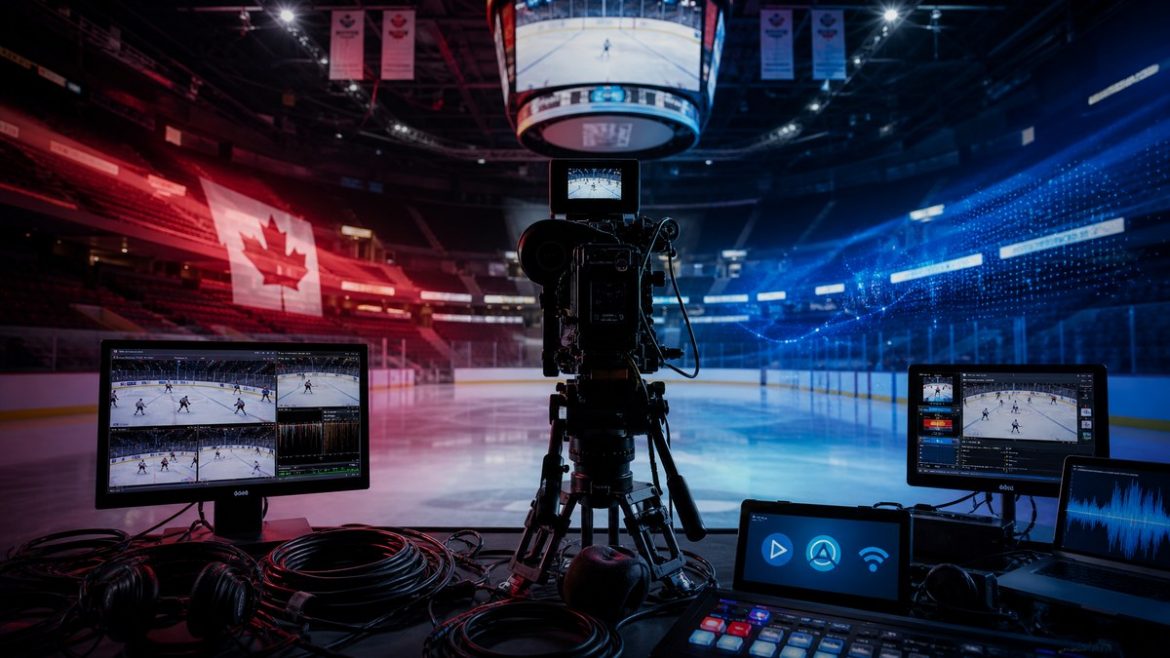
The NHL is approaching the 2026-27 season with a reshaped broadcasting landscape following major offseason changes, according to reports published Sunday by the Toronto Star, battlefordsNOW and the Winnipeg Free Press. The transition matters because broadcast assignments, presentation choices and distribution plans are central to how Canadian viewers follow the league throughout the regular season and Stanley Cup playoffs.
NHL broadcast changes arrive as the new season approaches
The start of a season always brings some adjustments to game coverage, but the latest changes have been significant enough to create a notably different broadcasting scene. For viewers, that can mean familiar games arriving through a different presentation, a revised studio format or a new combination of on-air voices.
The reports focus on a new-look environment after an active offseason behind the microphones and cameras. They also arrive at an important point on the hockey calendar, when preseason coverage is giving audiences an initial look at how networks intend to package the coming campaign.
Broadcast changes are more than a media-industry story in the NHL. Hockey audiences often develop long-running connections with play-by-play announcers, analysts and studio programs. Those broadcasters become part of the routine of a season, particularly in Canada, where national coverage and regional telecasts must serve audiences with different team loyalties and viewing habits.
Any substantial revision therefore requires an adjustment from both the production teams and the audience. New combinations need time to establish chemistry, while returning broadcasters may be asked to work within different formats or alongside new colleagues.
Canadian NHL viewers face an evolving television and streaming landscape
The changes also arrive as the line between traditional television and streaming continues to narrow. NHL coverage is no longer defined only by which channel carries a game. Viewers increasingly need to know which service has a particular matchup, whether the game is national or regional, and how the broadcast can be accessed on different devices.
That makes clear scheduling and distribution information especially important. A polished production has limited value if fans cannot quickly determine where a game is available. As the season begins, broadcasters will be under pressure to explain their weekly plans consistently across television listings, digital platforms and promotional material.
The challenge is particularly visible on nights with a full schedule. National windows can include several games, while regional coverage must still serve local audiences. Networks and digital services have to move viewers efficiently between early and late games, provide updates from other arenas and account for contests that run beyond their expected time slots.
Streaming adds flexibility but can also change long-established routines. Fans accustomed to finding hockey in the same television window each week may need to become familiar with app navigation, device compatibility and revised start pages. Broadcasters, meanwhile, must make the digital experience reliable without treating streaming as a secondary version of the main production.
On-air chemistry will shape the new-look NHL coverage
Much of the early attention will naturally fall on the people presenting the games. Hockey is a demanding sport to call because play can change direction instantly, substitutions happen during live action and important details often emerge away from the puck. Effective coverage requires accuracy, restraint and a clear understanding of when analysis adds to the pictures.
Play-by-play broadcasters must identify action at high speed without overwhelming the audience. Analysts are responsible for explaining systems, matchups and individual decisions while the game continues. Studio teams then have to place those moments in a wider league context, often during short intermissions with limited time for replays and discussion.
When crews change, chemistry cannot be assumed. The strongest pairings develop a natural division of responsibility: one voice establishes the action, the other explains why it unfolded that way. That balance generally improves through repetition, making the opening weeks an important period for new or reorganized teams.
Viewers are also likely to judge the broadcasts on more than personality. Accurate player identification, useful replay selection and timely reporting remain the core of a credible hockey production. A new presentation can modernize the coverage, but it still has to serve the game rather than distract from it.
Production decisions affect how NHL games are understood
Changes behind the scenes can be just as important as the visible lineup. Producers and directors determine which replays are shown, how quickly the broadcast returns to live action and when supplemental graphics help explain a sequence. Those decisions shape the audience’s understanding of goals, penalties, defensive breakdowns and goaltending plays.
Modern NHL broadcasts have access to more data and camera angles than earlier generations of coverage. The practical test is whether those tools clarify what happened. A well-timed replay can reveal a deflection, a missed assignment or a subtle zone entry that was difficult to see at full speed. Too many graphics or repeated cutaways, however, can interfere with the rhythm of the game.
The same principle applies to studio coverage. The most effective intermission segments usually combine current reporting with concise tactical explanation. With teams managing injuries, lineup decisions and roster movement throughout the year, viewers need confirmed information and appropriate context rather than speculation presented as fact.
Consistency will be the test for the revamped NHL broadcasts
The first broadcasts will attract scrutiny because the changes are fresh, but the more meaningful evaluation will come over several months. An NHL season places heavy demands on broadcast operations, from repeated travel and late schedule changes to technical challenges and overlapping games.
Consistency is therefore a better measure than any single opening-night performance. Viewers will expect stable streams, synchronized audio, informed commentary and dependable access to highlights and postgame coverage. They will also expect broadcasters to handle major moments—record pursuits, coaching changes, injuries and the playoff race—with accuracy.
Regional differences will remain important as well. A presentation designed for a national audience has to provide broad context, while a team-focused broadcast can spend more time on specific lines, prospects and tactical trends. Maintaining those distinct purposes helps avoid a one-size-fits-all approach to coverage.
The postseason will eventually provide the largest test. Playoff games draw broader audiences, carry greater production demands and frequently require broadcast teams to explain unfamiliar opponents to casual viewers. Decisions made at the start of the regular season will establish the structure used when the stakes rise in the spring.
NHL fans get their first extended look at the changes
For now, the opening stretch of the season will serve as an introduction. Viewers will learn new broadcast routines, on-air teams will begin developing chemistry and production staffs will have an opportunity to refine their approach in response to the schedule.
The central responsibility has not changed despite the offseason overhaul: show the game clearly, explain it accurately and make it easy to find. The new-look NHL broadcasting scene will ultimately be judged by how well it meets those standards over the full 2026-27 season, not simply by how different it appears at the outset.
Sources
- Toronto Star: Puck drops on new-look NHL broadcasting scene after major off-season changes
- battlefordsNOW: Puck drops on new-look NHL broadcasting scene after major off-season changes
- Winnipeg Free Press: Puck drops on new-look NHL broadcasting scene after major off-season changes