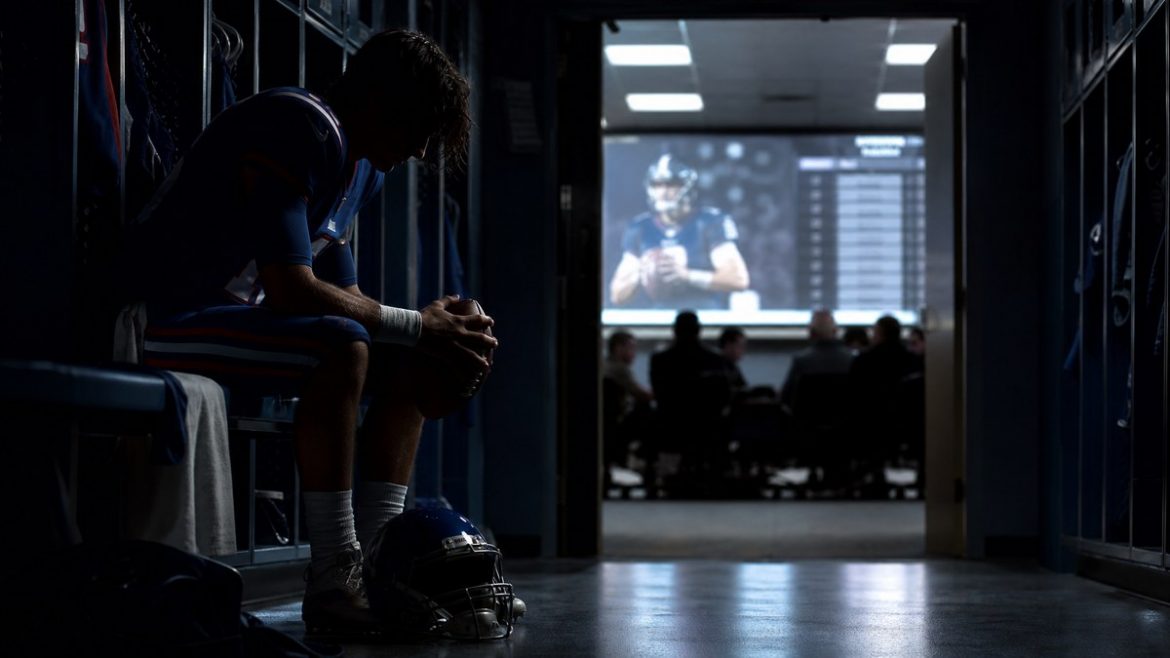
A group of syndicated reports published Thursday said the New York Giants have lost quarterback Jaxson Dart, introducing significant uncertainty at the most important position on their roster. The reports also pointed toward a growing 2027 NFL Draft conversation involving Notre Dame cornerback Leonard Moore and the Giants’ broader quarterback needs, although the available accounts did not specify the nature or expected duration of Dart’s absence.
That missing information is important. There was no detailed injury diagnosis, recovery timetable or corresponding roster move included in the reports provided. Until the Giants clarify Dart’s status, any assessment of the immediate effect must distinguish between what has been reported and what remains unknown.
Jaxson Dart’s status is central to the Giants’ plans
Dart is not simply another player on New York’s depth chart. The Giants selected the former Ole Miss quarterback with the 25th overall pick in the 2025 NFL Draft after trading back into the first round, a move that demonstrated a substantial organizational commitment to his development.
His arrival gave New York a young quarterback around whom it could begin constructing a longer-term plan. Dart brought extensive college starting experience, mobility and a willingness to attack downfield, but, like most young NFL quarterbacks, he also entered the league needing time to adjust to faster defenses, tighter throwing windows and the demands of operating a professional offense.
Any extended absence would interrupt that evaluation process. Live game repetitions are particularly valuable for a developing quarterback because they allow coaches to judge decision-making, pocket management, coverage recognition and command of the offense under pressure. Practice work can reinforce those skills, but it cannot fully replicate regular-season competition.
The Giants must now determine what Dart can do, how long he may be unavailable and whether the situation requires a short-term adjustment or a broader response. Those answers will shape the offense as well as the organization’s approach to future personnel decisions.
New York must separate the immediate problem from the long-term question
The first task for the Giants is practical: prepare the available quarterbacks and adjust the offense to their strengths. Without a confirmed timetable for Dart, the coaching staff has to create a plan capable of functioning whether the absence lasts briefly or extends deeper into the season.
That can mean simplifying certain reads, leaning more heavily on the running game, modifying protection responsibilities or reducing concepts that require the quarterback to hold the ball. The exact changes will depend on the healthy personnel available and the opponent, but continuity becomes harder whenever an offense changes quarterbacks.
The longer-term issue is more complicated. New York invested a first-round selection in Dart only one year ago, so a reported absence alone does not erase that commitment. It does, however, affect the amount of evidence the Giants can collect before making future roster decisions.
Quarterback evaluations are rarely linear. Young passers can improve significantly with experience, and injuries can temporarily obscure that progress. The Giants will need to avoid drawing sweeping conclusions before establishing the seriousness of Dart’s situation. At the same time, responsible roster management requires the front office to study every future quarterback class and preserve alternatives at the position.
Why Leonard Moore is part of the 2027 NFL Draft discussion
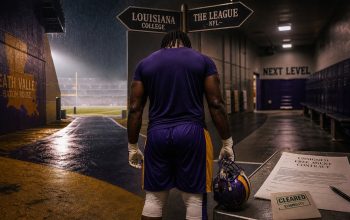
The reports also highlighted Leonard Moore, the Notre Dame defensive back who has emerged as a notable prospect for the 2027 NFL Draft cycle. Moore is a cornerback, not a quarterback, so his inclusion should be understood as part of a wider look at potential draft talent rather than as a direct answer to Dart’s status.
Moore established himself early at Notre Dame, earning a prominent role in the secondary as a young player. His size, coverage ability and experience in high-level college games make him a natural subject for advance scouting, particularly for teams that may need help at premium defensive positions.
Cornerback remains one of the NFL’s most valuable roster spots. Defenses need multiple players capable of handling receivers in space, and the increased use of three- and four-receiver formations has made secondary depth essential rather than optional. A prospect with the ability to play outside coverage can carry substantial value even for a team whose most visible concern is at quarterback.
It is still early in the 2027 evaluation process. Moore has more college football to play, and his eventual draft standing will depend on continued performance, health, development and the formal pre-draft process. Team needs also can change considerably before selections are made.
Giants’ quarterback needs require patient evaluation
The mention of future quarterback needs reflects the uncertainty that follows any disruption involving a young starter. It does not necessarily mean New York has changed its view of Dart or decided to pursue another early-round passer.
For the Giants, the next phase should involve three parallel evaluations. The medical staff must determine Dart’s condition and recovery outlook. The coaches must assess the offense with the quarterbacks currently available. The personnel department must continue scouting future options at quarterback and throughout the roster.
Those responsibilities are related, but they should not be confused. A short-term injury would call for a different response than a season-altering medical issue. Likewise, scouting a future quarterback does not automatically signal dissatisfaction with the current one. Every NFL team evaluates the position continuously because capable quarterbacks are difficult to acquire and essential to sustained success.
New York also must consider the effect on the players around Dart. Offensive linemen benefit from consistent communication and cadence. Receivers develop timing with a quarterback through repeated work. Running backs and tight ends often have protection assignments tied to the quarterback’s pre-snap decisions. A change under center can therefore affect the operation of the entire unit, even if the replacement has experience.
Official clarification is the Giants’ next important step
The immediate story remains Dart’s status. The syndicated reports agree that the Giants have lost their young quarterback, but the material available does not establish how the situation occurred, how much time he may miss or whether New York expects to make a roster transaction.
An official update from the team would provide the necessary framework for evaluating the consequences. Until then, the most defensible conclusion is limited but significant: the Giants face a new measure of uncertainty at quarterback, and any interruption to Dart’s development carries both short-term competitive consequences and long-term personnel implications.
The 2027 draft discussion, including attention on Moore and future quarterbacks, is part of that broader planning process. It should not overtake the current issue before the Giants provide more information, but it underscores how quickly an organization’s priorities can come into focus when the status of a young quarterback changes.