
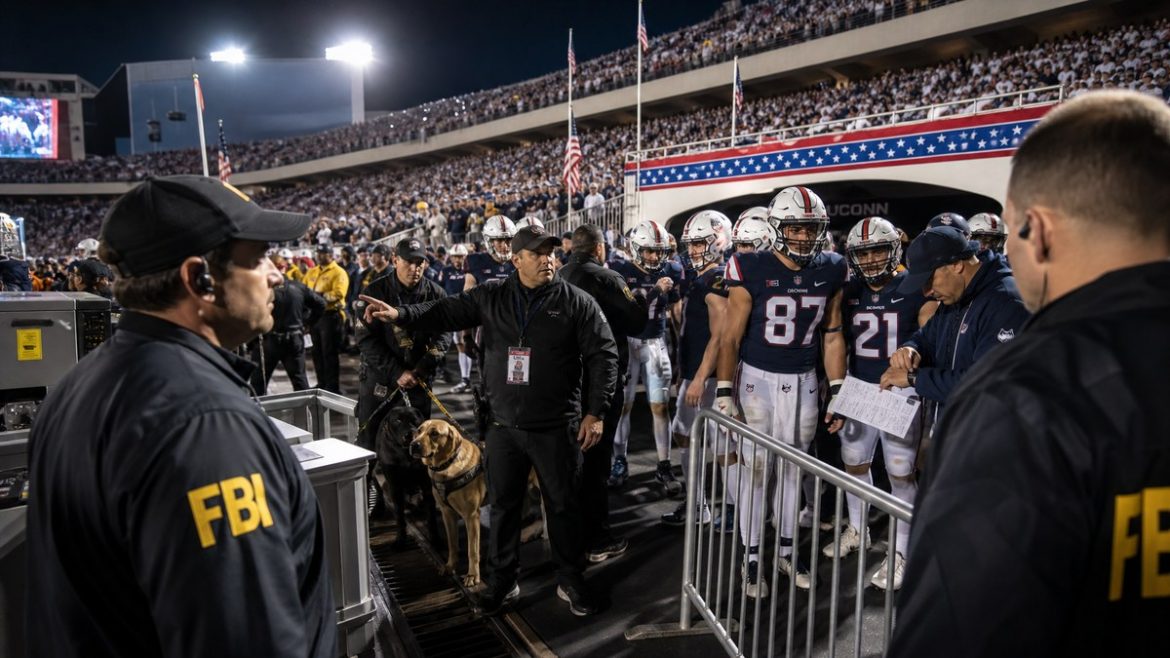
Donald Trump is expected to attend a prominent college football game Saturday, prompting coaches and event personnel to prepare for the additional security and logistical demands surrounding his visit. Reports carried by LancasterOnline and KSAT indicate that the central concern is not the game itself, but how heightened security could affect team movement, stadium access and normal pregame routines.
Trump’s college football appearance adds an operational challenge
A visit by a president or another nationally protected political figure changes the operating environment at any large public event. College football games already require extensive coordination among campus police, local law enforcement, emergency personnel, stadium staff and transportation officials. A presidential appearance adds federal security planning to that structure.
The reported concerns from coaches reflect the importance of predictability on game day. Teams follow carefully arranged schedules covering meals, meetings, treatment, transportation, warmups and the final movement from the locker room to the field. Even a relatively short delay at a security checkpoint can force staff members to adjust multiple parts of that plan.
The available reports describe Trump’s destination as a major college football game and focus on the possibility of disruption surrounding his attendance. They do not suggest that the event is in danger of being canceled. Instead, the issue is whether the security footprint and anticipated crowd movement will complicate the routine arrival and preparation of the teams.
College football coaches depend on precise game-day schedules
Coaches routinely emphasize controlling the elements their teams can manage. That becomes more difficult when external circumstances affect transportation routes, stadium entrances or access to areas normally used by players and staff members.
A typical road team must account for the trip from its hotel to the stadium, including traffic and the time needed to unload players, coaches and equipment. The home team also operates on a fixed timeline, even if its trip to the venue is shorter. Both programs must coordinate with conference officials and stadium management before warmups begin.
When enhanced security is in place, teams may be asked to leave earlier, use different entrances or limit movement through certain parts of the stadium. Those possibilities help explain why coaches would seek detailed information before kickoff. The objective is to keep players focused on the opponent rather than on altered travel arrangements or activity around the venue.
Pregame preparation can be adjusted, but coaches generally prefer to make those changes well in advance. Clear instructions allow football operations staffs to revise itineraries, brief players and ensure that buses and equipment vehicles are in the correct locations.
Stadium security may affect fans and team personnel
Large college football venues regularly host crowds numbering in the tens of thousands, creating significant demands even under ordinary conditions. Fans arrive over several hours, while team buses, officials, media members, stadium employees and emergency vehicles require separate access points.
Trump’s attendance is likely to increase attention on the perimeter of the stadium and the routes used to reach it. The specific restrictions depend on the venue and the plans adopted by federal, state and local authorities. Fans generally are best served by following official guidance from the university, stadium and public safety agencies rather than relying on unofficial social media posts.
Any changes to parking, gate procedures or permitted items would normally be communicated by event organizers. Arriving earlier than usual can help reduce congestion when additional screening is anticipated, although supporters should consult the host institution’s instructions for confirmed details.
Inside the stadium, security planning must balance protection of the visiting dignitary with the need to keep standard game operations functioning. That includes maintaining access for medical personnel, officials, television crews, team staff and other credentialed workers.
Coaches will try to keep the focus on football
For the participating programs, the practical response is to treat Trump’s visit as another game-day variable. Coaches cannot control the size of the security presence or the timing of temporary access restrictions, but they can prepare players for a different atmosphere.
That preparation often begins with a revised itinerary and a simple message: expect delays and remain flexible. Veteran coaching staffs typically assign football operations personnel to communicate with law enforcement and venue managers so position coaches and players can concentrate on football responsibilities.
The challenge is partly physical and partly psychological. An unusual scene outside the stadium can become a distraction if players are not told what to expect. Programs may therefore provide additional time for travel and warmups while keeping their internal schedule as familiar as possible.
Once the teams reach the field, the competitive considerations remain unchanged. Blocking assignments, coverage responsibilities, substitutions and situational decisions will determine the outcome. The work before kickoff is designed to ensure that the unusual circumstances around the event do not interfere with those fundamentals.
Political visits have a long connection to college football
Presidents and presidential candidates have attended major American sporting events for generations. College football is a frequent destination because of its large crowds, regional importance and highly visible place in campus life. Such appearances can bring national attention to a game that already carries significance for the participating schools.
They also require coordination beyond what is visible to spectators. Security planning can involve officials at several levels of government as well as university administrators, athletic department personnel and stadium operators. Much of that work occurs before the public receives final instructions.
The current situation follows that familiar pattern. Trump’s planned attendance is notable, but the immediate concern for coaches is practical: getting their teams into the stadium, through pregame preparation and onto the field without avoidable interruption.
Teams await final game-day instructions
Additional details about access and transportation may emerge closer to kickoff as authorities finalize their plans. Until then, team operations staffs will continue building flexibility into their schedules and communicating with the officials responsible for the event.
There is no indication in the available reports that Trump’s appearance will alter the competitive status of the game. The primary impact is expected to be outside the lines, where security requirements and a larger-than-normal public spotlight could make an already complex college football event more demanding to manage.
For coaches, the priority is straightforward: prepare for the logistical changes, keep players informed and preserve as much of the normal game-day routine as circumstances allow.
Sources
- LancasterOnline: Trump is attending a big college football game, and coaches are worried about disruptions
- KSAT: Trump is attending a big college football game, and coaches are worried about disruptions