

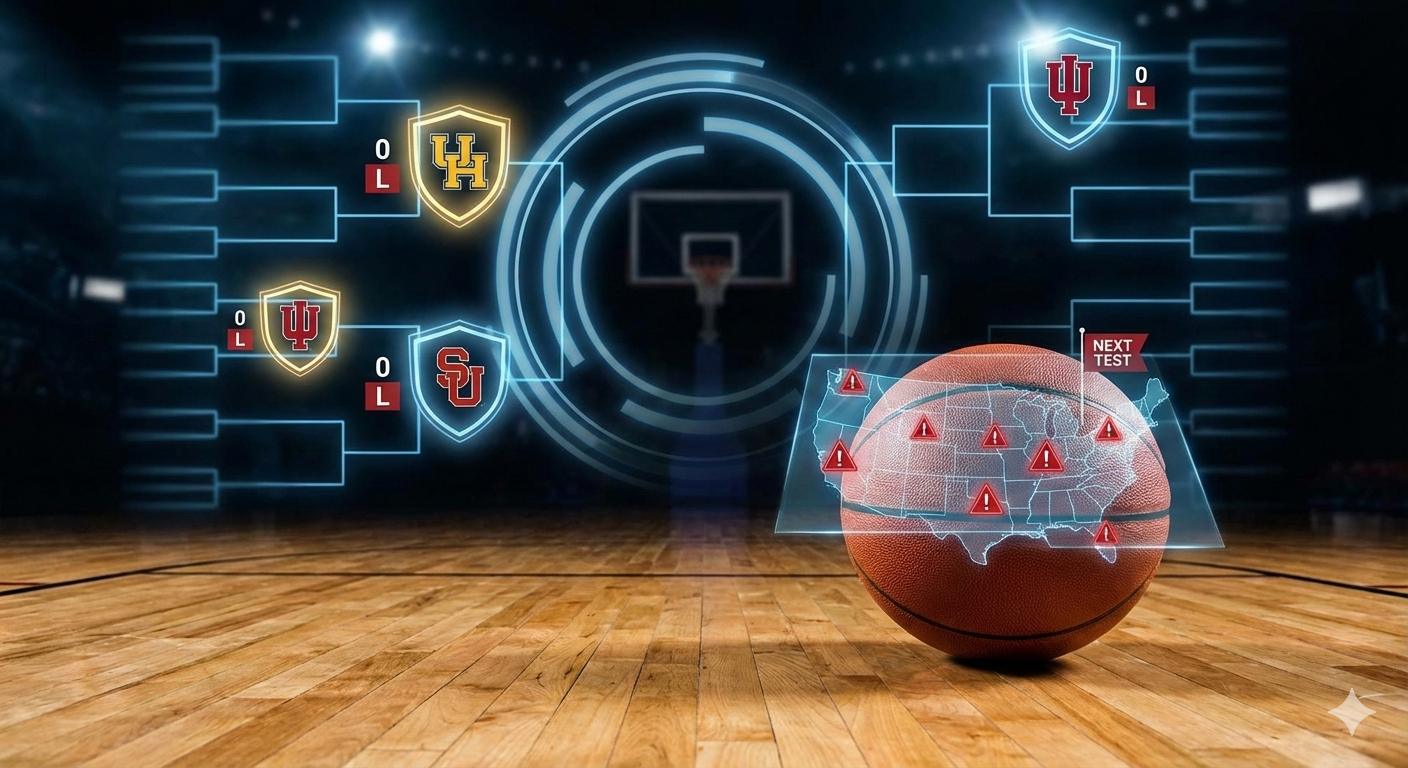
Undefeated records in college basketball always catch attention. A clean win column looks dominant on paper, but perfection rarely survives the full season. The grind of travel, injuries, scouting adjustments, and conference play eventually exposes weaknesses. That is why analyzing undefeated college basketball teams requires more than reading standings or scanning box scores. It takes context, structure, and an understanding of where pressure builds over time.
This guide breaks down how undefeated college basketball teams should be evaluated throughout the season. The focus stays on separating teams built to survive from teams simply riding favorable stretches. Platforms like ATSwins emphasize this same approach by blending efficiency data, schedule context, and situational risk, because those factors matter far more than the zero in the loss column.
Table Of Contents
- Definition and History of Undefeated College Basketball Teams
- Current Season Pulse
- Metrics and Method
- Conference and Postseason Context
- Monitoring and Sources
- Conclusion
- Frequently Asked Questions (FAQs)
Definition and History of Undefeated College Basketball Teams
An undefeated college basketball team is simply one that has not lost a game at a specific point in the season. In most conversations, that label applies only to the regular season, meaning conference tournaments and the NCAA Tournament are not included. That distinction matters more than it seems. Finishing a regular season undefeated already requires discipline, consistency, and favorable timing. Finishing an entire season without a loss pushes into a different tier entirely, where every game becomes an elimination-level test.
Regular-season undefeated teams operate within a more controlled environment. Schedules are largely known months in advance. Travel patterns repeat. Opponents are familiar, especially once conference play begins. Even so, the margin for error stays thin. One poor shooting night on the road or one bad matchup can erase months of clean work. End-to-end undefeated teams face a far steeper climb. Neutral-site games remove home-court comfort. Short rest between games limits adjustments. Single-elimination formats punish even minor lapses in focus or execution. That mix explains why full-season perfection is almost unheard of in the modern game.
In men’s Division I basketball, the 1975–76 Indiana Hoosiers stand as the last team to complete an undefeated season and win the national championship. Since then, college basketball has changed in ways that directly work against perfection. The number of high-level programs has grown. Talent spreads across conferences instead of concentrating at the top. Nonconference schedules now include early-season tournaments that pit elite teams against each other before rotations are settled. Conference play is deeper, more physical, and more scouted than ever. All of it adds friction to the idea of staying perfect.
Earlier eras produced more undefeated champions, but the structure of the sport was different. Fewer games, less travel, and wider talent gaps allowed dominant programs to separate consistently. Today’s landscape rewards balance and depth over pure star power. Even top-ranked teams regularly face opponents capable of beating them on the right night. That parity makes modern undefeated runs fragile by design.
Women’s Division I basketball has seen more undefeated champions, especially during stretches of program dominance. Connecticut, Tennessee, Baylor, and Texas each produced perfect seasons by pairing elite efficiency with overwhelming depth. Those teams controlled games defensively, limited transition chances, and rarely relied on shooting variance to survive. Even then, perfection was never comfortable. A single off night, an injury, or a cold stretch could have flipped outcomes quickly. Dominance reduced risk, but it never removed it.
Structural forces explain why undefeated seasons fade as the calendar moves forward. Nonconference play introduces neutral courts, unfamiliar opponents, and quick turnarounds before teams settle into rhythm. Conference play tightens scouting and increases physicality. Players accumulate wear and tear. Minor injuries stack up. Rotations shorten. By February and March, even elite teams play closer to their baseline than their peak, which shrinks margins and increases volatility.
That is why early undefeated records often mislead. A 6–0 start in November usually reflects favorable scheduling more than true dominance. Home-heavy slates, buy games, and opponents still experimenting with lineups inflate records early. A 22–0 record in February carries far more weight. By that point, teams have survived road tests, handled scouting adjustments, and proven they can win when efficiency dips.
The teams that remain undefeated deep into the season tend to share clear traits. They own real wins against high-quality opponents, not just clean records. They produce on both ends of the floor, scoring efficiently while defending without fouling. Most importantly, they can win in different ways. They handle pace swings, survive ugly road games, and close tight finishes without relying on perfect shooting. Those qualities, more than the number in the loss column, define whether an undefeated run is built to last.
Current Season Pulse
Tracking undefeated college basketball teams requires understanding when risk spikes during the season. The calendar itself introduces predictable pressure points where perfect records tend to crack.
The opening weeks of November produce the highest variance. Teams adjust to new rotations, freshmen roles, and neutral-site tournaments. Home-heavy schedules inflate early records, especially for power conference teams scheduling buy games.
Late November and December provide better signals. Holiday tournaments force quick scouting, travel, and matchup diversity. Finals week introduces odd rest patterns. Road openers begin to appear. Undefeated teams that survive this window often show structural strength.
January changes everything. Conference play sharpens scouting. Crowds grow louder. Coaches exploit tendencies. Pace control becomes a chess match. Even top teams face hostile road environments weekly. Many undefeated runs end here.
February and early March squeeze remaining edges. Rivalry games increase emotion. Rematches eliminate surprises. Conference tournaments compress schedules and introduce neutral venues. Even dominant teams feel fatigue during this stretch.
A practical approach to tracking undefeated teams involves weekly evaluation rather than daily reaction. Early in the week, the focus should be on upcoming opponents, rest gaps, and travel demands. Midweek adjustments account for injury updates and minute distributions. Weekend results clarify whether efficiency trends align with outcomes.
Certain conferences tend to preserve undefeated records longer, particularly mid-major leagues with limited top-tier depth. However, geography often offsets schedule strength. Long road trips, unique venues, and short rest windows create volatility late in conference play.
Common trap spots repeat every season. True road openers expose teams to unfamiliar shooting backgrounds and officiating rhythms. Short-rest back-to-backs test depth. Emotional rivalry wins often precede flat performances. Style clashes magnify weaknesses, especially when tempo extremes collide.
ATSwins highlights these risk windows through situational modeling that emphasizes travel, opponent style, and rest disparities rather than raw rankings.
Metrics and Method
Evaluating undefeated college basketball teams begins with schedule quality. The NCAA NET system categorizes wins and losses by quadrant based on opponent strength and venue. Quadrant 1 and Quadrant 2 wins carry the most weight, especially when earned away from home.
An undefeated team with multiple true road wins against high-tier opponents demonstrates resilience. A perfect record built primarily on home games against lower quadrants carries more fragility. Upcoming schedule context matters as much as past results.
Tempo-free efficiency offers deeper insight. Adjusted offensive efficiency measures scoring per possession against adjusted defenses. Adjusted defensive efficiency captures stops per possession against adjusted offenses. Teams capable of sustaining perfection usually rank near the top on both ends.
Offensive-heavy teams with average defense struggle on the road, especially against disciplined opponents. Defensive anchors with limited scoring margin rely on shooting variance to survive. Balanced teams tolerate variance better.
Shot quality analysis helps identify sustainability. Teams benefiting from opponents missing open shots often see defensive numbers regress. Offenses relying on unassisted jump shooting face volatility, especially in unfamiliar arenas. Consistent rim pressure and free throw generation travel better.
Close-game records require careful interpretation. Winning tight games reflects execution, but clusters of one-possession wins increase regression risk. Free throw variance, late-game officiating, and bounce outcomes eventually normalize.
Travel load compounds these factors. Altitude changes, long flights, and sleep disruption affect shooting legs and foul rates. Short rest increases turnover risk. Injuries to primary ball handlers or rim protectors disproportionately impact survival odds.
Roster continuity stabilizes performance. Teams returning a majority of minutes from the prior season handle adversity better. New lineups often shine early at home before struggling on the road. Transfers can mitigate this, but usage spikes should be monitored.
ATSwins converts these inputs into directional survival probabilities rather than precise predictions. Weekly estimates reflect schedule difficulty, efficiency balance, and situational modifiers. The goal is clarity, not certainty.
Conference and Postseason Context
Conference play is where undefeated records start to feel heavy. Early-season advantages shrink fast once teams see the same opponents again and again. Familiarity removes surprise. Coaches know which actions are coming, which shooters to run off the line, and where help needs to come from. Games turn into possession-by-possession battles instead of talent showcases. Pace control becomes intentional, not incidental, with teams either slowing things down to increase variance or pushing tempo to test depth.
Officiating adds another layer. Conference crews tend to develop consistent tendencies, but those tendencies still vary by venue. Some buildings allow more contact. Others reward movement and spacing. Undefeated teams that rely on free throws or aggressive drives often see those advantages shrink on the road, especially in places where whistles are tighter or crowds influence rhythm.
Rivalry games push volatility even higher. Emotions spike, crowds get louder, and clean execution becomes harder. Late-game decision-making often shifts toward isolation plays and quick shots. Even disciplined teams fall into hero-ball traps when momentum swings. That emotional variance is one of the most common ways elite teams drop their first loss, not because the opponent is better, but because the environment tilts the game.
Travel compounds those effects. Altitude trips impact conditioning late, especially for teams that rely on transition offense or aggressive rebounding. Legs go early, closeouts get slower, and second-chance points disappear. Back-to-back road games create similar problems. Fatigue shows up in fouls, turnovers, and missed rotations. Thin rotations struggle most in these spots, as starters log heavy minutes with little recovery.
Conference tournaments add another layer of pressure. Playing three games in three or four days stresses legs and focus. Neutral floors eliminate home-court comfort, but they are rarely neutral emotionally. Fan bases close to the venue often turn games into de facto road environments. Underdogs lean into variance by slowing pace, playing zone, and firing threes early in the clock. All of that raises upset risk, even for teams that dominated league play.
The NCAA Tournament multiplies those challenges. Even top seeds face opponents capable of winning on any given night. Neutral gyms flatten shooting advantages. Short prep windows reduce matchup-specific adjustments. Rankings matter less than stylistic fit. A team that struggles against ball pressure or elite shot-blocking can exit early regardless of seed line.
From a probability standpoint, perfection through six tournament games is brutal. Each round chips away at survival odds. Small disadvantages stack quickly, which is why even dominant teams rarely finish unblemished. Balanced efficiency matters more than resume shine at this stage. Teams that are elite on one end and average on the other usually run out of margin before the title game.
Monitoring and Sources
Tracking undefeated teams effectively is about rhythm, not overload. Daily checks should stay simple. The focus stays on upcoming opponents, injury updates, and where the game is being played. Venue context matters more late in the season, especially for teams that have been protected by home-heavy schedules.
Midday reviews help sharpen matchups. Opponent style, recent efficiency shifts, and rotation changes often signal stress points before they show up in results. Pre-tip evaluation compares market expectations with situational reality. When narrative momentum runs ahead of efficiency, risk increases.
Weekly synthesis brings clarity. Early in the week, survival estimates set expectations for the days ahead. Midweek alerts flag trap spots like short rest, travel stacks, or emotional letdowns. Weekend results confirm whether assumptions held or need adjustment. Teams earn fragility labels over time, not in one game.
ATSwins blends these steps into model outputs that account for both numbers and perception. Undefeated teams often carry extra weight in the market simply because zero losses attract attention. When that attention inflates expectations beyond efficiency reality, opportunity shifts to the other side.
Matchup overlays refine those reads. Defensive rebounding, ball pressure, and pace mismatches tend to matter more away from home. Player usage patterns tighten in close games, opening angles where individual performance becomes more predictable than full-game outcomes.
Tracking results by scenario builds discipline. Grouping outcomes by undefeated fades or supports helps isolate what actually works instead of relying on memory. Over time, patterns emerge that are easy to lean into and easier to trust.
Source consistency keeps everything grounded. AP rankings show narrative momentum and public perception. NCAA NET sheets anchor quality and quadrant context. Sports-Reference supplies game logs, minute trends, and historical comparisons. ESPN scoreboards help manage daily slates and spot neutral venues. Tempo-free efficiency sources provide the trend lines that explain why results look the way they do.
Together, this process keeps undefeated analysis sharp without turning it into noise.
Conclusion
Undefeated college basketball teams draw attention because perfection feels rare and fragile. Sustaining it requires structural strength, schedule resilience, and adaptability. Records alone mislead. Efficiency balance, travel context, and situational awareness reveal far more.
Tracking undefeated teams effectively means updating assumptions weekly, not reacting emotionally to single games. Strength of schedule, shot quality, rebounding, and turnover control travel better than shooting streaks. Small edges compound across months.
ATSwins applies these principles through data-driven modeling that blends efficiency, schedule, and market behavior. Whether identifying fragility or confirming legitimacy, the goal remains clarity over hype. Perfect records fade quickly. Good analysis lasts all season.
Frequently Asked Questions (FAQs)
What does undefeated college basketball teams mean over the course of a season?
Undefeated college basketball teams are those that have not lost a game at a given point. Most references apply to regular-season records, excluding conference and NCAA tournaments. Context matters because the difficulty of remaining undefeated increases as schedule strength rises. Evaluating where wins occur and against whom provides more insight than the record itself.
How can legitimate undefeated teams be separated from lucky ones?
Legitimate undefeated teams combine quality wins, balanced efficiency, and road success. Quadrant 1 victories, especially away from home, signal strength. Efficiency margins that align with outcomes suggest sustainability. Teams relying on close-game luck or unsustainable shooting often regress once travel and scouting intensify.
What usually causes undefeated runs to end?
Most undefeated streaks end during true road games, short-rest stretches, or matchup clashes. Fatigue, foul trouble, and shooting variance play larger roles away from home. Conference familiarity and rivalry intensity also elevate risk. Perfection typically ends due to thin margins rather than collapse.
How does ATSWins help analyze undefeated college basketball teams?
ATSWins provides AI-powered sports analysis that blends efficiency metrics, schedule context, injury data, and market behavior. For undefeated college basketball teams, the platform highlights perfection premiums, matchup risks, and situational edges. This approach helps identify when undefeated teams are overvalued or misunderstood.
What is the best weekly routine for tracking undefeated teams?
A simple routine includes verifying schedules and venues, updating NET quadrant results, reviewing efficiency trends, checking recent game logs, and flagging upcoming travel or rivalry spots. Consistent weekly review prevents overreaction and sharpens long-term perspective.
Related Posts
AI For Sports Prediction - Bet Smarter and Win More
AI Football Betting Tools - How They Make Winning Easier
Bet Like a Pro in 2025 with Sports AI Prediction Tools
Sources
The Game Changer: How AI Is Transforming The World Of Sports Gambling
AI and the Bookie: How Artificial Intelligence is Helping Transform Sports Betting
How to Use AI for Sports Betting
Keywords:
MLB AI predictions atswins
AI MLB predictions atswins
NBA AI predictions atswins
basketball ai prediction atswins
NFL ai prediction atswins