

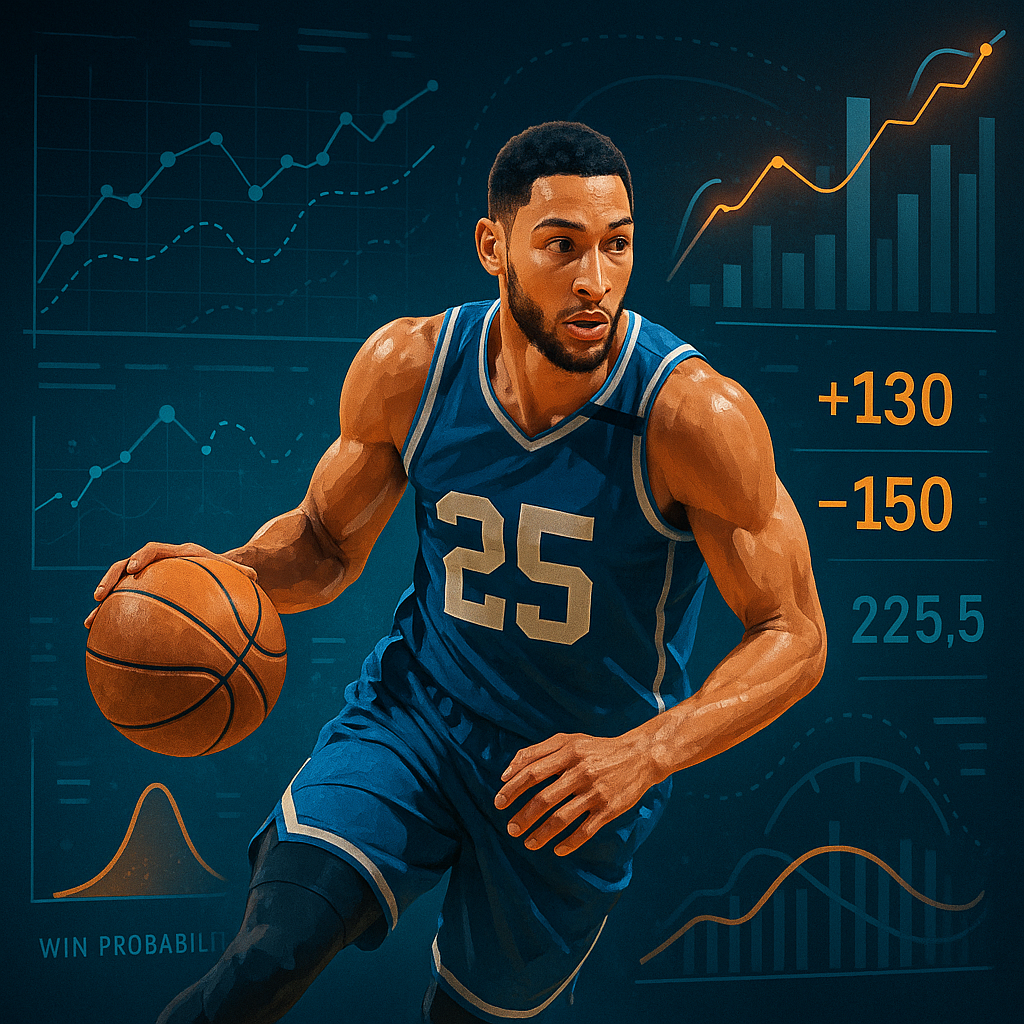
Want to actually simulate NBA game outcomes and make predictions that don’t rely on luck? This guide walks through how to turn player data, rotations, and market info into something that gives you real edges on NBA bets. It’s built from what pros use but written in a way anyone can follow. You’ll learn how to clean and prep data, build models, use Monte Carlo simulations, test everything, and make sense of it the way ATSWins does daily with their AI-powered betting tools.
Table Of Contents
- Simulation-First NBA Outcomes That Power Real Betting Decisions
- Data Collection and Feature Engineering
- Modeling the Game Engine
- Monte Carlo Simulation to Price Markets
- Validation and Operations
- How ATSwins Uses This in Practice
- Building Your Own NBA Simulator
- Common Pitfalls and Lessons
- Conclusion
- Frequently Asked Questions (FAQs)
Simulation-First NBA Outcomes That Power Real Betting Decisions
When you build a model to predict NBA games, you’re basically creating a system that looks at stats and simulates how a matchup could play out thousands of times. Every possession, every rotation, and even every questionable injury can shift the odds slightly. What makes simulation-first betting cool is that it’s not guessing. It’s math, randomness, and structure rolled together to reflect reality better than gut feeling ever could.
This is where data meets the court. You start with clean inputs — team stats, player stats, travel situations, injuries — then run them through a simulation that mimics a season’s worth of possible results. After that, you can compare your simulated outcomes to what the sportsbooks offer. If there’s a difference, that’s your edge. That’s literally how pros find value.
ATSwins takes this type of modeling and runs it at scale. They use simulations, AI-driven models, and betting history to produce picks and props that are transparent, data-backed, and easy to understand for both casual and serious bettors.
Data Collection and Feature Engineering
This part is the backbone. If your data’s messy, everything else collapses. NBA games are full of small variables, so you need accurate, detailed numbers. That means team and player stats, rest days, travel miles, injuries, and even market odds over time.
Think of it like this: your model is only as smart as the information you feed it. You want complete game-level data like box scores, possessions, and points per possession, plus player-level data such as usage rate, offensive rating, and defensive rating. You also want rotation data to understand who’s on the floor together and how that changes scoring efficiency.
When you have that, you can start creating meaningful “features.” These are stats that help the model see patterns — things like team pace, shooting efficiency, turnover rate, rebounding rate, and travel fatigue. You don’t want raw numbers that mean nothing; you want structured inputs that actually describe what’s happening on the court.
For example, if a team’s pace is high but they’re on a second night of a back-to-back, your model should automatically know to tone down their expected possessions a bit. Or if a star player is questionable, you can use historical injury data to give that scenario a probability and simulate both outcomes — one where they play, one where they don’t.
This type of detail takes time, but once it’s in place, it’s gold. That’s how you get simulations that actually mirror reality, not some spreadsheet fantasy.
ATSwins uses this same structure in their AI betting tools. They mix performance data with market trends, giving bettors a look at when the market’s wrong or when the numbers say there’s hidden value.
Modeling the Game Engine
Once your data is clean, it’s time to turn it into a model that mimics an NBA game. The model acts like a mini virtual league — it simulates possessions, rotations, and outcomes over and over again. Think of it like letting your computer “play” each game 10,000 times to see which side wins more often.
The tricky part is picking the level of detail. You can model the game possession by possession, which is super detailed but slow, or you can model it minute by minute, which is faster but a little less precise. Most bettors find a middle ground — simulate in small time chunks that reflect rotation shifts and lineup changes. That gives enough accuracy without making your laptop explode.
Inside the model, you combine team offensive and defensive ratings, pace, and player effects. Each player has a measurable impact on how many points their team scores or gives up. When you build lineups, you sum up those impacts but also make small adjustments for fit — like how two poor spacers might make an offense worse even if their individual stats look okay.
You also want to use something called Bayesian shrinkage. That’s a fancy way of saying you don’t overreact to tiny samples. If a guy has a great two-week stretch, the model shouldn’t suddenly think he’s an All-Star. It should blend new data with long-term performance. That’s how you keep things balanced and avoid overfitting.
Another thing worth noting is luck, especially with three-pointers. Teams go hot and cold, but your model should know the difference between good shot quality and pure luck. It’s better to use expected three-point percentage based on shot types than actual makes. Over time, that’s more stable and predictive.
Finally, injuries and rest matter a lot. You can’t just mark someone “out” or “in” — it’s better to use probabilities. If someone’s questionable, maybe your model assumes a 60% chance they play and adjusts team strength accordingly. When you run thousands of simulations, some runs will have that player in, some won’t, and the overall average will reflect that uncertainty.
This kind of approach is what makes simulation-first modeling powerful. ATSwins uses similar setups, adjusting lineups and player usage in their simulations to keep predictions realistic and grounded in what’s actually happening in the league.
Monte Carlo Simulation to Price Markets
Now comes the fun part — running simulations. Once your model is built, you use something called a Monte Carlo simulation. The idea is simple: you run the same game thousands or even hundreds of thousands of times, each time letting randomness play out. Maybe a team hits more threes in one simulation or turns the ball over more in another. Over many runs, you see the real range of outcomes.
Each simulation produces a score difference, so by the end, you have a full distribution of possible margins. From there, you can calculate how often the home team wins, how often they cover the spread, and how often the total goes over or under. That’s where the math meets betting.
For example, say your simulations show the home team wins 57% of the time. You can turn that into fair odds by dividing one by that probability. Compare those odds to what the sportsbook offers. If the book gives better odds than your fair price, you’ve got value.
The same goes for spreads and totals. You just look at how often each outcome hits in your simulations. You can even simulate derivative markets like first halves or team totals. It all comes from the same score distributions, just sliced in different ways.
This is also where bankroll management comes in. You never want to bet full-Kelly or go all-in. Fractional Kelly — betting a small percentage of what your model says you should — is smarter. It smooths variance and protects you from streaks.
The process also includes tracking results and calibrating the model. If your simulations consistently miss a certain type of matchup, you go back and fix the assumptions. Maybe you overestimated pace, or maybe you didn’t adjust enough for injuries. The point is, the model isn’t static. It evolves as the season goes.
ATSwins uses this type of workflow behind their picks and props. Their platform runs large-scale simulations, compares results to real market lines, and highlights edges in spreads, totals, and player props. The cool part is that they track performance transparently, so users can see what’s working and what’s not over time.
Validation and Operations
Validation is where you find out if your model’s actually any good. It’s not enough to build something that looks smart — you have to test if it beats the market. That means backtesting, calibration, and tracking closing-line value.
Backtesting means running your model on past games using only the data that was available at that time. No cheating with future info. You check if your predicted probabilities match real outcomes. If your model says a team has a 60% chance to win, over many games they should win around 60% of the time. That’s calibration.
You can also look at metrics like Brier score or log loss. These show how well your probabilities match reality. Lower scores mean better calibration. Over time, if your edges align with positive expected value, you know you’re doing something right.
One thing that kills models is drift. The NBA changes every year — rule tweaks, play styles, scoring trends. If you don’t retrain your model or refresh your priors, you’ll slowly lose accuracy. That’s why it’s good to have a schedule for retraining, maybe light updates daily for player data and deeper refits monthly.
On the operations side, having a daily routine helps keep everything tight. In the morning, you pull new data, refresh projections, and check for early lines. Midday, you monitor injury updates, rerun high-impact games, and look for differences between your model and ATSwins betting splits. Before tip-off, you finalize everything with the latest injury info, lock simulations, and log every bet with reasoning. After the games, you track what happened and why.
Documentation is a huge deal here. Every assumption, every parameter, and every data version should be logged. If something looks off later, you can rerun it exactly as it was. That’s how you build trust in your numbers.
ATSwins takes this same disciplined approach. They version data, track model changes, and show transparent results so users can understand where each prediction comes from. It’s not about pretending every pick wins. It’s about knowing why each one was made and learning from it.
How ATSwins Uses This in Practice
ATSwins runs an AI-powered simulation system that merges traditional sports modeling with live betting data. They process player stats, betting splits, and injury reports in real time to keep their models fresh. Their system constantly recalibrates and updates edge probabilities based on both team performance and market shifts.
What makes ATSwins stand out is the transparency. You’re not just handed random picks. You get insight into why the model likes a certain side — whether it’s pace, rest advantage, player impact, or just bad market pricing. That level of clarity lets bettors make their own calls instead of guessing blindly.
Their simulations price everything from spreads and totals to props and team derivatives. Each projection includes uncertainty bands, so users can see not just what’s likely, but how volatile it might be. That’s key when you’re managing bankrolls and trying not to overbet high-variance spots.
ATSwins also tracks performance over time. You can see how often their predicted edges hit, how they perform versus closing lines, and which markets they beat most consistently. It’s an approach built on data integrity and accountability — two things you don’t get from tipsters or Twitter picks.
All of this modeling power gives bettors the confidence to play smart. You get information that’s clear, traceable, and based on repeatable processes, not vibes.
Building Your Own NBA Simulator
If you want to build something like this on your own, start small and iterate. You don’t need a massive setup on day one. Just start with clean game data, compute simple team ratings, and simulate possessions. Once that’s solid, you can add complexity like injuries, rotation changes, and matchup effects.
It helps to structure your data tables early. Have one for games (with spreads, totals, and pace info), one for player impacts (offense and defense values), and one for player availability (injury status and minutes projections). Keeping that structure consistent makes it easier to scale later.
When you run your first simulations, you’ll realize how fast variance adds up. That’s why running thousands of iterations is key. Each run captures a possible game path. When you average them, you get probabilities that stabilize. The more you run, the less noisy it gets.
Once you have reliable results, you can start comparing them to market odds. That’s where it gets fun — you’ll start spotting when your model and the market disagree. Sometimes you’ll be right, sometimes you’ll learn something. Either way, it’s progress.
Over time, you’ll get better at tuning your parameters. You’ll learn how much to weigh rest, how to handle hot shooting streaks, and how to adjust for lineup synergy. The best part is, even when you’re not betting, you’ll start understanding the NBA on a whole new level.
That’s the mindset ATSwins promotes: use data to learn, not just to gamble. Betting smarter starts with knowing your numbers, understanding uncertainty, and respecting variance.
Common Pitfalls and Lessons
Even with all the tech, models still fail if you don’t handle the basics. The biggest mistake is overfitting — making your model so specific to past data that it can’t handle new situations. To avoid that, keep your models simple and use regularization techniques that prevent extreme swings based on small samples.
Another issue is treating injuries as binary. “Questionable” doesn’t always mean 50/50. Learn player-specific patterns. Some stars play through those tags almost every time, while others sit. Modeling those probabilities accurately can be the difference between a good and a bad line.
Then there’s bankroll discipline. Even the best model has losing streaks. You can have perfect edges and still go negative for a few weeks just due to randomness. The solution isn’t to panic; it’s to stick to your risk plan. Small, consistent bets compound faster than emotional chases.
Documentation also saves you from chaos. If you can’t explain why you made a bet, you can’t fix it later when it loses. Always write down assumptions, even quick notes like “bet due to pace mismatch” or “line inflated from injury overreaction.” Those notes become valuable later when you review your results.
Lastly, don’t fall for false confidence. A model that worked last season might break this season. That’s normal. The league evolves, and so should your approach.
Conclusion
So yeah, simulating NBA game outcomes isn’t just for data nerds — it’s how pros find real betting value. You start with clean data, build features that matter, model games realistically, and run tons of simulations to find your edge. Then you track, validate, and improve it over time.
ATSwins takes this process to another level with its AI-powered platform. They combine everything from player props to betting splits to deliver transparent, data-backed insights for NBA, NFL, MLB, NHL, and NCAA. Whether you’re new to betting or already deep in the numbers, their tools help you make smarter decisions, stay disciplined, and see the game like an analyst.
At the end of the day, the point isn’t to win every bet. It’s to understand why you’re betting, how much you should risk, and when the numbers are actually on your side. That’s what separates guessing from strategy — and what makes this whole process worth it.
Frequently Asked Questions (FAQs)
What does “simulate NBA game outcomes” really mean?
It means you’re using data and probability to predict how a game might unfold. You take real stats like team pace, shooting efficiency, and defensive matchups, feed them into a model, and run it thousands of times. The percentage of wins, covers, or overs from those runs gives you realistic probabilities instead of random guesses.
How do I get started building my own simulator?
Start simple. Gather clean data from official NBA box scores, build basic features like pace and offensive rating, and simulate team possessions. You don’t need fancy software. Even simple tools like Python or Excel work fine at first. Then scale up gradually as you get comfortable.
What stats matter the most?
Focus on pace, efficiency, shooting quality, and rebounding. Those directly impact total points and margins. Also track injuries and travel rest — teams play differently on the road or on short rest. A few well-chosen stats often beat a hundred random ones.
How does ATSwins help with this?
ATSwins already does the heavy lifting. They use AI and simulations to produce data-driven predictions, player props, and betting splits across multiple leagues. Their platform gives you insights, context, and transparency so you can bet smarter without building the full model yourself.
What mistakes should I avoid?
Don’t overreact to short streaks, don’t treat injuries as coin flips, and don’t chase variance. Always track your performance and respect the math. Betting is about discipline and data, not emotion.
Related Posts
AI For Sports Prediction - Bet Smarter and Win More
AI Football Betting Tools - How They Make Winning Easier
Bet Like a Pro in 2025 with Sports AI Prediction Tools
Sources
The Game Changer: How AI Is Transforming The World Of Sports Gambling
AI and the Bookie: How Artificial Intelligence is Helping Transform Sports Betting
How to Use AI for Sports Betting
Keywords:
MLB AI predictions atswins
ai mlb predictions atswins
NBA AI predictions atswins
basketball ai prediction atswins
NFL ai prediction atswins