

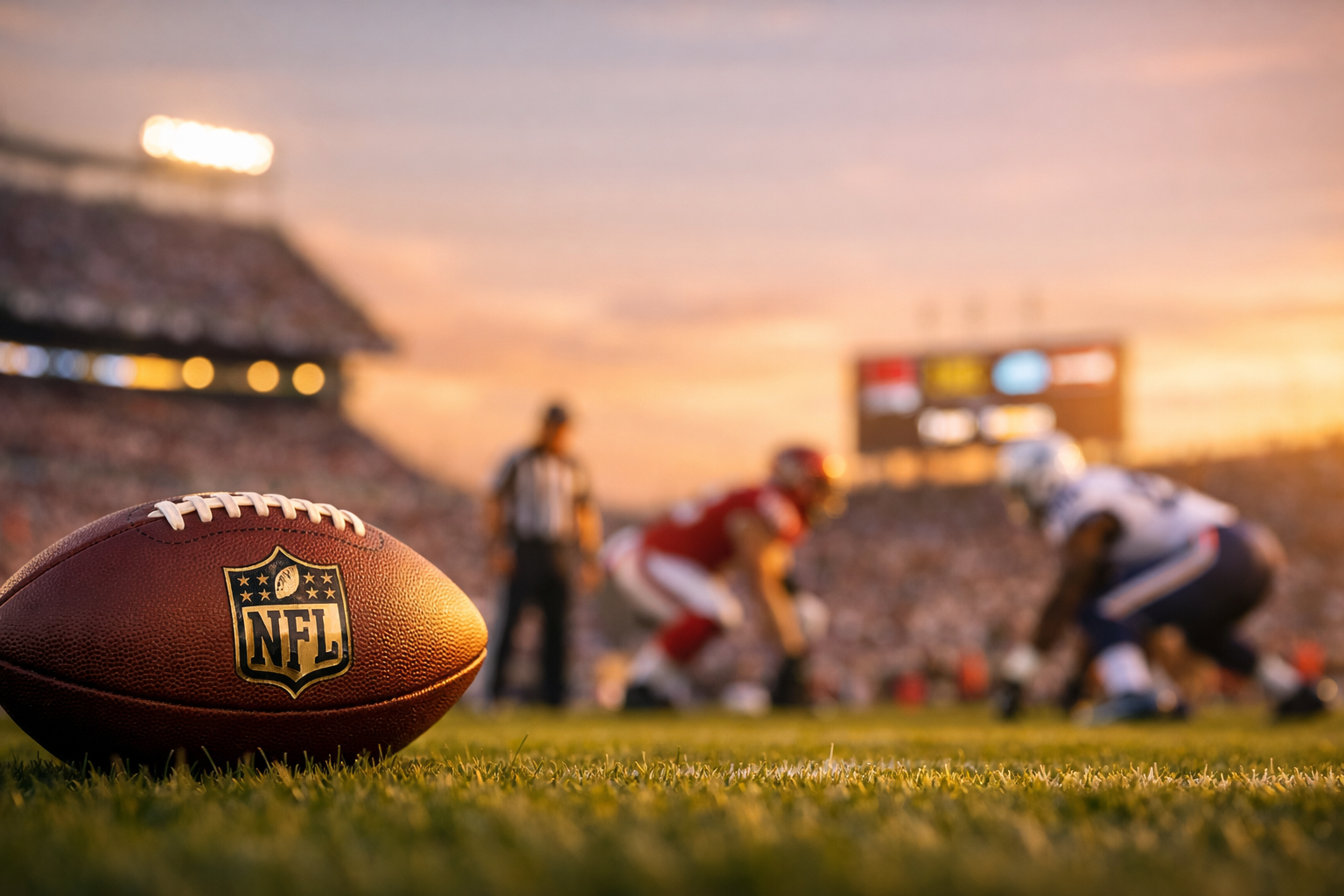
Saturday NFL games always feel different. They hit later in the season, right when things actually matter, and they completely change the rhythm of a normal football week. By the time Saturday rolls around in December, teams are dealing with injuries stacking up, playoff pressure, weird travel spots, and weather that can flip a game on its head. If you are watching casually, Saturday games are fun. If you are trying to prep like a pro, they are one of the most profitable and misunderstood spots on the entire NFL calendar.
As someone who builds AI-based models and studies betting markets every week, Saturday slates are where preparation really shows. You have less time to react, more uncertainty, and sharper late-week movement. That combination rewards people who have a system and punishes people who wing it. This guide is about turning that chaos into something manageable. We are going to break down how Saturday NFL games work, why they exist, how the schedule shifts, how to watch them without scrambling, and most importantly how to prepare for them using a clear, repeatable process.
This is not about guessing or chasing narratives. It is about understanding late-season football, knowing where the edges usually show up, and using tools like ATSwins to stay organized when information starts flying late on Friday and early Saturday morning.
Table Of Contents
- Saturday NFL schedule essentials
- AI-driven prep for Saturday matchups
- Matchup and trend checklist
- How to watch and plan
- Applying an AI-first lens to Saturday slates with ATSwins
- Building your own Saturday routine
- Conclusion
- Frequently Asked Questions (FAQs)
Saturday NFL schedule essentials
Saturday NFL games are not random. The league does not just throw games onto Saturdays for fun. There is a very specific reason they cluster late in the season, and understanding that helps explain why these slates feel different from normal Sundays.
The NFL avoids Saturdays for most of the year because of college football. Once the college regular season ends and bowl season starts, those restrictions loosen. That is when the NFL steps in and starts using Saturdays to spread out high-impact games. By Weeks 15 through 18, the playoff picture is taking shape, and the league wants standalone windows where the focus is entirely on one or two games at a time.
These Saturday games are usually chosen because they matter. Division races, wild card fights, seeding implications, and win-and-in scenarios tend to get pushed into these slots. That means motivation is high, but it also means pressure is high. Pressure changes how coaches call games, how quarterbacks play, and how conservative teams become late.
Flex scheduling is a huge part of this. Games that were originally scheduled for Sunday can be moved to Saturday late in the year. The league gives teams notice, but from a betting and prep perspective, it means your normal weekly rhythm gets compressed. Instead of having until Sunday morning to react, you often have to be fully locked in by Friday afternoon.
Holiday weekends add another wrinkle. Saturdays around Christmas and New Year’s are often loaded with games, sometimes even triple-headers. When Christmas lands on a Sunday, the league almost always shifts marquee games to Saturday. That creates unique situations where teams are playing on unusual rest cycles and fans are juggling family plans with football.
Kickoff windows on Saturdays are usually familiar but still important to track. Afternoon games tend to land around early and late afternoon, with a night game in primetime. Unlike Sundays, there are fewer overlapping games, which means every matchup draws more attention from bettors and the market. Lines tend to sharpen faster because everyone is watching the same thing at the same time.
Saturday slates also overlap with college bowls. That matters more than people think. Attention is split, betting volume can be uneven early in the week, and then liquidity ramps up late. That late ramp is where numbers can move quickly once injury reports are finalized.
The key takeaway here is that Saturday NFL games are intentional, high-stakes, late-season football. Treating them like just another Sunday slate is one of the easiest ways to get caught flat-footed.
AI-driven prep for Saturday matchups
Saturday prep starts earlier than most people realize. If you wait until Saturday morning, you are already behind. My process starts early in the week, but it tightens significantly by Thursday and Friday.
The first step is building a clean baseline. That means pulling season-long efficiency metrics and then layering in recent form. Late-season football is tricky because you cannot ignore the full season, but you also cannot pretend September performance matters the same way it did before injuries piled up. I like to look at season-long numbers alongside last four-week splits, with guardrails to avoid overreacting to small samples.
Injuries matter more on Saturdays because there is less recovery time. Teams coming off Monday night games who then play Saturday are at a real disadvantage, especially in the trenches. Offensive linemen, defensive linemen, and linebackers feel short weeks the most. If you see a team coming off Monday with multiple linemen listed as limited or questionable on Friday, that is not noise. That is a red flag.
Practice participation throughout the week tells a story. A player who is limited early and then goes full on Friday is very different from a player who never practices and gets labeled questionable. Late-season designations are often strategic, so you have to read between the lines. That is where tracking patterns over time pays off.
Weather is another area where Saturday games create opportunity. Cold alone does not kill offenses, but wind absolutely does. Wind impacts passing depth, kicking range, and play-calling confidence. Because Saturday games lock earlier, some weather edges are not fully priced until late Friday. If you are watching forecasts and updating expectations, you can get ahead of that.
Surface matters too. Turf versus grass, especially in cold weather, changes how receivers cut and how pass rushers bend the edge. These are small details, but Saturday slates are often decided by small details.
Market timing is critical. Early in the week, limits are lower and lines are softer. By Thursday night and Friday afternoon, information starts getting priced in aggressively. For Saturday games, Friday afternoon is often the most important window of the entire week. That is when final practice reports drop, beat reporters share real information, and sharp money makes its move.
On ATSwins, I use this timing to my advantage. I can tag games with short-week penalties, weather flags, and injury clusters. That allows me to see at a glance which Saturday games are genuinely volatile and which ones are relatively stable.
The goal of AI-driven prep is not to predict the future perfectly. It is to remove as much uncertainty as possible before kickoff. Saturday games reward people who narrow outcomes and punish people who guess.
Matchup and trend checklist
Once the baseline is set, matchup analysis takes over. This is where Saturday games really separate themselves from early-season slates.
Everything starts in the trenches. Late in the year, if you cannot protect the quarterback, nothing else matters. Pressure rate mismatches are amplified in cold weather and on short rest. If one team can generate pressure with four and the other team has offensive line injuries, expect shorter routes, fewer explosive plays, and stalled drives.
Coverage tendencies matter too. Some defenses lean heavily on man coverage, others live in zone. Knowing what a quarterback does well against each is crucial. Late in the season, teams also show more of their true identity. Disguises drop, tendencies harden, and coaches lean into what they trust.
Red-zone efficiency becomes massive. Cold weather compresses the field, and teams that struggle inside the twenty are at a disadvantage. Quarterback mobility matters here. A quarterback with a lower-body injury may still play, but his red-zone value drops dramatically if he cannot extend plays or threaten defenses with his legs.
Third-down performance is another area where Saturday games swing. Not all third downs are equal. Third-and-short success often reflects physical dominance, while third-and-long success reflects quarterback processing and protection. Understanding which type of third down a team is likely to face tells you a lot about how sustainable their offense is.
Special teams are often ignored, but they matter more in December than any other time of year. Wind affects punts and field goals. Cold affects kicking range. A reliable punter who can flip field position in bad weather is a real edge. Missed kicks and short fields decide games late in the season.
Quarterback health cannot be overstated. Even minor injuries change play-calling. Coaches protect quarterbacks in ways that reduce upside. That shows up in pace, depth of target, and red-zone decisions. Backup quarterbacks introduce variance, which can be good or bad depending on the market’s expectations.
Travel and time zones also show up more on Saturdays. West-to-east travel on a short week is brutal. Body clocks matter, especially for early kickoff windows. Fatigue shows up in the fourth quarter, not the first.
The biggest mistake bettors make is overvaluing motivation. Must-win spots sound great, but talent and matchup still win games. Motivation changes aggression, not ability. Aggression increases variance, which means outcomes widen. That can help underdogs and totals, but it does not magically make bad teams good.
Using ATSwins, I tag all of these factors so I can see patterns over time. Late-season Saturdays consistently reward teams with trench advantages, healthy quarterbacks, and coaching staffs that stay disciplined under pressure.
How to watch and plan
Watching Saturday NFL games should be easy, but too many people scramble at the last minute. Planning ahead removes stress and helps you focus on the game itself.
Because Saturday slates are often flexed, it is important to confirm kickoff times late in the week. Times can shift, and windows can change. Setting calendar reminders for likely windows helps prevent surprises.
Streaming access matters too. Some Saturday games are exclusive to specific networks, while others simulcast locally. Knowing where to watch ahead of time prevents last-minute scrambling, especially if you are traveling or relying on mobile viewing.
Alerts are your friend. Friday practice reports are the most important information drop of the week for Saturday games. Turn on notifications for team injury updates and beat reporters. These updates often come out in waves, and being early matters.
Inactives are released ninety minutes before kickoff. For props and late bets, that is the moment everything locks. Have your plan ready before then so you are not making rushed decisions.
I recommend building a simple Saturday slate dashboard. Nothing fancy. Just one page with each game, the line, weather notes, injury flags, and your lean. Overloading yourself with information leads to paralysis. Clarity beats complexity.
ATSwins makes this easier by centralizing picks, tracking confidence, and logging results. When everything is in one place, you can focus on decision-making instead of note-taking.
Saturday mornings should be calm. If you did your work during the week, Saturday is just about confirming assumptions and executing.
Applying an AI-first lens to Saturday slates with ATSwins
An AI-first approach does not replace football knowledge. It organizes it.
For Saturday games, I build models that account for efficiency, injuries, environment, and style. The key is weighting things differently in December than in September. Pressure, wind, and red-zone execution matter more late. Explosive plays matter slightly less unless conditions are perfect.
Injury probabilities are layered in rather than treated as binary. A player can be active but limited. That distinction is huge. Offensive line continuity, defensive back depth, and special teams availability often matter more than a single skill player.
Environment adjustments translate wind and cold into expected changes in passing depth and kicking efficiency. This helps project totals and prop distributions more accurately.
Opponent style mapping helps predict how teams will actually attack each other, not how they attack in a vacuum. Some coordinators change tendencies based on matchup, and late-season film makes those changes easier to spot.
Simulation ties everything together. Running thousands of simulations per game allows you to see distribution tails, not just averages. That matters for props, alternate lines, and volatility management.
ATSwins adds a market overlay, comparing projections to current prices and tracking how lines move. Closing line value is one of the best indicators that your process is sound, even when short-term results swing.
Over time, ATSwins profit tracking shows which tags perform best on Saturdays. Cold weather unders, pressure-based sack props, and short-week fade spots consistently show up as profitable when handled correctly.
Building your own Saturday routine
Consistency is the real edge.
A strong Saturday routine starts Monday with baseline analysis and ends Saturday morning with confirmation. Each day has a purpose. You are not scrambling because you already know what you are looking for.
Keep your file structure simple. Save weekly data, injury notes, simulations, picks, and reviews. Post-mortems matter. Reviewing why something lost is how you improve.
Develop small habits that pay off. Always check wind. Always check offensive line health. Always confirm quarterback mobility. These habits compound over time.
Do not chase action just because it is Saturday. Fewer games does not mean you need more bets. Quality over quantity wins long term.
ATSwins helps reinforce discipline by tracking performance honestly. When you see what actually works, it becomes easier to stick to your plan.
Conclusion
Saturday NFL games are where preparation pays off. They are late-season, high-stakes, information-dense football. Injuries matter more. Weather matters more. Trenches matter more. The margin for error is smaller, but the edges are clearer if you know where to look.
By planning early, confirming late, and using structured tools like ATSwins, you can turn Saturday chaos into a repeatable process. Focus on health, pressure, environment, and execution. Let the market chase narratives while you stick to data and discipline.
Saturday football is not just another day. It is an opportunity.
Frequently Asked Questions (FAQs)
When do Saturday NFL games usually happen?
Saturday NFL games typically appear late in the season, most often between Weeks 15 and 18. They are scheduled after most college football regular-season games are finished, allowing the league to use Saturday windows for high-impact matchups with playoff implications.
How should I adjust my prep for Saturday NFL games?
Saturday prep should focus on short-week rest, injuries, and weather. Final practice reports on Friday are critical, and inactives ninety minutes before kickoff often decide prop markets. Late-season football rewards attention to trenches, quarterback mobility, and red-zone efficiency.
Where can I watch Saturday NFL games?
Saturday NFL games are broadcast across several networks depending on the week. Availability can change due to flex scheduling, so confirming kickoff times and broadcast access late in the week is important.
How can ATSwins help with Saturday NFL games?
ATSwins is an AI-powered sports prediction platform offering data-driven picks, player props, betting splits, and profit tracking across NFL, NBA, MLB, NHL, and NCAA. For Saturday NFL games, it helps organize injury data, weather context, matchup edges, and performance tracking so decisions are faster and more informed.
Do Saturday NFL games get flexed often?
Yes. Saturday games are frequently flexed late in the season to highlight playoff-relevant matchups. Checking updates through the week and confirming times on Friday helps avoid surprises and ensures accurate prep.
Related Posts
AI For Sports Prediction - Bet Smarter and Win More
AI Football Betting Tools - How They Make Winning Easier
Bet Like a Pro in 2025 with Sports AI Prediction Tools
Sources
The Game Changer: How AI Is Transforming The World Of Sports Gambling
AI and the Bookie: How Artificial Intelligence is Helping Transform Sports Betting
How to Use AI for Sports Betting
Keywords:
MLB AI predictions atswins
ai mlb predictions atswins
NBA AI predictions atswins
basketball ai prediction atswins
NFL ai prediction atswins