

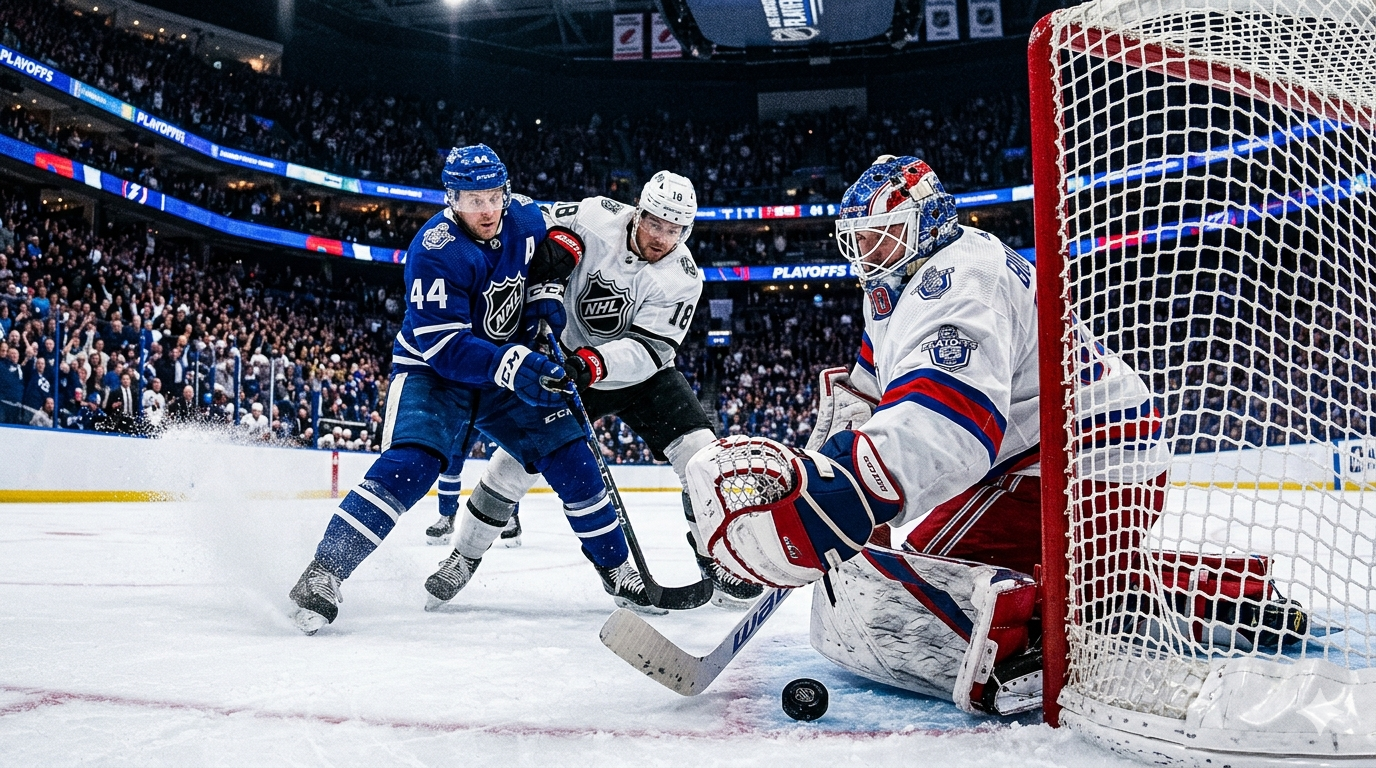
The NHL playoffs are one of the hardest environments to handicap if you rely too heavily on regular season numbers. Everything changes once the postseason starts. Coaches shorten benches, defensive pairings tighten up, neutral-zone play becomes more conservative, and games can swing from low-event chess matches into chaotic overtime battles in seconds. That shift creates opportunity for bettors who understand how playoff hockey changes scoring environments and how sportsbooks adjust totals markets. A lot of casual bettors still chase recent scores instead of understanding why the pace changed in the first place, which is where real edges start showing up.
As someone who builds predictive sports models and studies betting markets daily, I’ve noticed that playoff totals are often mispriced because sportsbooks still have to balance public perception with real matchup data. The public sees a 6-5 game and assumes the next matchup is another Over. Meanwhile, experienced bettors are looking at rush chance suppression, expected power-play minutes, goalie rebound control, and even coach empty-net tendencies. This is where concepts like the nhl playoff under betting systems, nhl playoff underdog value strategy, nhl playoff lower seed betting trends, and even the broader mindset behind a expected value betting strategy all overlap. The goal is not simply picking Overs or Unders. The goal is identifying where market perception drifts away from actual probability.
Table Of Contents
- NHL Playoff Over/Under Angles the Markets Miss
- Playoff Totals Landscape
- Pace, Matchups and Score Effects
- Special Teams, Officiating and Empty-Net Dynamics
- Goaltending, Adjustments and Variance
- Modeling and Execution
- Live Betting Angles
- Alternative Markets to Consider
- Common Mistakes That Cost Bettors Money
- Conclusion
- Frequently Asked Questions
NHL Playoff Over/Under Angles the Markets Miss
Playoff hockey is completely different from the regular season when it comes to totals betting. If you handicap playoff totals the same way you handicap games in January, you are going to run into trouble quickly. Pace changes, officiating changes, matchups tighten, and overtime dynamics become much more important. Sportsbooks know this, which is why totals are usually shaded lower once the playoffs begin. The problem is that the market does not always fully account for how specific matchups change the environment from series to series.
One of the biggest differences is overtime. In the regular season, overtime becomes 3-on-3 hockey followed by a shootout. In the playoffs, overtime is full 5-on-5 sudden death hockey until somebody scores. That creates a much different distribution for totals bettors. The scoring rate per minute is lower in playoff overtime compared to regular season 3-on-3 hockey, but the amount of time played can stretch far longer. A 2-2 game after regulation can suddenly become a 4-2 final after multiple overtime periods and an empty-net goal. Bettors who ignore overtime probability are missing one of the biggest variables in playoff totals.
Pace compression is another major factor. Coaches become far more conservative with defensive pinches, neutral-zone risk, and line changes. Teams protect the middle of the ice better and limit dangerous transition opportunities. Rush chances decrease while cycle play increases. That matters because rush opportunities typically produce higher-quality scoring chances. When both teams are forcing opponents into perimeter cycle offense, expected goals usually drop.
Another huge playoff adjustment comes from rest and preparation. During the regular season, teams travel constantly and often play back-to-backs. In the playoffs, teams have extra time to prepare, pre-scout, and game plan. Defensive structures become sharper and players are less fatigued. That usually benefits goaltenders and defensive systems more than offensive creativity.
Empty-net situations become more important too. Some coaches pull goalies extremely early when trailing. Others are very conservative and wait until the final minute. Those coaching decisions can add major variance to totals markets. A single aggressive coach can completely change the value of a 5.5 total late in a game.
This is where smart bettors start applying concepts from nhl playoff under betting systems and the broader logic behind a expected value betting strategy. The edge comes from pricing the probability better than the market, not just predicting which team will score more goals.
Playoff Totals Landscape
Playoff totals usually trend lower than regular season totals because games become more structured. Teams sacrifice offensive aggression in exchange for limiting mistakes. Defensemen pinch less often, forwards track back harder, and coaches rely heavily on matchup lines.
Markets understand this, which is why totals often open at 5.5 or even 5.0 during playoff games between defensive teams. The challenge for bettors is determining whether sportsbooks shaded the number correctly or overreacted to public assumptions.
A lot of bettors blindly assume playoff hockey automatically means Under. That approach is too simplistic. Certain playoff series actually create strong Over environments because of aggressive forechecking, turnover pressure, weak penalty killing, or inconsistent goaltending. The key is understanding the style of each matchup instead of treating every playoff game identically.
One thing I consistently track is how series evolve over time. Game 1 can look wildly different from Game 4. Coaches adjust quickly. If a series starts producing too many rush opportunities, defensive structures usually tighten in the following game. This is why blindly chasing recent results often fails.
This is also where nhl playoff lower seed betting trends become relevant. Lower-seeded teams frequently rely on defensive structure and counterattack hockey because they lack the offensive depth of higher seeds. That can create lower-event games, especially on the road where the higher seed controls line matching with last change.
Pace, Matchups and Score Effects
Pace is one of the most important components of playoff totals betting. The first thing I examine is 5-on-5 shot attempt rate combined with expected goals rate. Those numbers help identify whether teams are generating dangerous offense or simply accumulating harmless perimeter shots.
Rush offense matters heavily. Teams that create offense off the rush tend to generate higher-quality scoring chances than teams that rely solely on cycle pressure. If both teams suppress rush opportunities effectively, totals become much harder to push Over.
Forechecking systems also shape playoff totals. Aggressive forechecks create turnovers and chaos. Passive forechecks reduce risk and slow the pace dramatically. If both coaches are prioritizing defensive positioning over offensive pressure, games often turn into slower tactical battles.
Home ice matters too because of last change. Coaches can dictate matchups and deploy shutdown lines against elite scorers. If the home team consistently neutralizes the opponent’s top line, scoring quality drops significantly.
Score effects also behave differently during the playoffs. In the regular season, trailing teams often open up aggressively and create track meets. In playoff hockey, trailing teams still push offensively but usually maintain more defensive discipline. That reduces the wild back-and-forth scoring sequences bettors see during the regular season.
The smartest bettors combine these matchup reads with structured nhl playoff underdog value strategy concepts. Underdogs that successfully slow pace and reduce transition chances often outperform market expectations because they drag games into lower-scoring environments where variance increases.
Special Teams, Officiating and Empty-Net Dynamics
Special teams become extremely important in playoff totals betting, but not always in the way casual bettors expect. One of the biggest mistakes bettors make is relying too heavily on raw power-play percentage. Power-play conversion rates fluctuate heavily and can be misleading in small playoff samples.
Instead, I focus on power-play expected goals rates, controlled zone entries, seam-pass creation, and rebound generation. Those numbers are far more predictive than simple conversion percentages.
Penalty rates also change during the playoffs. Officials generally allow more physical play and call fewer penalties overall. That reduces total power-play opportunities and increases the importance of 5-on-5 hockey.
Still, officiating crews matter somewhat. Certain referees consistently call more stick infractions or obstruction penalties. I never overreact to officiating assignments, but they absolutely belong in the model as a small adjustment.
Empty-net situations create another layer of variance. Coaches have wildly different tendencies when trailing late. Some coaches pull goalies extremely early, while others wait for perfect offensive-zone possession before committing. Aggressive empty-net strategies can add major scoring volatility late in games.
This matters heavily for bettors using nhl playoff under betting systems because many playoff Unders lose during chaotic final minutes. Understanding coach tendencies helps avoid getting trapped by late-game variance.
Goaltending, Adjustments and Variance
Goaltending is always important in hockey betting, but playoff hockey amplifies its importance. Defensive structures become tighter, meaning elite goalies often face fewer dangerous chances overall. That allows strong goaltenders to dominate series.
One thing I track closely is rebound control. Goalies who suppress second-chance opportunities dramatically improve Under value because rebounds create many of the highest-danger scoring situations in hockey.
I also pay close attention to fatigue, injuries, and coaching leash tendencies. Coaches become far quicker to pull struggling goalies during the playoffs. Backup appearances introduce massive variance into totals markets.
Series adjustments matter too. Coaches constantly tweak neutral-zone structure, forecheck pressure, and defensive-zone coverage. Rush opportunities often decline after Game 1 because coaches identify transition weaknesses and adjust accordingly.
This is another place where lessons from a expected value betting strategy translate well into NHL betting. The idea is not predicting exact outcomes. The idea is identifying where probability and market pricing diverge enough to justify a wager.
Modeling and Execution
The best playoff totals models are actually fairly simple. Overcomplicated models often become unstable during the playoffs because sample sizes shrink dramatically.
My approach starts with core 5-on-5 expected goals rates adjusted for playoff pace. Then I layer in special-teams projections, officiating tendencies, goaltending strength, travel spots, and empty-net tendencies.
The most important thing is understanding how each component interacts. A defensive series with low penalty expectations and conservative goalie pulls creates a completely different scoring distribution than a series featuring aggressive forechecks and high-risk pull strategies.
I also simulate overtime separately because playoff overtime behaves differently than regulation hockey. Since playoff overtime only ends with one goal, the scoring distribution changes significantly.
Timing bets matters too. Early markets are often best for exploiting structural matchup edges before sportsbooks fully adjust. Later markets become more valuable for reacting to goalie confirmations, injuries, and lineup changes.
Bettors using nhl playoff lower seed betting trends effectively often find value early because sportsbooks initially price higher-seeded teams aggressively before matchup realities settle in.
Live Betting Angles
Live betting becomes extremely powerful during playoff hockey because game scripts reveal themselves quickly. If the first period confirms a low-rush defensive structure with few penalties, live totals sometimes remain inflated after a fluky goal.
I also monitor power-play entry quality during games. If both teams are consistently entering the zone cleanly and generating dangerous setups, the original pregame Under assumption may no longer hold.
Coach pull tendencies matter even more live. Aggressive coaches can turn dead Unders into chaos during the final minutes. Understanding those tendencies gives live bettors a significant advantage.
Alternative Markets to Consider
Sometimes full-game totals are not the best way to attack playoff hockey. Team totals can offer cleaner edges when one team has a significant goaltending or matchup advantage.
First-period totals are another strong market because many playoff games start cautiously before opening up later. Game 1s especially tend to begin conservatively as teams feel out the matchup.
Shots on goal props can also create value. Some playoff games generate high shot volume but low scoring quality because teams rely heavily on perimeter cycle offense.
These derivative markets often fit well alongside a broader nhl playoff underdog value strategy because lower-event underdogs frequently suppress quality chances even while allowing moderate shot volume.
Common Mistakes That Cost Bettors Money
One of the biggest mistakes bettors make is overreacting to small samples. A single high-scoring playoff game does not automatically mean the series became an Over series. Coaches adjust constantly.
Another huge mistake is ignoring empty-net dynamics. Many playoff totals are decided during the final two minutes because of aggressive goalie pulls.
Bettors also misuse power-play percentages constantly. Raw conversion rates are noisy and unreliable. Expected-goals-based metrics provide much more stable information.
Another major issue is double-counting goaltending adjustments. If team defensive metrics already include elite goalie play, adding another large goalie adjustment can distort projections badly.
Finally, many bettors fail to account properly for overtime. Playoff overtime adds exactly one goal to the final total, not an entire additional regulation scoring environment.
Conclusion
Playoff hockey creates one of the most unique betting environments in sports. Pace slows, defensive structures tighten, officiating changes, and overtime dramatically alters scoring distributions. Bettors who understand those dynamics can find strong edges in totals markets that casual bettors completely miss.
The key is staying disciplined and focusing on probability instead of narrative. Strong playoff betting comes from understanding pace, rush suppression, special teams, goaltending, empty-net strategy, and coaching adjustments. That is the foundation behind successful nhl playoff under betting systems, profitable nhl playoff underdog value strategy concepts, and even the same mathematical thinking behind a expected value betting strategy.
ATSwins helps simplify this process by combining projections, betting splits, player props, and historical tracking tools into one platform. Whether you are comparing totals projections, tracking playoff ROI, or identifying line movement patterns, having centralized data makes playoff betting far more efficient.
Frequently Asked Questions
What are NHL playoff over under betting angles?
NHL playoff over under betting angles are strategies bettors use to analyze totals during playoff hockey. These angles focus on playoff-specific factors like slower pace, fewer penalties, tighter defensive structure, overtime probability, goalie form, and empty-net tendencies.
Why are NHL playoff games usually lower scoring?
Playoff games tend to become more defensive because coaches shorten benches, prioritize structure, and reduce risky offensive plays. Teams also have more preparation time, which improves defensive execution and suppresses scoring chances.
What is the best stat for NHL playoff totals betting?
There is no single perfect stat, but 5-on-5 expected goals per 60 minutes is one of the strongest starting points. Combining that with rush chance rate, special-teams projections, and goalie rebound control gives a much clearer picture of scoring environments.
How important is overtime in NHL playoff betting?
Overtime is extremely important because playoff overtime is full 5-on-5 sudden death hockey. A tied game after regulation automatically adds another scoring opportunity that can completely flip totals outcomes.
What are NHL playoff under betting systems?
Nhl playoff under betting systems are betting approaches focused on identifying lower-scoring playoff environments. These systems often rely on reduced pace, fewer penalties, strong goaltending, and conservative coaching tendencies.
How does empty-net strategy affect playoff totals?
Coach pull tendencies can dramatically impact totals. Aggressive goalie pulls create more late-game scoring opportunities, including empty-net goals and transition chances the other way.
How can lower seeds create betting value?
Many lower-seeded playoff teams slow games down and rely on disciplined defensive structure. Those styles often increase variance and help underdogs outperform market expectations, which is why tracking nhl playoff lower seed betting trends can uncover value.
What is an NHL playoff underdog value strategy?
An nhl playoff underdog value strategy focuses on identifying playoff underdogs whose defensive style, goaltending, or matchup structure gives them a better chance to compete than market odds imply.
How should bettors manage bankroll during NHL playoffs?
Playoff hockey contains higher variance because of overtime and empty-net scoring swings. Bettors should scale bet sizing carefully, avoid chasing losses, and focus on long-term edge rather than short-term outcomes.