

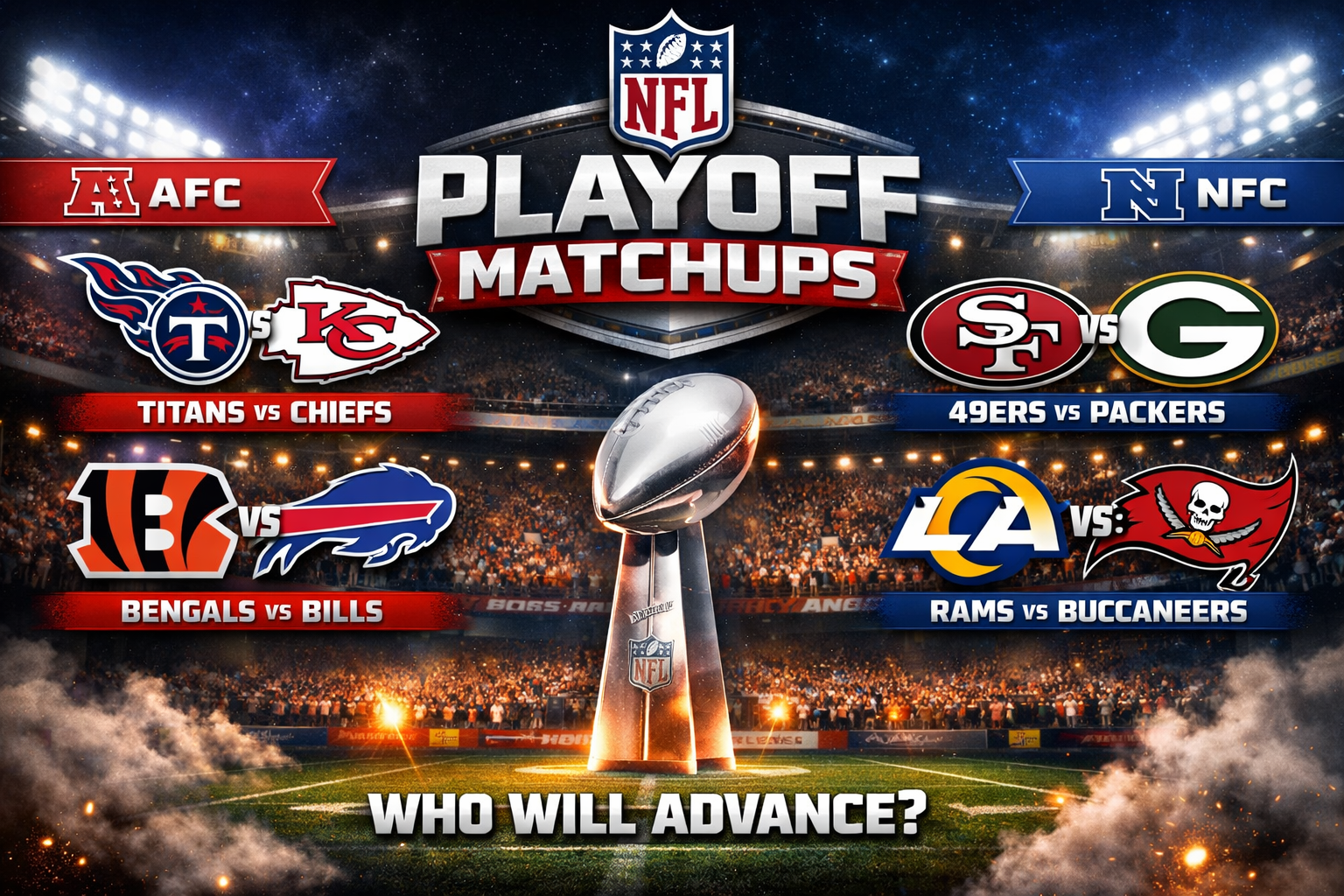
January football is where tiny edges suddenly matter a lot more. Games tighten up, mistakes get magnified, and one busted protection or missed kick can flip an entire season. That is why playoff betting feels so different from the regular season. You are not just picking teams anymore. You are evaluating matchups, coaching decisions, weather, travel, pressure, and how teams actually respond when everything is on the line.
This breakdown looks at NFL playoff matchups through a practical analyst lens. The goal is not to sound smart. The goal is to be useful. I pair film tendencies with model driven insights, focusing on what actually moves win probability in January. That includes pressure rates, early down efficiency, red zone behavior, fourth down decisions, rest versus rust, and how game scripts usually unfold once playoff intensity kicks in.
If you want to turn this into smarter picks, better live reads, or just a sharper understanding of what you are watching, this is built to help.
Table Of Contents
- Bracket, seeding and schedule snapshot
- Matchup lenses and predictive angles
- Data-driven trends to watch
- Scenario planning and game scripts
- Building your ATSwins playoff workbook
- Translating angles into ATS, totals, and props
- Monitoring kickoff windows, rest edges, and path changes
- How ATSwins models frame playoff matchups
- Practical walk-through: your weekly playoff workflow
- Common pitfalls to avoid in playoff handicapping
- Final reminders
- Conclusion
Frequently Asked Questions
Bracket, seeding and schedule snapshot
Every playoff handicap starts with understanding the path. Seven teams qualify in each conference. Division winners take the top four seeds, followed by three wild cards. Only the number one seed earns a bye, and that single week of rest ends up shaping the entire conference more than most people realize.
Home field matters more in January than at any other time of year. Crowd noise gets louder, travel fatigue stacks faster, and cold weather teams usually gain a real comfort edge. After the Wild Card round, the league reseeds. The highest remaining seed always plays the lowest remaining seed. That means potential paths shift immediately after every upset, and futures value can swing overnight.
Rest versus rust is always part of the conversation. The number one seed gets time to heal, but timing can drift if a team struggles to re-sync early. That is why it helps to look at how teams historically perform on their first two drives after a bye. Some coaches script beautifully. Others come out flat.
Overtime rules also change how bettors should think late. Both teams get a possession even if the first offense scores a touchdown. That adds variance and slightly increases scoring expectation late. Sides and totals that feel safe in regulation can flip quickly in overtime, especially if one team has a strong two-minute offense.
Kickoff scheduling matters more than people think. Monday Wild Card winners often end up with short rest the following week, and that fatigue is rarely priced fully into early lines. Tracking actual kickoff times, not just dates, helps you spot rest edges that do not show up in headlines.
Matchup lenses and predictive angles
Quarterback performance under pressure is the heartbeat of playoff handicapping. Pressure rates rise in January, windows shrink, and mistakes cost more. The key is not how often a quarterback is pressured, but how they perform when it happens. Some quarterbacks stay efficient and avoid sacks. Others fall apart once the pocket collapses.
The trenches decide whether pressure arrives naturally or requires blitzing. Offensive lines that win consistently allow deeper route development and cleaner play action. Defensive fronts that stop the run on early downs force obvious passing situations and make life easier on coverage units.
Explosive plays are harder to come by in the playoffs, but they still matter. Teams that can generate chunk gains without relying on broken coverage have a major edge. If an offense relies heavily on deep shots and faces wind or a disciplined two-high defense, scoring expectations should drop.
Red zone efficiency often decides spreads. Yardage between the twenties can look great on paper, but settling for field goals kills cover chances. Teams that convert red zone trips into touchdowns consistently are far more reliable favorites. Defensively, units that stiffen inside the twenty create sneaky value for unders and opponent field goal props.
Special teams quietly shape field position. In cold weather games, a reliable kicker and strong punt coverage can tilt expected points by multiple points across a game. Long fields compress play calling and force offenses into longer drives, which increases the chance of mistakes.
Coaching decisions on fourth down also matter more in January. Aggressive coaches increase variance, which helps underdogs and overs. Conservative coaches shrink games and favor unders and live dog positions. Knowing a coach’s tendencies ahead of time helps you react faster in live betting.
Data-driven trends to watch
Late season form tells you more than full season averages. A rolling four to six game window captures who a team actually is right now. Injuries, scheme tweaks, and opponent quality all show up more clearly in that range.
Early down success rate is one of the cleanest indicators of control. Teams that stay ahead of the chains dictate tempo, protect their defense, and reduce randomness. When both teams struggle on early downs, games tend to stall and totals suffer.
Coverage tendencies matter for props. Some receivers thrive against man coverage and disappear against zone. Others live in soft spots and pile up volume against zone heavy defenses. Aligning receiver props with coverage style instead of season averages is one of the simplest edges available.
Blitz rates versus quarterback splits also deserve attention. A blitz heavy defense facing a quarterback who punishes blitz looks scary on paper, but it can flip quickly if protection holds. On the other side, a defense that creates pressure without blitzing often suppresses yardage and increases sack potential.
Injuries late in the season are not always obvious. A starting corner playing limited snaps or a lineman rotating more than usual can quietly shift matchups. Tracking snap shares matters just as much as official injury designations.
Scenario planning and game scripts
Every playoff game usually follows one of two paths. Either the favorite jumps ahead early and starts controlling tempo, or the underdog lands the first punch and forces adjustments.
When a favorite leads early, run rates increase and variance drops. That boosts rushing volume but often lowers efficiency. Opposing quarterbacks are forced into higher pass rates, which increases pressure exposure and sack chances.
When an underdog leads early, defenses tend to play more conservatively and force long drives. Short passing volume rises, deep shots decline, and totals often drift downward unless explosives sneak through.
Two-minute efficiency becomes critical late. Quarterbacks who manage the clock well and consistently create points before halftime or regulation end add hidden value. With overtime rules guaranteeing possessions, teams with strong late game execution gain extra edge.
Field position also matters late. A great punt pinning an opponent deep can swing expected points more than a 20-yard completion. These hidden yards accumulate quietly and often decide covers.
Live betting works best when you set rules before kickoff. Watch pressure rates, early down success, and play calling intent rather than reacting to one big play. Noise happens. Signal repeats.
Building your ATSwins playoff workbook
A simple structured worksheet keeps emotion out of playoff betting. Start with power ratings and adjust for rest, travel, and weather. Track injuries and expected snap shares instead of relying on questionable tags.
Log recent form using rolling efficiency metrics. Add matchup notes that explain how each offense scores and how each defense disrupts. Include special teams notes and coaching tendencies.
Scenario planning deserves its own space. Write down what changes if the favorite leads early and what changes if they trail. This makes live betting faster and more disciplined.
ATSwins makes this process smoother by centralizing matchup data, model projections, betting splits, and profit tracking. Instead of jumping between tabs, you can align model signals with your own notes and track which angles actually perform.
Translating angles into ATS, totals, and props
Against the spread, favorites with strong early down efficiency and aggressive coaching tend to cover more reliably. Underdogs gain value when they protect the quarterback, win special teams, and face conservative opponents.
Totals rise when both teams throw efficiently in neutral scripts and punish blitzing defenses. Totals fall when wind, red zone inefficiency, or field position issues pile up.
Player props are where matchup detail shines. Receivers facing favorable coverage, running backs aligned with positive game scripts, and quarterbacks facing pressure mismatches all offer opportunities. The key is avoiding correlated bets unless the edge is clear.
Monitoring kickoff windows, rest edges, and path changes
Kickoff timing affects preparation and recovery. Short weeks matter more late in the season. Weather often shifts closer to kickoff, especially wind. Checking conditions again ninety minutes before the game can save bad positions.
Reseeding changes futures value quickly. When a top seed’s path softens due to an upset, implied championship odds adjust. Staying flexible helps avoid overcommitting too early.
ATSwins recalculates matchup probabilities as brackets shift, which helps align futures positions with evolving paths rather than preseason assumptions.
How ATSwins models frame playoff matchups
Playoff models weight recent performance more heavily. Early down success, pressure efficiency, explosive differential, red zone execution, special teams, and coaching tendencies all matter more than raw yardage.
Baseline ratings adjust for injuries, weather, rest, and matchup fit. Those numbers are then compared to the market to identify edges and trigger points.
Profit tracking matters. If an angle stops working, it gets downgraded. The goal is not to be right once, but to be right consistently.
Practical walk-through: your weekly playoff workflow
Confirm the bracket and kickoff times first. Update injuries and snap expectations throughout the week. Refresh recent efficiency metrics and matchup notes.
Price the game honestly and compare it to the market. Build a short prop list aligned with coverage and pressure matchups. Write down live triggers before kickoff.
Execute, track results, and log reasoning. That feedback loop is what sharpens future decisions.
Common pitfalls to avoid in playoff handicapping
Do not overweight one prior meeting. Schemes change. Personnel shifts. Weather differs. Special teams matter more than you think.
Cold alone is rarely the issue. Wind is. Overreacting to public narratives leads to bad numbers. Discipline wins in January.
Final reminders
Recheck official brackets before locking anything. Keep your process flexible. Small edges stack. Emotion kills value.
If your handicap captures pressure, early down control, red zone execution, and coaching decisions, you are already ahead of most bettors.
Conclusion
NFL playoff matchups are about context, not hype. Seeding, styles, pressure, and decisions on fourth down shape outcomes more than raw talent alone. The sharper your process, the calmer your betting becomes.
ATSwins helps connect model driven insights with real game context. With data driven picks, player props, betting splits, and profit tracking across major sports, it gives bettors structure instead of noise. In the playoffs, that structure matters more than ever.
Frequently Asked Questions
What matters most when picking NFL playoff matchups?
Quarterback play under pressure, early down efficiency, and red zone execution matter most. Add coaching decisions on fourth down and special teams reliability, and you cover the majority of playoff outcomes.
How do injuries and weather change NFL playoff matchups?
A single offensive line injury or missing corner can flip a matchup. Wind affects passing and kicking far more than cold. Always blend injury context with expected conditions.
What stats should I focus on?
Early down success, pressure rates, explosive plays, red zone touchdown rates, and recent form. Keep the list tight so signal does not get lost.
How can ATSwins help with playoff picks?
ATSwins aligns AI driven projections with matchup data, betting splits, and profit tracking. It helps identify when public perception diverges from on-field reality.
Any advice for live betting playoff games?
Wait for confirmation. Two drives usually tell you more than one highlight. Track pressure, tempo, and intent rather than reacting emotionally.
Related Posts
AI For Sports Prediction - Bet Smarter and Win More
AI Football Betting Tools - How They Make Winning Easier
Bet Like a Pro in 2025 with Sports AI Prediction Tools
Sources
The Game Changer: How AI Is Transforming The World Of Sports Gambling
AI and the Bookie: How Artificial Intelligence is Helping Transform Sports Betting
How to Use AI for Sports Betting
Keywords:
MLB AI predictions atswins
ai mlb predictions atswins
NBA AI predictions atswins
basketball ai prediction atswins
NFL ai prediction atswins
ai betting analysis