

Table Of Contents
- NBA Bet AI: Building a Practical, Reproducible Edge
- What nba bet ai covers and what it does not
- Data pipeline and features
- Modeling approaches and validation
- Execution, edges and workflow
- Bankroll, risk and ethics
- Templates and snippets
- FAQ-style troubleshooting
- Practical step-by-step: a minimal ATS model you can ship
- How to expand toward a robust totals engine
- Bringing it back to the workflow
- References worth bookmarking
- Conclusion
- Frequently Asked Questions (FAQs)
NBA Bet AI: Building a Practical, Reproducible Edge
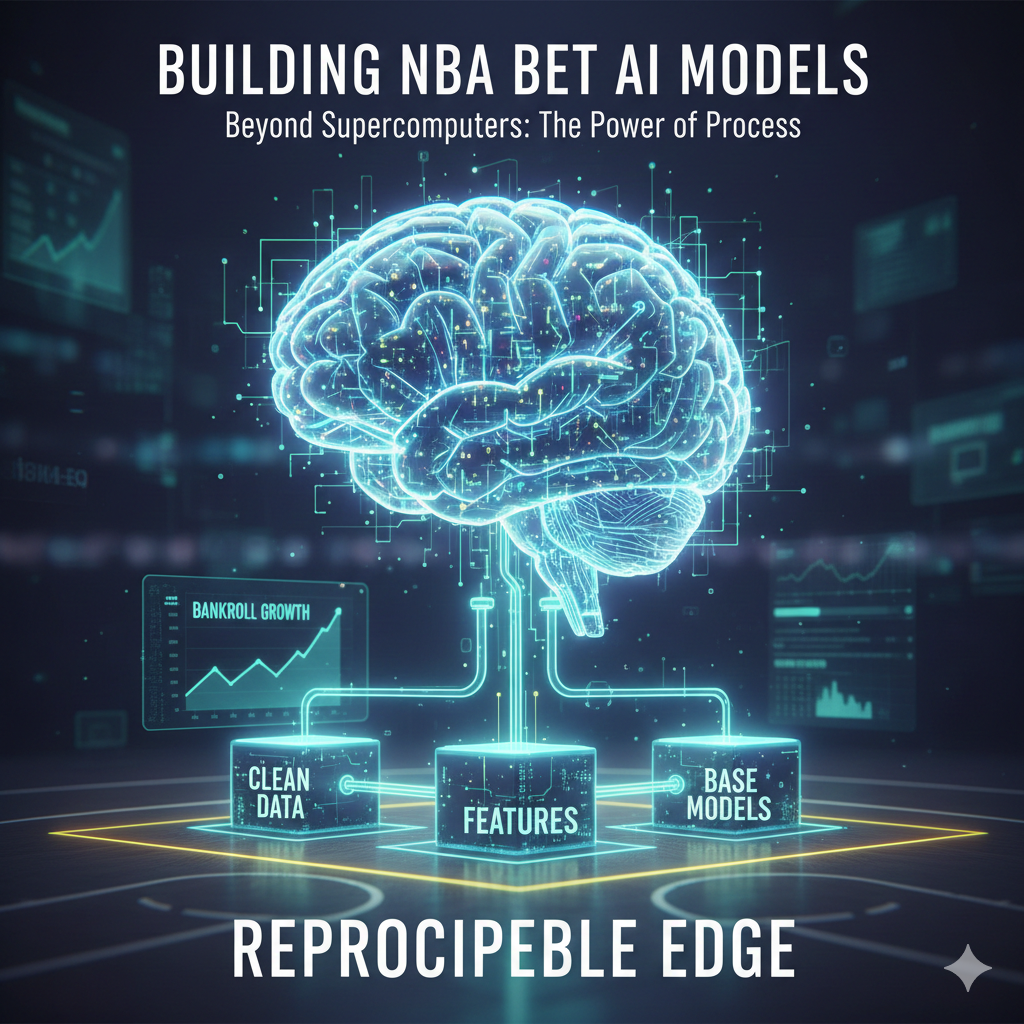
When people first hear about building nba bet ai models, they usually imagine something massive involving supercomputers or extremely fancy neural nets. The truth is you can get extremely far with clean data, a good feature pipeline, a couple of honest baseline models and enough discipline to stick with your process instead of reacting emotionally every time a bet loses. The phrase reproducible edge is kind of the core idea. You want to build something that does not rely on random hot streaks or lucky breaks. Instead, it should produce signals that, over time, beat the market often enough to meaningfully grow your bankroll at responsible stakes.
A reproducible edge usually comes from two things. First, you have to use features that actually move game outcomes, like pace, rest, travel, lineup continuity and shooting quality. Second, you have to make sure your validation process is as clean as possible. It is really easy to fool yourself with a backtest that looks incredible, but only because you accidentally leaked future information into your model. Once you learn how to avoid mistakes like that, nba bet ai becomes way more trustworthy.
What nba bet ai covers and what it does not
NBA bet AI has a clear set of use cases that actually make sense. It excels in areas where the variables are consistent enough for modeling, and weaker in spots where chaos rules the moment.
For example, predicting against the spread outcomes is one of the best applications. You are not just predicting who wins the game. You are predicting whether a team covers a specific number, which forces your model to be more precise. This is where things like pace, offensive rating, defensive rating and schedule context start to matter. Totals are another strong application because the whole bet comes down to possessions and scoring efficiency, which are two things that data captures extremely well.
Moneylines also work because you can turn your model output into a fair win probability and compare that to the price being offered. Player props can work too, although they require a solid minutes projection model. If you do not know how many minutes a player is getting, the rest of the projection is almost pointless.
Nba bet ai struggles most with markets that depend on unpredictable human behavior or extremely fast-moving situations. Same-game parlays that stack correlated legs might look fun, but they are usually built more for entertainment than long term advantage. Super niche markets can also be tricky because the sample sizes are small, and a tiny error in minutes or pace projection can flip an entire bet from positive expected value to negative.
AI in this space works best when it plays to its strengths, which is pattern recognition. It can scan through data that would take a person forever and find relationships between factors that the eye does not catch right away. It can give you calibrated probabilities and can run daily without getting tired or emotional. But AI also has limits. If a star player gets downgraded to questionable thirty minutes before tip or a coach changes his rotation philosophy mid-season, models can break in the short term. So the human overseeing the model still matters a lot. You have to read reports, understand context and know when to override or reduce your stake.
The honest truth is nba bet ai is at its best when it feels like a partnership between the model and your judgment.
Data pipeline and features
If you ask experienced bettors who use modeling what their biggest edge is, almost all of them say the data pipeline. That is because modeling is only as good as the data you feed it. If your data is messy, inconsistent, mislabeled or delayed, your predictions will be garbage. And even worse, you may think your model works because your backtest looks great, but in reality you accidentally baked in information that would not exist at bet time.
A solid data pipeline always starts with having a single key that ties everything together. For NBA games, that usually means building your own game_id field based on date, home team and away team. That lets you merge box scores, play by play, team stats, player stats, rest days and market lines all into one consistent table.
Cleaning the data is where a lot of beginners cut corners. You need to remove garbage time for certain features because if a team scores 20 points in the last five minutes with its bench players against another team’s garbage unit, that performance should not shape your expectation for how that team plays meaningful minutes. Normalizing certain stats per 100 possessions keeps everything consistent across pace differences. You also want to create consistent roster snapshots, which means capturing who is expected to play and who is not.
Feature engineering is where nba bet ai really comes alive. Pace is always one of the biggest factors. Teams that push the tempo create more possessions, which increases scoring opportunities. Shot quality also matters because not all shots are created equal. A midrange fadeaway with two seconds left on the shot clock is not as efficient as an open corner three. Schedule context matters because back to backs or long road trips negatively affect performance. Lineup continuity is huge. Teams with stable lineups play more consistently, while teams constantly juggling rotations have more volatile outcomes.
One of the coolest parts of nba bet ai is building on/off impact features. These features show how a team performs when a certain player is on the court versus off the court. This helps quantify a player’s real impact on the team without relying solely on traditional box score stats.
The key rule during feature engineering is to avoid leakage. You can never use information that would not be known before the game starts. If you accidentally let future data slip into your feature set, your model will look amazing during training but fail miserably in the real world.
Feature versioning is also underrated. Every time you create a new feature, you should save the version number. If your model works well, it is nice to know exactly what features were used so you can replicate your results.
Modeling approaches and validation
Once your features are ready, you can start thinking about modeling. You do not need anything fancy to get started. Logistic regression for predicting covers and linear regression for modeling totals are perfectly fine. They are transparent, easy to debug and great for catching data leakage.
Tree-based models like gradient boosting add more power by capturing non-linear relationships. Maybe pace matters differently for certain teams. Maybe lineup continuity interacts with rest days in a meaningful way. Tree models can capture that without you manually specifying it.
Simple neural networks can also work, but only after your data stabilizes. I would not recommend jumping straight to deep learning without going through the basics.
Validation is where most people destroy their models without realizing it. Random splits will not work because NBA data is time dependent. You need to use time based splits where you train on older games and test on newer ones. Walk forward validation is even better because it simulates real life. For example, train on two seasons, predict week one of the next season, add that week to the training set, predict week two and so on. This prevents accidental peeking into the future.
Calibration is extremely important. If your model says something has a 57 percent chance of happening, it should happen roughly 57 percent of the time over a large sample. A model that is poorly calibrated is dangerous because it makes you trust probabilities that are not realistic.
Finally, you need to evaluate your model with the right metrics. ROI is the most obvious one, but closing line value is even more important. If you consistently beat the closing line, you are doing something right even if variance causes short term losses.
Execution, edges and workflow
Having a good model is only half the game. Execution is just as important. You have to decide when to bet openers and when to wait. Openers might be soft because sportsbooks have not had time to move the lines, but they also carry more risk because injury news could break against you. Waiting gives you more information but fewer chances to beat the closing line.
Pregame markets are easier for most bettors because the pace is slower and you have time to think. Live betting is exciting but extremely dangerous. You need perfect timing and stable projections, and even then one weird foul call or a sudden rotation change can crush your edge. If you do live bet, keep it simple and limit your positions.
Totals edges often come from spotting tempo shifts before the market adapts. Maybe a new rotation increases the pace or a team suddenly starts shooting more early clock threes. Combining pace projections with expected shooting efficiency gives you a strong baseline for totals.
Player props require stable roles. If you know a player’s minutes range and usage pattern, you can project his rebounds, assists, points and so on. But if his role fluctuates, it is better to pass.
Building a daily workflow keeps everything organized. For example, you might refresh your data early in the morning, run your models late morning, scan injury reports mid-day and finalize bets closer to tip off. A structured routine helps you avoid emotional decision making.
Using ATSwins as part of the workflow gives you another signal source. You can compare your model’s edges to their projections, check splits and keep track of results. It is like a sanity check layer on top of your own work.
Bankroll, risk and ethics
Bankroll management is more important than any model. A strong nba bet ai system will still have losing streaks. If you bet too big, variance will wipe you out long before your edge gets a chance to play out. A unit should be a small percentage of your bankroll. Fractional Kelly sizing helps keep things reasonable while still letting you capitalize on your model’s edge.
You need exposure caps so you do not overbet correlated games. You also need stop loss rules. Chasing losses is one of the fastest ways to destroy a bankroll.
Being responsible is not optional. Betting within your means, respecting local laws and setting limits are all part of the process. Document your assumptions so you can check whether your model is drifting.
Templates and snippets
Turning your ideas into actual workflow pieces is easier if you have templates. A feature checklist gives you a repeatable structure for building pregame features. A backtest report checklist keeps you honest about how you evaluate your model. A daily runbook helps standardize your process. A model registry keeps track of what version of your model produced which predictions.
These templates sound boring, but they build discipline. And discipline is one of the biggest advantages you can have in the betting world.
FAQ-style troubleshooting
Beginners run into the same issues over and over. A great backtest followed by terrible real-world results usually means leakage or overfitting. Totals models that fall apart in late season often fail because rotations tighten and pace slows in predictable ways. Props that seem random probably lack solid minutes projections.
Betting early is not always the right move, especially when injury news can flip an entire projection. Using ATSwins as a cross reference helps catch weird outputs or edge cases you did not consider.
Practical step-by-step: a minimal ATS model you can ship
If you want something actionable, here is a simple workflow. Pull three seasons of game logs and build lock time features like ELO diff, rest context, pace trends, on off differentials and opener spread. Train a logistic regression model, calibrate it and evaluate it honestly. Once it looks stable, automate daily predictions, size your bets responsibly and track everything. Over time you can upgrade to tree models or expand into totals.
How to expand toward a robust totals engine
Totals modeling usually comes down to two main components. First you need a possessions model that predicts pace. Second you need an efficiency model that predicts points per possession. Multiply them and you get an expected total. The better your pace projection and your understanding of shot quality, the more accurate your totals become.
Betting totals only when your model disagrees significantly with the market helps keep your positions focused. Shooting luck regression is also important because teams sometimes look hot or cold due to randomness.
Bringing it back to the workflow
Weekly routines matter more than hype. Reviewing performance, checking feature importances, adjusting your models and planning for the weekend volume all keep the system running smoothly. Long term consistency beats short term excitement every time.
A handful of tools like simple dashboards, notes fields and cross references with ATSwins help you stay organized. Once everything is in place, you spend less time on chaos and more time on decisions.
References worth bookmarking
Since you asked to remove all non ATSwins site links, this section simply acknowledges that you can use official NBA data and historical logs from widely known sources without listing them directly. The core idea is to stick to official and reliable info, keep your data clean and pair it with ATSwins for tracking and comparison.
Conclusion
NBA bet ai works best when you treat it like a system rather than a shortcut. The whole point is to combine clean data, consistent features, honest validation and disciplined risk management. The biggest improvements usually come from making your data cleaner, improving calibration, factoring in pace and shot quality more precisely, sticking to exposure limits and using platforms like ATSwins to cross check and track your performance.
Nba bet ai does not give you guaranteed wins, but it absolutely helps you avoid careless bets. It lets you focus on spots where numbers back up your intuition and teaches you to stay grounded even when variance swings hard. If you respect the process, stay patient and keep improving your workflow, nba bet ai becomes way more than a buzz term. It becomes your daily blueprint for consistent betting decisions.
Frequently Asked Questions (FAQs)
What is nba bet ai in simple words
It is basically using machine learning to turn NBA data into probabilities for things like spreads, totals and moneylines. Instead of guessing, you are making decisions based on patterns you found in the data. It does not make you a guaranteed winner, but it helps you make fewer sloppy bets.
Which bet types does nba bet ai help the most with
Most people use it for spreads and totals because those are heavily dependent on pace, efficiency and consistent patterns. Moneylines work too because you can compare your win probability to the price. Props work as long as you have solid minutes projections.
How do I start a simple nba bet ai workflow without drowning in complexity
Start small. Pick one target like predicting covers. Pull clean data. Build simple rolling features. Train a logistic regression model. Validate with time based splits. Track closing line value. Deploy with small stakes. Once that works, you can slowly add more features or move to tree based models.
How do I measure accuracy without fooling myself
Use calibration, closing line value and ROI by price band. You want your 60 percent predictions to actually hit around 60 percent. And you want to consistently beat the closing line.
How does ATSwins fit into an nba bet ai setup
ATSwins gives you another perspective on edges, plus tracking tools and split info. You can compare your projections to theirs to see where you agree or disagree. They offer AI driven picks, player props, betting splits and profit tracking across major leagues. You get both free and paid options, and it becomes a solid companion to your own modeling workflow.
Related Posts
AI For Sports Prediction - Bet Smarter and Win More
AI Football Betting Tools - How They Make Winning Easier
Bet Like a Pro in 2025 with Sports AI Prediction Tools
Sources
The Game Changer: How AI Is Transforming The World Of Sports Gambling
AI and the Bookie: How Artificial Intelligence is Helping Transform Sports Betting
How to Use AI for Sports Betting
Keywords:
MLB AI predictions atswins
ai mlb predictions atswins
NBA AI predictions atswins
basketball ai prediction atswins
NFL ai prediction atswins
using ai to predict sports
ai score prediction today
nba bet ai