

 si
si
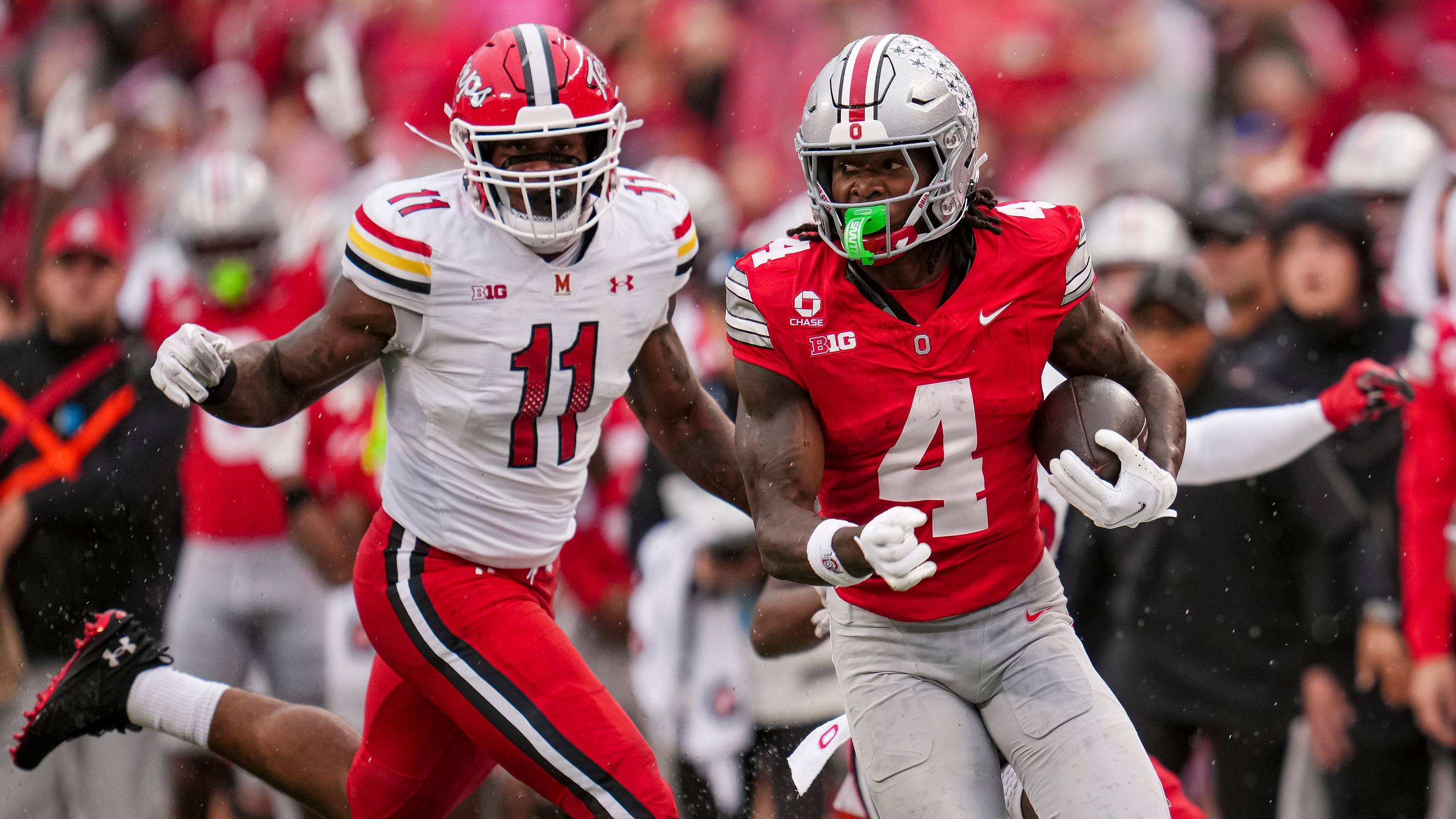
The Miami Dolphins are positioned for a high selection in the 2027 NFL draft, and the prospect of drafting Ohio State standout wide receiver Jeremiah Smith has generated significant buzz among fans and draft analysts. Smith is widely regarded as the premier talent in college football at this early juncture, and the Dolphins, in the midst of a rebuild, could theoretically use upgrades at nearly every position.
Adopting a best-player-available strategy, Smith would appear to be a logical choice if Miami has the opportunity to select him and bring the Miami Gardens native back home. However, the situation is more nuanced, and there are compelling reasons why the Dolphins might be better served looking elsewhere.
The Better Approach for Miami
As of Week 5, the Dolphins hold the third overall pick in the 2027 draft due to a higher combined opponent winning percentage than the other winless teams, the Tennessee Titans and Los Angeles Chargers. According to ESPN's Football Power Index, Miami has a 49 percent chance of securing the No. 1 overall pick, far ahead of Tennessee (20 percent) and Tampa Bay (8 percent).
Given Miami's need for additional draft capital, an optimal scenario might involve trading down a few spots with a team eager to acquire Smith or the top quarterback prospect, thereby accumulating extra assets while still landing a high-caliber player to bolster their foundation. If the Dolphins stay put, whether at No. 1, 2, or 3, they would be wiser to target a quarterback—if they determine Malik Willis is not the long-term answer, though that evaluation remains ongoing despite a rocky start—or a player at a different position.
The Positional Value Position
In today's NFL, the most valuable positions are widely considered to be quarterback, offensive tackle, pass rusher, and cornerback. Beyond quarterback, no position is as dependent on the other 10 players on the field as wide receiver, as even the most talented receiver requires a quarterback to deliver the ball and an offensive line to provide protection. A wide receiver also touches the ball perhaps 15 times per game at most, limiting his impact on game-changing plays, though his ability to draw attention can open up opportunities for others.
Statistical evidence underscores the limited impact of wide receivers on Super Bowl success. Over the past 10 Super Bowls, the winning teams—Kansas City three times, Philadelphia and New England twice, Tampa Bay, the L.A. Rams, and most recently Seattle—featured a total of 13 players who were top-5 draft picks in their starting lineups. Only one was a wide receiver: Sammy Watkins of the Chiefs in 2019, who was originally drafted by the Buffalo Bills. The list also included four quarterbacks (Tom Brady, Carson Wentz, Matthew Stafford, Sam Darnold), one running back (Saquon Barkley), one offensive tackle (Lane Johnson), two edge defenders (Chris Long, Von Miller), one defensive tackle (Ndamukong Suh), one linebacker (Devin White), and two cornerbacks (Jalen Ramsey, Devon Witherspoon).
Only four of those 13 top-5 picks won a Super Bowl with their original team: Wentz, Johnson, White, and Witherspoon—one quarterback, one tackle, one linebacker, and one cornerback. Another statistical tidbit: in the 15 drafts from 2010 to 2024, 12 defensive ends/edge defenders were selected in the top five. Ten of them made the playoffs with their original team, an 83 percent hit rate. During the same period, eight cornerbacks were top-5 picks, and six made the playoffs with their original team (75 percent). Quarterbacks had the same 75 percent rate (18 of 24). Wide receivers lagged at 57 percent, with four of seven top-5 picks making the playoffs with their drafting team: A.J. Green, Amari Cooper, Corey Davis, and Ja'Marr Chase. The misses were Justin Blackmon, Sammy Watkins, and Marvin Harrison Jr.
Harrison, once considered a near-surefire star out of Ohio State in 2024, was recently traded from the Arizona Cardinals to the Houston Texans for a second-round pick and a late-round swap. While Harrison was not viewed as favorably as Smith is now, his struggles serve as a cautionary tale that few prospects are guaranteed successes.
Is Jeremiah Smith the New Calvin Johnson?
Calvin Johnson is often cited as the perfect wide receiver prospect, possessing 6-5 stature, 4.2-4.3 speed, and exceptional route-running ability. He lived up to the hype, becoming a first-ballot Hall of Famer after the Detroit Lions selected him second overall in 2007. However, the Lions made the playoffs only twice in Johnson's nine seasons and never won a playoff game during his tenure. This was not Johnson's fault, as success requires more than one great wide receiver, but it illustrates that even a brilliant receiver, paired with a quarterback like Matthew Stafford, is not enough.
The Dolphins experienced this firsthand with Tyreek Hill, an explosive player who commanded attention and opened up the offense. Despite Hill and a talented sidekick in Jaylen Waddle, Miami won zero playoff games in four years. Critics may argue Hill diminished in big moments or lacked the size to excel in physical games, and there is merit to that. Smith, however, possesses both athleticism and size, so that concern does not apply. What Smith lacks is the right position.
If the Dolphins were only a wide receiver away from contention by next spring, selecting Smith at No. 1 or No. 2 would be justifiable. But they are not, so it is not. Jeremiah Smith is a fabulous prospect and likely will become a great NFL player. Nevertheless, the Dolphins should look elsewhere to maximize their anticipated top pick in the 2027 NFL draft.
Alain Poupart is the publisher/editor of Miami Dolphins On SI, host of the All Dolphins Podcast, and co-host of the Dolphins Collective. He has covered the Miami Dolphins full-time since 1989 for various outlets, including Dolphin Digest, The Associated Press, and the Dolphins team website. A credentialed member of the Miami Dolphins press corps, Poupart has covered three Super Bowls (for NFL.com, Football News, and the Montreal Gazette), the annual NFL draft, the Senior Bowl, and the NFL Scouting Combine. During his nearly 40-year journalism career, which began at the now-defunct Miami News, he has covered virtually every sport, from tennis to golf, baseball, basketball, and more. His career also included time as a copy editor, working on several books, including 'Still Perfect,' an inside look at the Miami Dolphins' 1972 perfect season. A native of Montreal, Canada, whose first language is French, Poupart grew up a huge hockey fan but soon developed a love for all sports, including NFL football. He has lived in South Florida since the 1980s. Follow @PoupartNFL.