

 si
It is uncommon but not unprecedented for a highly touted prospect to accelerate his timeline and secure a spot on the Los Angeles Dodgers' major league roster by September. Walker Buehler accomplished the feat in 2017, Gavin Lux did so two years later, and Josue De Paula followed suit this year—though his path was likely cleared by an injury to Shohei Ohtani.
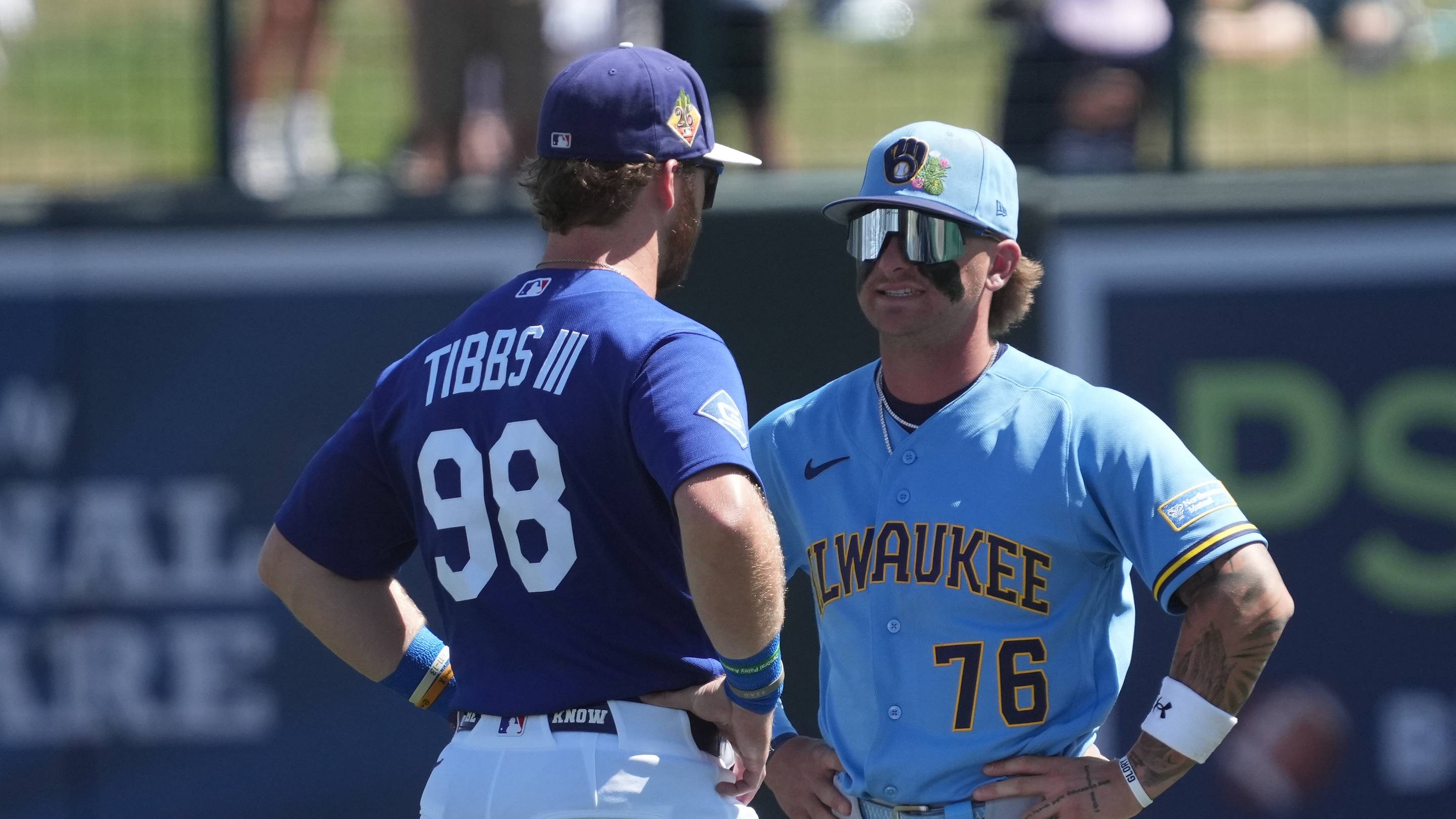
Throughout the season, fans vocally advocated for outfielder James Tibbs III to be summoned from Triple-A Oklahoma City after he posted numbers rarely seen in the Pacific Coast League over the past four decades: 30 home runs, 107 RBIs, 109 runs scored, and a .409 on-base percentage. In an organization with a less congested outfield, those statistics might have been sufficient to earn Tibbs his major league debut in 2026.
However, the Dodgers' outfield was firmly set before the team cruised to 100 regular-season victories, and only once did Teoscar Hernandez, Andy Pages, or Kyle Tucker land on the injured list. When Hernandez strained his hamstring in May, the club opted to call up Ryan Ward—who already held a spot on the 40-man roster—instead of Tibbs, who did not.
The importance of 40-man roster spots is magnified by the approaching lockout. In the event of a lockout, team personnel—including executives, coaches, athletic trainers, and strength coaches—are barred from contacting players on the 40-man roster. This restriction, ostensibly a bargaining tactic, creates an unnecessary obstacle for every team, and the Dodgers will be affected just as much as the other 29 clubs.
Players on minor league contracts within an organization are not subject to this prohibition (their Collective Bargaining Agreement runs through the 2027 season). Consequently, Tibbs and every other Dodgers prospect not on the 40-man roster—essentially everyone except De Paula, for the time being—will be free to communicate with team personnel regardless of how long a lockout lasts. That is an advantage for Tibbs.
The Dodgers are not required to protect him from the Rule 5 draft until next November, so there is no urgency to add him to the 40-man roster before then. He can expect a normal spring training and could even report to the team's facility early for extra work if he chooses.
From the team's perspective, the primary benefit of not promoting Tibbs during the season is that his service-time clock remains at zero. But as Katie Woo of The Athletic noted in a recent Reddit AMA, the looming lockout has become a motivating factor for teams that do not need to promote a prospect before December.
Key Analysis
In the end, the deliberate approach may prove to be the best path for Tibbs to be fully prepared for his first major league call-up. The combination of roster mechanics and lockout dynamics suggests that patience could yield significant rewards for both player and team.