

 si
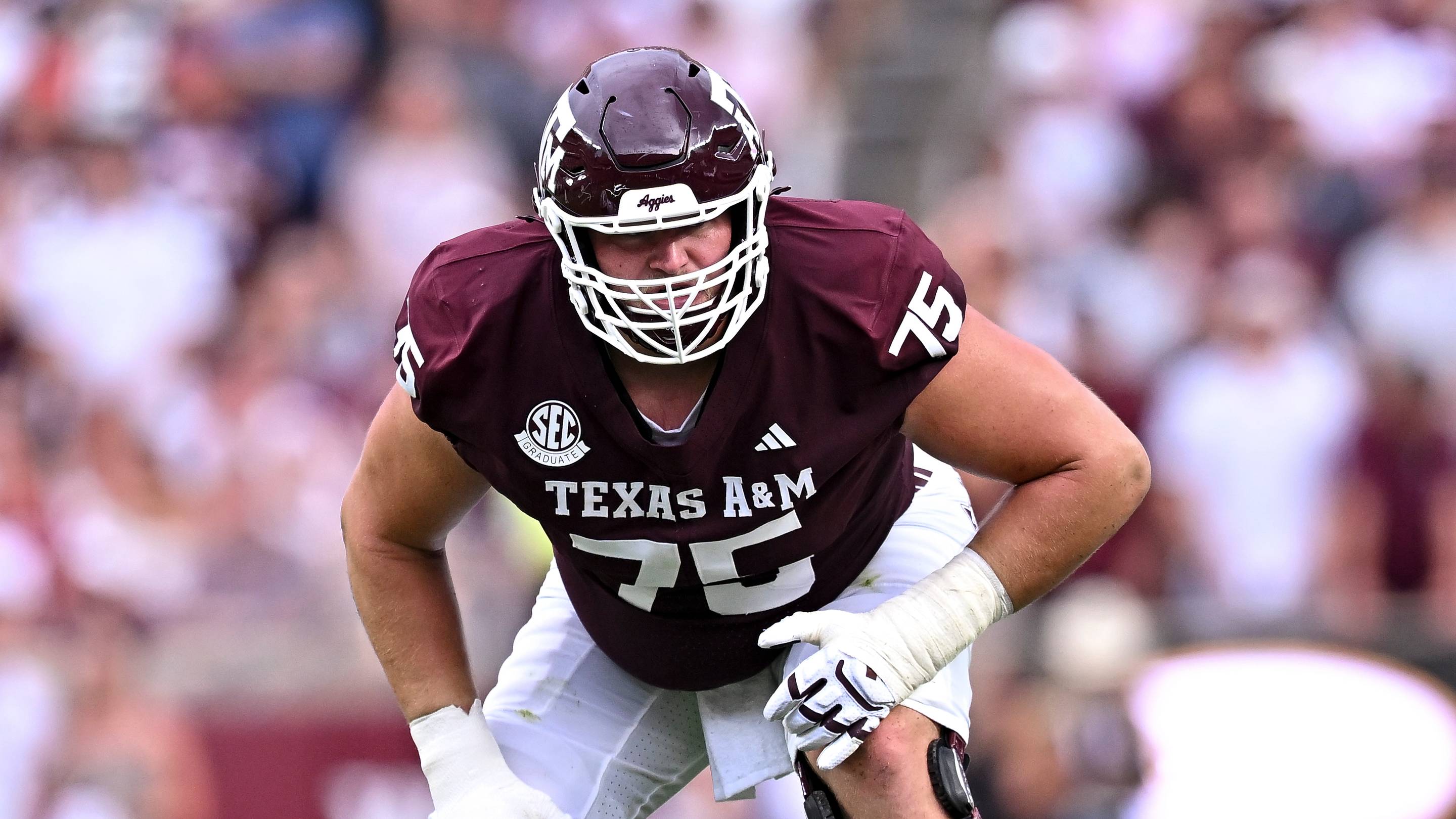
The offensive line has been a persistent weak point for Texas A&M during the 2026 campaign. While replacing several starters from last year's unit provided a reasonable justification for early struggles, that rationale has worn thin after eight games as the problems persist.
With South Carolina, Tennessee, Oklahoma, and Texas still on the docket, the Aggies are staring down a gauntlet of formidable defensive fronts. Unless head coach Mike Elko's squad uncovers solutions in a hurry, November could turn into a painful stretch for the entire program.
The Growing Pains Aren't Going Away
At one point, Elko thought the offensive line was finally making strides. After Texas A&M's win over Arkansas in October, the head coach commended the group's progress.
"I do think they have gotten better," Elko said. "I think they're gelling more. I think they're starting to understand playing together more."
That optimism seemed justified at the time. The Aggies rushed for 231 yards against Arkansas and kept quarterback Marcel Reed reasonably well-protected. However, the improvement hasn't held up against stronger competition. At Alabama, Texas A&M managed just 2.9 yards per carry, and Reed was sacked twice in the fourth quarter alone.
Through eight games, the Aggies have allowed 15 sacks—not a catastrophic number—but the protection has broken down at the most critical junctures when the offense desperately needs a play.
November Won't Offer Much Mercy
The upcoming defensive fronts are anything but forgiving. South Carolina has recorded 18 sacks, Oklahoma 22, and Texas 19. Tennessee leads the SEC with 35 sacks through eight games, averaging more than four per contest—a frightening prospect for an offense already struggling to protect its quarterback and run the ball efficiently.
Improvement must start with more reliable communication and better handling of pressure, especially against the disruptive fronts that await Texas A&M. But the running game—or lack thereof—might be even more critical. The Aggies can't keep asking their quarterback to carry the load; at some point, they must establish a presence between the tackles. That would go a long way toward making the entire operation less miserable and more productive.
Overall, Texas A&M has spent enough time waiting for its offensive line to coalesce. But with November approaching and some of the nation's best defensive fronts looming, there isn't much time left to wait.