

 oanow
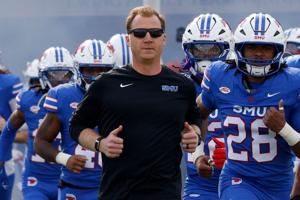
In University Park, Texas, after roughly three decades of underachievement, oil and gas tycoon Bill Armstrong decided enough was enough. He understood that the NCAA's 1987 'death penalty' for illicit payments to players had triggered a long decline for SMU football, but he also felt the program's extended struggles were partly self-inflicted.
Armstrong candidly remarked that SMU needed to 'pull its own head out of its ass,' acknowledging that the university had allowed itself to remain in the penalty box for 40 years out of embarrassment, letting 'the inmates run the asylum.' The Mustangs had no alternative but to change, and their desire for a fresh approach aligned with seismic shifts in college athletics, including NIL, the transfer portal, and conference realignment.
The results of SMU's new strategy have been striking. As the team enters its third ACC season, it commands a level of respect unseen since before the death penalty. The Mustangs were predicted to finish second in the ACC preseason poll, their highest since joining the conference, and they enter the season ranked No. 19 in the AP poll for the second consecutive year. On Monday night, they face Florida State on the road as 3.5-point favorites.
Key Analysis
Head coach Rhett Lashlee described SMU as 'new blood,' not blue blood, emphasizing that they are 'living on what we're doing now.' This new breed of programs, including Indiana and Texas Tech, has risen rapidly through aggressive spending and strategic recruiting, challenging the traditional powers. SMU's athletic director Damon Evans noted that new bloods are built through investment, foundation, and belief, and that parity in today's game is greater than ever.
SMU's general manager J.R. Sandlin saw the program as a 'gold mine' when he joined in 2024, citing location as key. With a rich high school talent pool in Dallas-Fort Worth, SMU has focused on recruiting locally, with over half of its roster hailing from Texas. Unlike Florida State, which faltered after relying heavily on the transfer portal, SMU balanced transfers with homegrown talent like quarterback Kevin Jennings, ensuring stability and long-term success.
The Mustangs have also invested in retaining their coaching staff, extending Lashlee's contract multiple times to prevent departures. Their financial muscle, bolstered by wealthy alumni, allowed them to forgo over $20 million annually in ACC media rights revenue, a sacrifice Armstrong says some schools lack the stomach for. While SMU has yet to achieve its ultimate goal, Lashlee insists they are 'in pursuit of great,' and Evans believes they are 'just getting started.'
Originally reported by oanow.