

 si
si
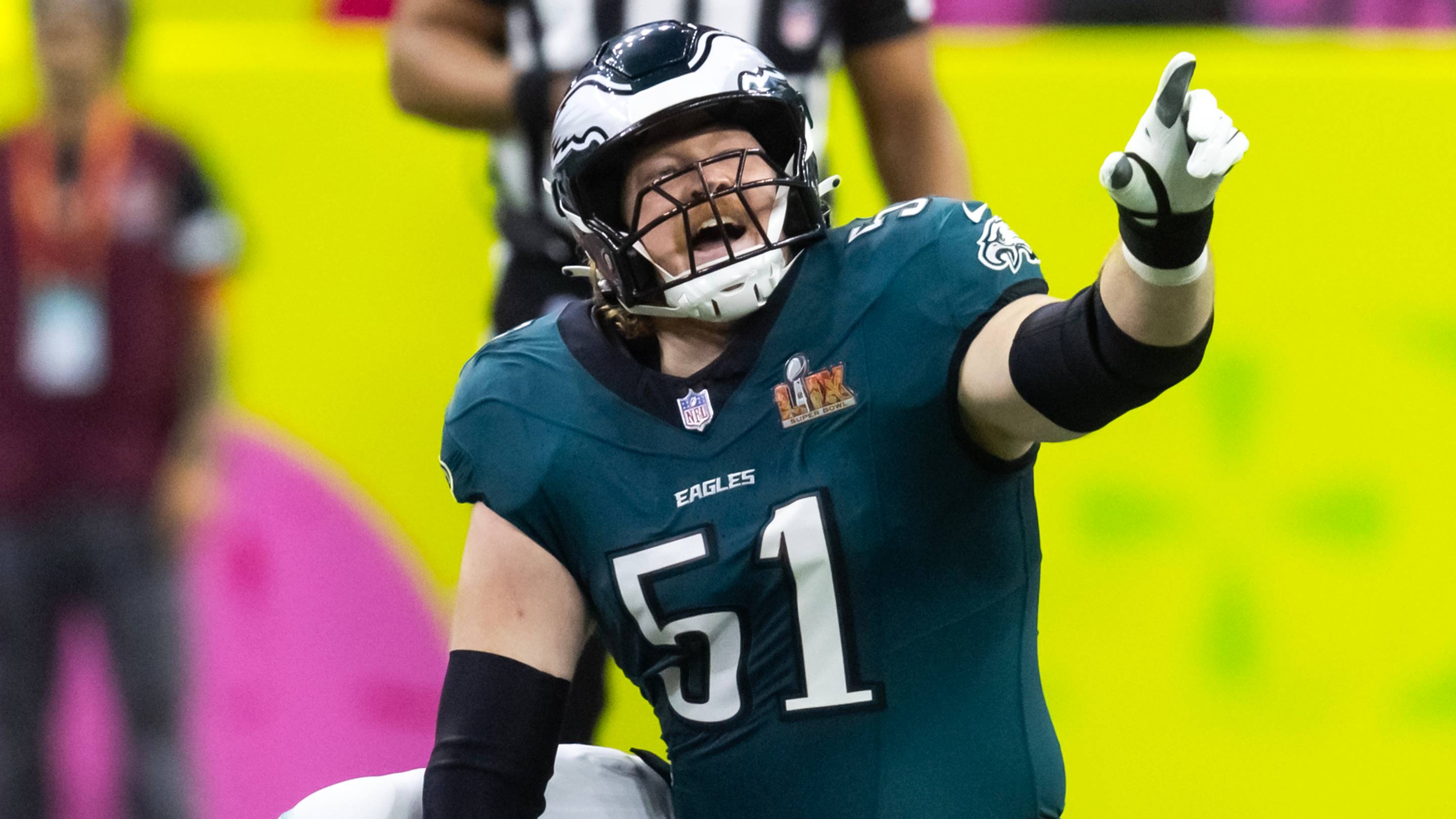
Since the February scouting combine, the Baltimore Ravens have been aware of their need for a legitimate starting center, as star Tyler Linderbaum's market value soared beyond their comfort zone. The Ravens held exclusive negotiating rights to Linderbaum throughout his rookie contract but failed to secure an extension before the 2025 season, when both he and two-time MVP quarterback Lamar Jackson required new deals and neither came close to fruition.
Thus, any analysis of the Ravens sending two draft picks—a fifth-rounder in 2027 and a second-rounder in 2028—to acquire Eagles lineman Cam Jurgens must begin with that context. Jurgens, who underwent major back/nerve surgery in February 2025 and has not been the same since, will return to his natural position of center.
Evaluating an in-season trade with a general manager as accomplished as Philadelphia's Howie Roseman necessitates considering the player's health and current status, as well as the bleak situation Jurgens is entering. Baltimore's interior offensive line ranks among the worst in football, consistently exploited in pass protection and unable to generate any interior rushing presence, even for the great Derrick Henry.
This complicated transaction merits two separate grades in real-time given Jurgens' highly unusual injury history. After consulting with two outside general managers, several former general managers, a salary cap expert, and other current NFL personnel executives, a spectrum emerged for setting a realistic standard of what this trade could offer the Ravens.
D for Desperation
The Ravens dug themselves an ugly hole by mismanaging this critical situation while installing a new offense under a rookie offensive coordinator, with issues across the offensive line beyond just center. Their 30-year-old first-time play caller, Declan Doyle, always needed a proven veteran leader at center—his mentor Sean Payton said as much this offseason—and the fact that they didn't select any available center in the second round of the draft, before the anticipated run on interior offensive linemen, means they could have solved this problem far more cheaply than it has come to now.
They weren't fooling anyone: budget signings Danny Pinter and Jovaughn Gwyn were never close to starting-caliber players. As longtime lineman and NFL analyst Brian Baldinger told me this summer, 'They don't have an NFL center on their roster, they just don't.' When those players got hurt—along with late signing Ethan Pocic, who never looked right coming off Achilles surgery—the massive problem became suffocating.
The Ravens' history is to draft and develop centers and they truly value them, because many thought Linderbaum went too high when they took him in the first round. They have resisted paying centers top dollar going all the way back to Jason Brown. Holding 11 picks and not addressing this in a draft with myriad options was always odd, and taking a hope-and-prayer pass rusher in Zion Young (yes, he can set the edge) struck us as ridiculously odd at the time, and plenty of executives around the league agreed.
'You only make this move if you are desperate,' one GM told me, also noting: 'Those guys aren't exactly quick to trade picks that high (second round).' Jurgens has traveled to South America to get treatment for ongoing nerve issues, and he gutted through 14 games last season but was in extreme pain and was not good on the field. The issue spread up and down his legs.
The Eagles know his medicals better than anyone and were willing to unload him at a time their All-Pro guard, Landon Dickerson, is on IR and all-world tackle Lane Johnson just basically retired for mental health reasons. So when they do this, it raises major red flags about the medicals for a player who has a high pain threshold but carries big risks, or serious medical red flags as another GM put it: 'Jurgens is still a good player, he is, we have good grades on his film. And it's a major upgrade to anything Baltimore had there. But Howie isn't mailing it in. He's not tanking. No way Howie does this if he's convinced this is a starter for him—at center or guard or anywhere—for the rest of that contract.'
Jurgens makes $16.5M this season and is essentially guaranteed $15M of his $17.5M salary for 2027 and carries that same figure for 2028, without such current guarantees. 'What are the Ravens thinking?' said one longtime NFL exec who watches the Eagles closely. 'The good, but not really great, Cam left once he had the back surgery. You don't see trades like this for interior offensive linemen and this one had back surgery and the tape since then is not the same, including at center.'
B for Belief
Jurgens is a two-time Pro Bowl player who replaced a Hall of Fame center in Jason Kelce and learned from him before taking over. He anchored a dominating, Lombardi-trophy-winning offensive line loaded with Alphas. He is a warrior and brings a different profile and resume into that offensive line than anyone else's, even decorated left tackle Ronnie Stanley.
'At the center position, you really are the voice of the offense out there,' offensive line coach Dwayne Ledford said Thursday, hinting strongly at how much having a true vet center matters, as we've said all along. Jurgens says he feels great this season, it was an ugly situation in Philly (although the one he's walking into has issues, too), and the Ravens get to move stud rookie Vega Ioane back to guard, where he can maul, and perhaps they will be able to improve in pass protection and run blocking in the interior. Given the price they paid, they must.
Teams were blitzing the A Gap with abandon before Ioane stabilized things Week 4, stunts and twists were gutting them, and there seemed to be very little connective tissue between the center and guards no matter which combination Baltimore tried. Jurgens's presence and intangibles change that, and the Ravens made big additions to their medical team this offseason and they have to hope they can keep Jurgens as healthy and pain-free as possible, but he plays a car-crash position and some wonder if all the years of the Eagles running the Tush Push into the ground, literally, has taken years off those linemen.
'They may have just solved their biggest problem,' said one NFL personnel executive. 'And if this isn't their starting center the next three years, they just made it worse.' But by Week 6, if indeed Jurgens is out of concussion protocol, the Ravens should have a better foundation in the middle of their line than at any point since Linderbaum left, and they have to do whatever they can to maintain that as long as possible.
'He isn't a guard, strictly a center,' Baldinger suggested to me after the trade. 'It allows Ioane to stay at guard where he can be the next (potential future Hall of Famer Marshal) Yanda.'