

 si
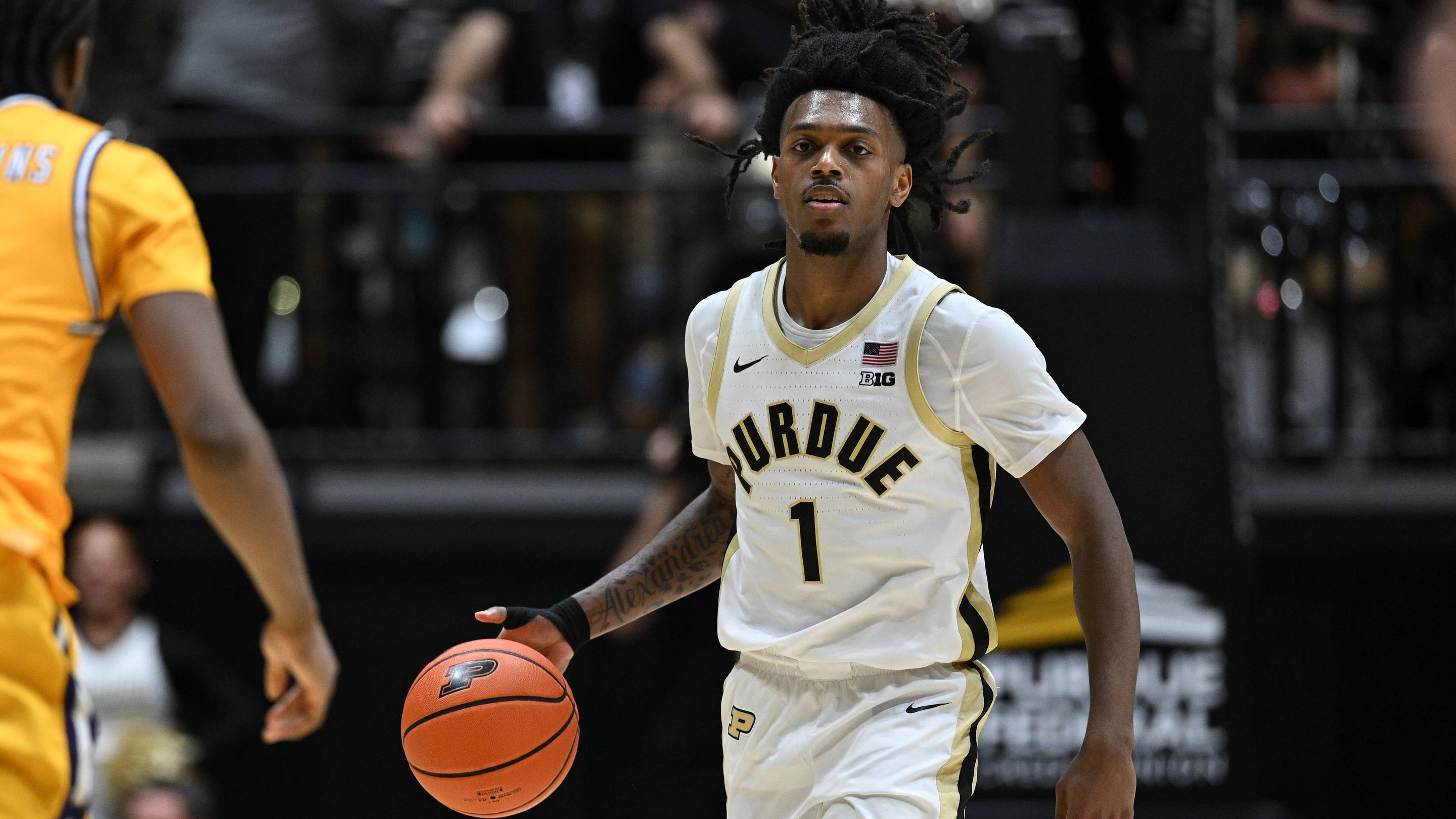
Five games into the 2026-27 college basketball season, Purdue sits at 3-2. After losses to No. 15 Gonzaga and Valparaiso, Matt Painter's team has responded with three consecutive victories, building momentum before the non-conference schedule intensifies. It has been a five-game stretch filled with highs and lows—no need for fans to visit Indiana Beach for roller coasters, as this young team provides plenty of twists and turns on its own. Below is a breakdown of what has worked, what hasn't, and what has been downright ugly for the Boilermakers so far.
The Good
Daniel Jacobsen's Leap
The most encouraging development has been the significant jump from Daniel Jacobsen. After averaging just 5.5 points and 3.0 rebounds off the bench last season, the 7-foot-4 center now leads Purdue in nearly every major category. He is putting up 19.6 points, 8.8 rebounds, 3.0 assists, and 1.2 blocks per game while shooting 67.3% from the field—all team highs. Jacobsen has been dominant in the post, playing with physicality and showing marked improvement in his decision-making. He has been Purdue's most improved player and a key reason for the team's early success.
Rebounding
Painter emphasized rebounding as a critical area for improvement over the summer, and the Boilermakers have delivered. Only Gonzaga has outrebounded Purdue, narrowly winning the battle 34-31. In the other four games, Purdue has been the aggressor on the glass. Despite losing size and physicality from last year's roster, the Boilers are holding their own. They average 37.2 rebounds per game, but the real story is the plus-10.2 margin against opponents, which ranks 52nd nationally. Tougher tests lie ahead, but the early returns are promising.
Free-Throw Shooting
While field-goal shooting has fluctuated, Purdue has been remarkably consistent from the charity stripe. The Boilermakers are converting 82.4% of their free throws, the seventh-best mark in the country. They are attempting 21.6 free throws per game, and converting those opportunities has been crucial. Jacobsen has been particularly efficient, making 86.1% of his 36 attempts. Having a big man who can knock down free throws is a valuable weapon, and having a team full of reliable shooters is even better.
The Harris/West Swap
The decision to insert Antione West Jr. into the starting lineup and move Gicarri Harris to the bench wasn't a direct swap, but it has worked well for both players and for Purdue. Since joining the starting rotation against Illinois State, West has averaged 20.3 points per game, including a career-high 27-point outburst against Lipscomb. Harris, meanwhile, scored 23 points with five rebounds and four assists off the bench against Ohio, then added 16 points against Lipscomb. While such production may not be sustainable every game, something has clicked for both guards since the change, especially offensively.
The Bad
Defensive Consistency
Purdue's defense has shown flashes of excellence, with guards preventing deep drives and funneling traffic to Jacobsen, who alters or erases shots at the rim. However, opponents have also found it too easy to penetrate the paint and create open looks. Through five games, Purdue's opponents are shooting 45% from the field, ranking 269th nationally. The Boilers have done well to limit three-point shooting, holding teams to 28.3% from beyond the arc. Communication has been an issue on defense for the past two seasons; cleaning up those miscues could still make this a solid defensive unit.
Three-Point Shooting
The first two games against Gonzaga and Valparaiso dragged down Purdue's three-point percentage. The Boilers shot 5-for-21 from deep against Gonzaga and 5-for-28 against Valpo. Those numbers have improved over the last three games, with Purdue shooting above 40% in wins over Illinois State and Lipscomb. Overall, the Boilermakers are shooting 32.8% from three-point range—a figure that needs to rise given the number of quality shooters on the roster.
The Ugly
Bench Production
Depth was supposed to be a strength for this team, and it may still become one. But so far, Purdue's bench outside of Harris has been largely unproductive. Backup centers Enzo Shahrvin and Raleigh Burgess have combined for just 10 points and 11 rebounds through five games. Omer Mayer has contributed five points and four assists since moving to the bench. Freshman Luke Ertel has added 14 points and nine rebounds. The Boilermakers need their reserves to improve in November and December before Big Ten play begins. The bench can still be a strength, but it remains a work in progress.
Struggling to Put Teams Away
Purdue has started games well, jumping out to big early leads against each of its last four opponents. The problem has been delivering a knockout punch early in the second half. Despite leading by 12 at halftime against Valparaiso, the Boilers allowed the Beacons to hang around and ultimately lost in double overtime. Illinois State had a chance to tie the game with 10 minutes left in the second half after trailing by double digits. Against Lipscomb, Purdue led 40-14 in the first half but saw that advantage sliced to five in the second half. The Boilermakers have faced talented mid-major opponents, but they must find ways to close out games. Allowing high-major and Big Ten teams to hang around later in the season would be a dangerous game.