

 si
si
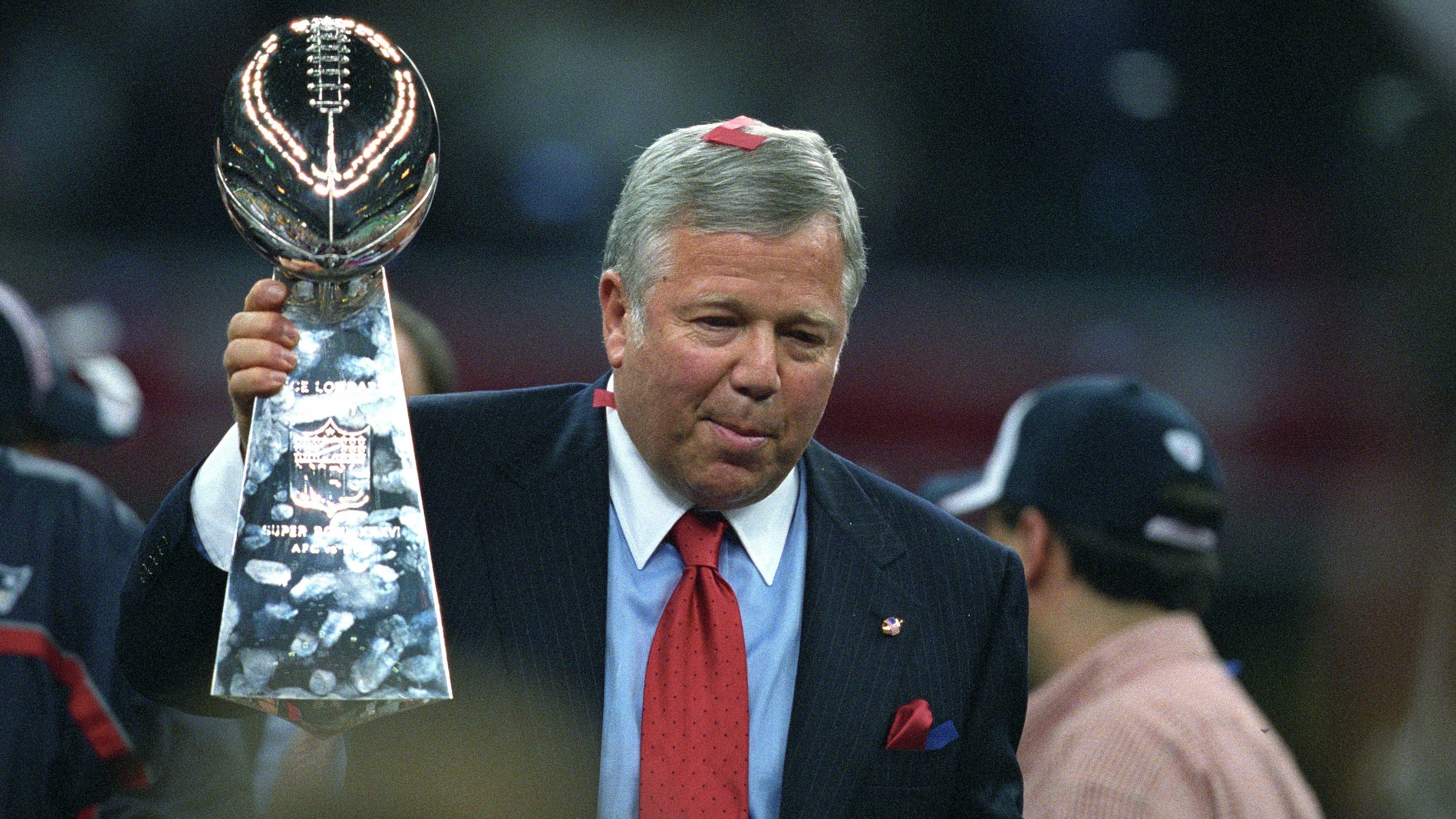
Robert Kraft had a lot on his mind as he drove from his Brookline, Massachusetts, home to Foxborough on January 19, 2002. The September 11 attacks had deeply affected him, and uncertainty loomed over the new stadium being built next to the Patriots' old home. The new venue featured far more suites and club seats, a stark contrast to the old facility. Yet, as he entered southeastern Massachusetts, a small smile crossed his face: snow was falling, and he sensed his Patriots, three-point underdogs to the Raiders, were gaining an edge.
"It made me happy because I knew it was foreign to the Raiders," Kraft recalled Thursday. "And [Raiders owner] Al Davis had been good to me when I came in. That's a whole other story—he wanted me to get into his little cabal he had, and I knew he was great. But I thought, 'Oh, this is good. The Raiders coming from the warm. They're going to be in it, too.'"
Kraft now admits he could never have foreseen what would unfold over the next seven or eight hours, or the quarter century that followed. On Sunday, the Patriots owner will welcome back the team that upset the Raiders that night, the Steelers eight days later, and the powerhouse Rams the week after to win the franchise's first Super Bowl. The celebration marks the 25th anniversary of those games and that season, and also honors kicker Adam Vinatieri, who will receive his Pro Football Hall of Fame ring at halftime.
For Kraft, reflecting on where he and his franchise stood then is staggering. Since that fateful night in Foxborough—the final game at the old stadium he bought in the 1980s—the Patriots have won six Super Bowls, reached ten, and captured 17 more AFC East titles. Gillette Stadium was completed months later and eventually spawned Patriot Place, a community of stores, restaurants, and entertainment. Forbes valued the franchise at $524 million in 2001, ninth-most in the NFL; today it is worth $10.6 billion, trailing only the Cowboys, Rams, and Giants.
"I just think that snow game opened the door," Kraft said. "And this team really created the foundation of everything that's happened. There's a certain pride here—we're different."
For the owner, it was the culmination of a series of gambles that seemed unlikely to pay off. It began with the Brookline native entering the picture. After buying the parking lots and then the stadium, he set his sights on the team in 1994, telling his late wife, Myra, that $110 million was probably the right number, but he might go to $115 million or $120 million. He ended up spending $172 million, a record for a sports franchise at the time. Just before pushing the bid through, he called Massachusetts Governor Bill Weld, told him he would need a stadium in Boston if he was going to do it, and got a promise that it would get done. It didn't.
Kraft then flirted with Hartford, which offered him a sweetheart deal to move the franchise to Connecticut, before deciding to build a new home on his own. Then came the hire of Bill Belichick, whose reputation had been tarnished from his tumultuous first head-coaching stint in Cleveland, and Belichick's subsequent selection of Tom Brady with the 199th pick in the 2000 draft—a choice driven primarily by quarterbacks coach Dick Rehbein, who died suddenly a month before the 2001 season opener.
"I remember in the draft room, he insisted that we draft Brady," Kraft recalled. "He started saying it in the third round, and every round until the last pick in the sixth round, 199. He's the reason we got Brady. So he passed away. And then, we started the season 0-2. After 10 games, we were a 5-5 team, and no one could believe what would be going on. The injury, with Drew [Bledsoe] suffering a life-threatening injury and Tommy coming in. I mean, it was just all these things going on."
The last big gamble: With Bledsoe cleared ahead of a November game against the Rams, Belichick stuck with Brady, despite the incumbent's contract (he was the NFL's highest-paid player) and status as the face of the franchise. The team lost to St. Louis, fell to 5-5, and then didn't lose again until late September 2002. Along the way, the Patriots went on a six-game winning streak to finish the regular season and earn a bye, Vinatieri's iconic kicks to force overtime and win in the Snow Bowl, and a growing feeling for Kraft that something bigger was at work.
The owner remembers seeing Super Bowl jerseys for sale near Pittsburgh's Heinz Field as the Patriots arrived for the AFC title game. It became fodder for the coaches to sell to players as a sign of disrespect—even if, in reality, it was probably more about the rare one-week turnaround to the Super Bowl (there was no bye week that year, even before the 9/11 fallout pushed the game back a week). But for Kraft, it was another sign in a year full of them.
Then, Brady got hurt in Pittsburgh. "And Drew's participation was like God's hand at work," Kraft said. "When Tommy got hurt in that game and Drew came in and hadn't played for so long, he played a great game—he played a great game. I'll always remember that touchdown pass in the end zone to David Patten. And it just tells you about the kind of human being Drew is, his professionalism. And he was an important part of bringing that championship to New England."
Then came the Super Bowl, where, after knocking off a three-point favorite in the divisional round and a 10-point favorite in the AFC title game, they were 14-point underdogs to the Rams. The Patriots used a Ty Law pick-six and a Rams turnover at the end of the first half to take a 14-3 lead to the break, at which point Kraft convened with his son and team president Jonathan in the restroom after their Superdome suite.
"We went in at halftime in the men's room and tried to figure out what we were going to say if we actually won," Kraft said, explaining the scene as U2 played the halftime show. "I mean, we heard Bono, and we loved that. But, 'Geez, this could really happen.'"
Jointly, they decided to play off the 9/11 theme, and Kraft's line—"We are all Patriots"—is now displayed at the team's practice facility and stadium, and stitched into the jerseys. Of course, no one, the Krafts included, knew it would be more than a one-off. No one knew Brady would become the greatest player of all time, or that Belichick would be regarded in that rarefied air as a coach. No one knew that Vinatieri would become a franchise icon, or that the team's rookie first-round pick Richard Seymour would wind up a Hall of Famer. No one knew that the Patriots were about to become a gold standard.
Kraft also didn't know that he'd be celebrating that team 25 years later, much less doing so with one of the team's star pass rushers, Mike Vrabel, in his second year as Patriots head coach. All Kraft knew at the time was that another dream of his was coming true.
"The fans in this area, we're emotional, we're invested, we're awesome fans," he said. "I had the chance to move over and become an owner. And our family looks at the team like it's owned by the community. And I'll just tell you, the decisions we made were never decisions about how to make the most money. It was about how to get the most wins. To have this moment at this time, it was just unbelievable. So I think about the resilience and unselfishness of those players and how they all believed in one another. And they really established the foundation for everything that followed. So now, they'll get their day. And rightfully so."
Albert Breer is a senior writer covering the NFL for Sports Illustrated, delivering the biggest stories and breaking news from across the league. He has been on the NFL beat since 2005 and joined SI in 2016. Breer began his career covering the New England Patriots for the MetroWest Daily News and the Boston Herald from 2005 to 2007, then covered the Dallas Cowboys for the Dallas Morning News from 2007 to 2008. He worked for The Sporting News from 2008 to 2009 before returning to Massachusetts as The Boston Globe's national NFL writer in 2009. From 2010 to 2016, Breer served as a national reporter for NFL Network. In addition to his work at Sports Illustrated, Breer regularly appears on NBC Sports Boston, 98.5 The Sports Hub in Boston, FS1 with Colin Cowherd, The Rich Eisen Show, and The Dan Patrick Show. A 2002 graduate of Ohio State, Breer lives near Boston with his wife, a cardiac ICU nurse at Boston Children's Hospital, and their three children. Follow AlbertBreer.