

 players_bio
Parents, fans furious with puzzling decision that could make high school baseball far more dangerous A month into the MLB season, batters are making frequent use of the new ABS challenge system.
High school baseball pitchers better have their heads on a swivel beginning in 2028, because the game is about to change.
On Wednesday, USA Baseball and the National Federation of High School State Associations (NFHS) announced that the NFHS Rules Committee voted to expand permitted bat drop weights in high school baseball to include -4, -5, and -6.
For those who don't know, "bat drop weights" is the difference between a bat's length (in inches) and its weight (in ounces).
For example, the current rules say a bat must be -3, or a drop-3.
If a bat is 31 inches long, it must be weigh 28 ounces.
That's standard practice for bats in high school baseball.
VANDERBILT PITCHER SCREAMS AT BATTER LIKE A MANIAC, GETS HIT WITH INSTANT KARMA ONE PITCH LATER A 31-28 bat, 32-29, or 33-30.
You get the picture.
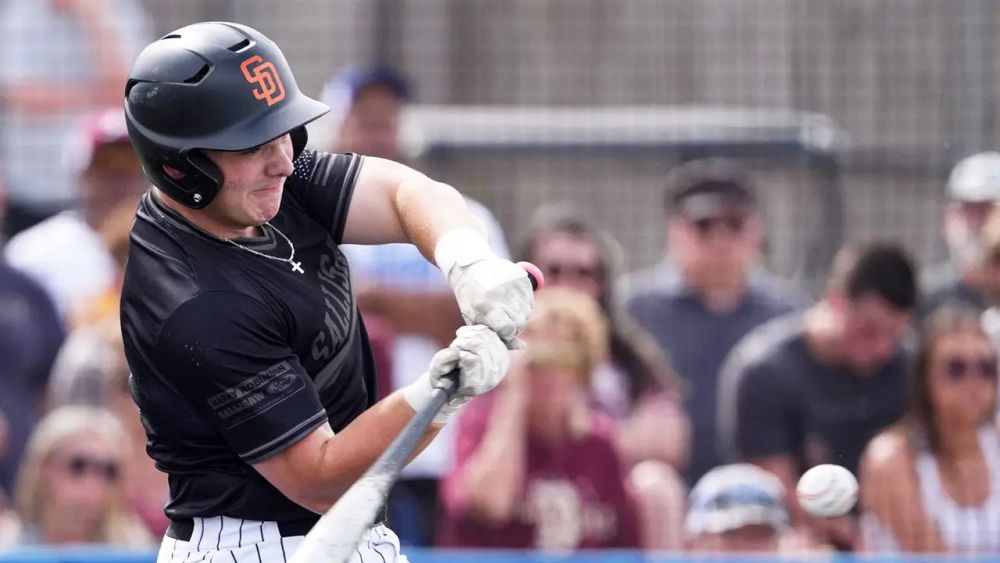
Sallisaw's Carson Sharp hits walk-off home run during a Class 4A high school playoff baseball game between Sallisaw and Blanchard at Noble High School in Noble, Okla., May, 14, 2026.
(USA TODAY Network via Reuters Connect) Starting in 2028, players will be able to legally use a lighter bat, hence the -4, -5, or -6.
USA Baseball sold the move as a necessary one to "keeping more athletes in baseball and supporting their long-term development." I'm not so sure.
Neither are fans, parents, or coaches.
"We have seen too many athletes entering high school baseball struggle with the immediate jump to the -3-drop weight and then walk away from the game," USA Baseball President John Gall said in a release.
"This rule change creates flexibility for players to continue building strength, refining mechanics, and developing bat speed over time before.