

 si
The Milwaukee Brewers and Tampa Bay Rays, both small-market clubs that have been perennial contenders, did not eliminate big-spending teams like the Los Angeles Dodgers and New York Yankees by chance. Their success is the result of deliberate planning and execution.
These organizations boast elite front offices led by some of the sharpest minds in baseball, a stark contrast to the situation in Baltimore, where Mike Elias is entering his ninth year of a seemingly endless rebuild.
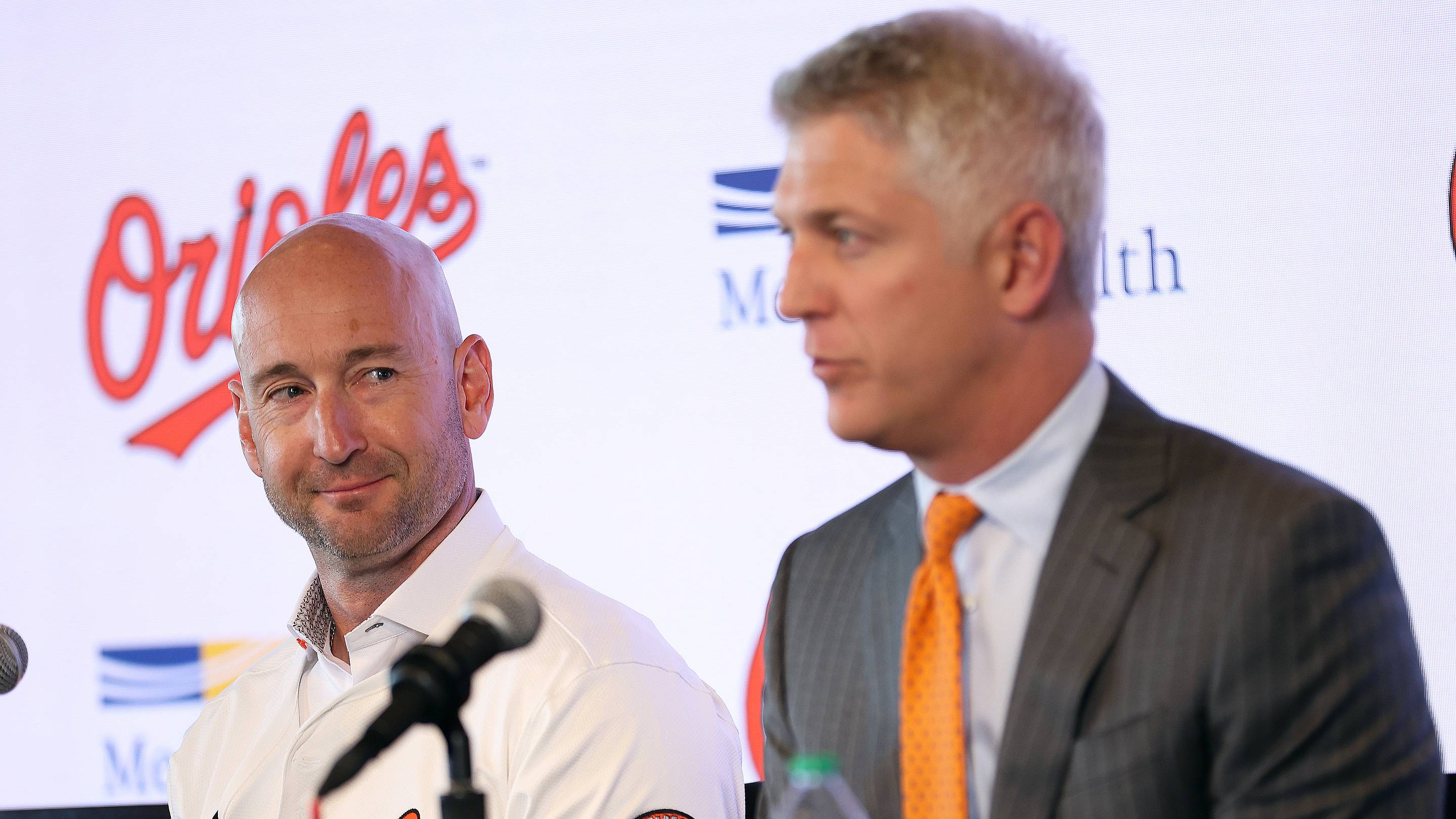
Elias was hired by former owner John Angelos with the Brewers and Rays as models, but he has filled his front office with cronies from the Houston Astros and St. Louis Cardinals. Even his latest hire, purported general manager Jared Banner, comes from a big-market background. The Orioles reportedly expressed interest in candidates from Milwaukee but failed to generate sufficient interest—understandable, given that Elias remains firmly entrenched despite his track record.
Keeping widely disliked figures like Sig Mejdal in the organization makes it clear that the general manager position was not a genuine opening. Still, one can hope that watching these two franchises secure the right to play in the final series of the season—with one guaranteed to win its first World Series—will resonate with Elias.
Perhaps he will notice the myriad ways these teams have surpassed him and the common traits that run counter to his failed attempts to build a playoff roster. After nearly a decade on the job, it is fair to wonder if Elias is simply not cut out for this role, and he might be uncomfortable seeing how the Brewers and Rays expose him: they actually scout. They invest in people and let them do their jobs, rather than relying solely on computer models.
They would never instruct their scouting department, as Mejdal did according to baseball analyst Kyle Glaser on "The Daily Flock Show," to stop writing reports on pitchers because Mike and Sig had it covered with their models. Instead of gutting their organizations of experienced scouts who provide crucial checks and balances—as Elias did by pushing out B.J. Surhoff and Dean Albany—these winning franchises are industry leaders in investing in human capital.
Glaser explains it well: Elias has boasted about his small circle of trust. When you surround yourself with sycophants and make loyalty and deference core requirements for any hire, you end up 39 games out of first place in the AL East for two consecutive years. It took an act of God—the destruction of their stadium in 2025—to keep the Rays from outperforming projections, as they always do.
It takes human beings to turn Drew Rasmussen into an ace, to repeatedly fleece Elias in trades, to steal Junior Caminero, and to know when to sell high. It also takes human judgment for the Brewers to reinvent Quinn Priester, Kyle Hamilton, and Dustin May on the cheap.
Key Analysis
Defense is another area where these franchises excel. Knowing they cannot overspend for sluggers, they maximize every margin and utilize the entire field with their offensive and defensive approaches. It is not just about out-launch-angling the opponent. They make run prevention a hallmark throughout the organization, helping their pitchers. Meanwhile, Elias plays top prospects at three positions, leads the league in errors and unearned runs, and fails to find adequate gloves even for essential positions or the bench.
The Rays and Brewers take runs off the board and frustrate opponents with their positioning, instincts, consistency, and flair for the dramatic in the infield and outfield. This is the antithesis of everything Elias implements and seemingly believes in.
Managerial empowerment is another key difference. They have strong-willed managers—not puppets—who hold all players accountable. They do not play favorites or pick on the last guys on the roster. If you think Pat Murphy or Kevin Cash would not bench Gunnar Henderson after he was picked off twice in the same game amid a full-scale meltdown, then you are not watching them. It would never have reached that point because Henderson would have been benched the first time he fell asleep at first base. Especially with it happening so early in wannabe manager Craig Albernaz's tenure, a signal would have been sent immediately.
Cash is as respected as any manager in the game and has set a standard for quality of play and attention to detail that is the envy of baseball. Elias has hired three dugout figureheads, each more under his thumb than the last; player quality has deteriorated under all three, and his most recent hire would have been fired after one abysmal season if anyone in the warehouse believed the skipper mattered.
Much of this is not changing with Albernaz returning and Elias finding a new underling to replace Matt Blood in player development—but not bringing in anyone with prior decision-making experience to check his worst practices. Perhaps the Orioles will stumble into a roster that can actually field, throw, and run the bases next season.