

 awfulannouncing
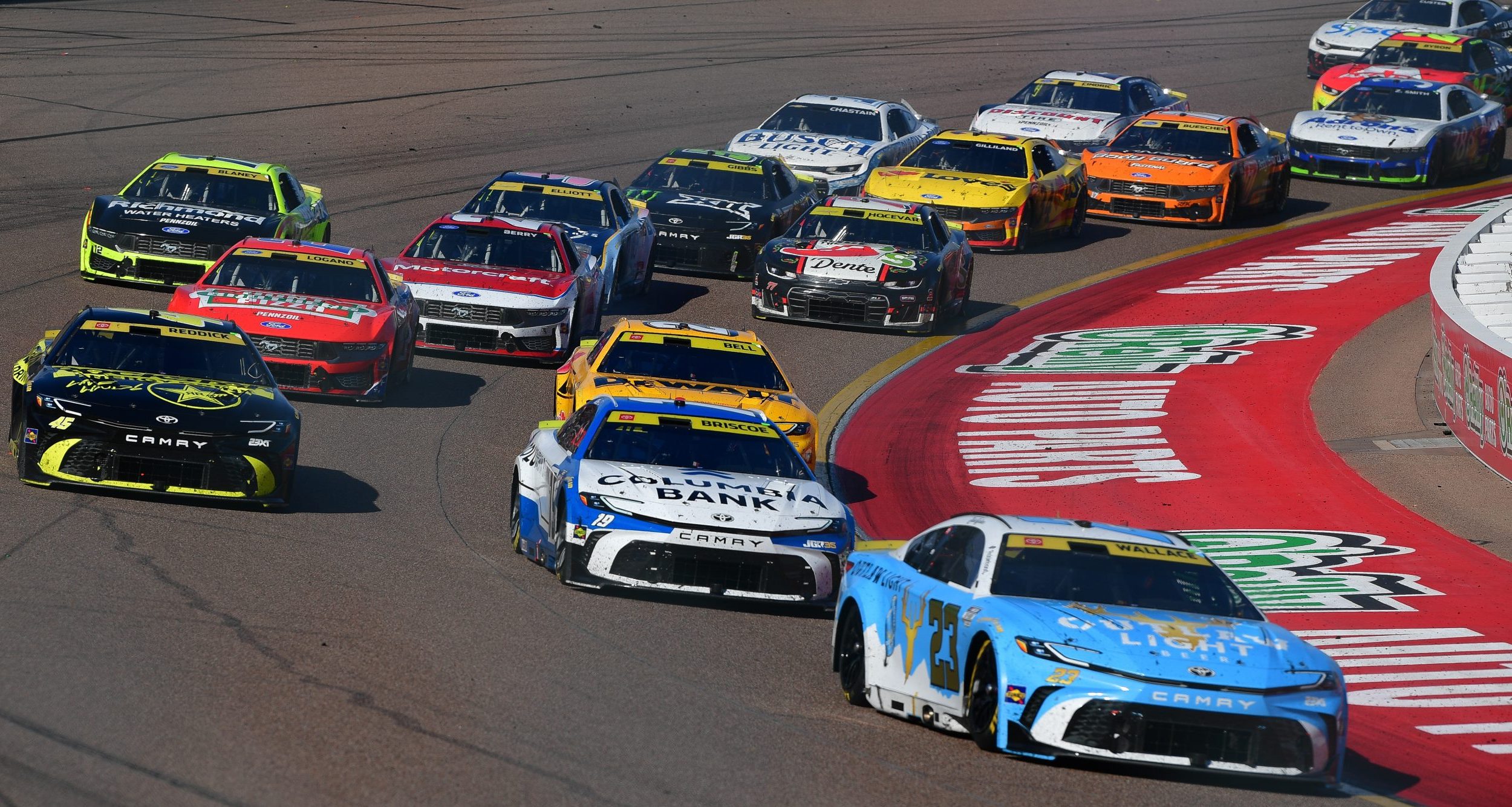
NASCAR's attempt to reignite postseason excitement by bringing back The Chase has yet to translate into a significant viewership boost. Over the first six races of the 2026 NASCAR Cup Series Chase, the average audience stands at 1.62 million viewers, a mere 1% increase from the 1.61 million recorded during the same period last year, according to data from NASCAR Communications.
The most recent Cup Series event at Charlotte Motor Speedway, broadcast on USA Network, attracted 1.48 million viewers last Sunday. That represents a 15% decline compared to the Charlotte Roval race from a year ago, which drew 1.8 million. It marks the steepest year-over-year drop of any race in this year's Chase, as all other races have seen single-digit changes. According to Nielsen's Big Data formula, the Bank of America 400 earned a 0.82 rating, flat compared to last year, but saw a decrease in total viewership.
This raises a critical question: Is The Chase merely a temporary fix for a more systemic issue? A common thread between this year's Chase and the 2025 playoffs is that the first seven races are exclusively aired on cable, with USA Network handling all broadcasts. While this arrangement may maximize revenue for the sport, it does not position the Cup Series favorably against the NFL's most-watched window of the week. Audiences consistently below 2.0 million viewers for what should be the crown jewel of the Cup Series schedule are neither sufficient nor sustainable.
Even Prime Video's summer schedule, which averaged 2.29 million viewers, outperformed the first six races of The Chase (1.62 million). Clearly, changes are needed.
Key Analysis
Last month, NASCAR Chief Operating Officer Ben Kennedy appeared on Sports Business Journal's Sports Media Podcast with Austin Karp, where he questioned the sport's future scheduling. Kennedy pondered whether NASCAR should continue going head-to-head with the NFL every Sunday at this point in the year, especially as the sport looks ahead to 2032 inventory start and end dates. Although NASCAR is only in Year 2 of its 7-year media deals, Kennedy acknowledged that the sport will soon be auditioning for new contracts.
NASCAR is not alone in grappling with NFL scheduling conflicts. In 2022, MLB shifted the World Series from its traditional midweek start to a Friday start, eliminating Sunday World Series games that competed directly with Sunday Night Football. This also added more Friday and Saturday games, an option NASCAR might consider if it pursues a similar strategy. Similarly, in 2019, the PGA Tour adjusted its FedEx Cup Playoffs schedule to conclude before the NFL season began. IndyCar, another U.S. motorsports series, has also tweaked its schedule in recent years to avoid overlapping with the NFL.
Ideally, NASCAR would have avoided prioritizing short-term revenue over reach in its current television deal and kept the majority of its playoffs on broadcast television. More sports than ever are airing on free, over-the-air TV. Even Mountain West football and basketball have secured dozens of windows on The CW. IndyCar, a motorsport sibling, airs its entire schedule on Fox to maximize viewership. NASCAR's decision to prioritize revenue and rely heavily on cable rather than broadcast television for a deal running through the 2031 season has already proven costly.
As an alternative, NASCAR could explore midweek races, as it did during the 2020 COVID-affected season to complete a full 36-race schedule. While viewership for those midweek races didn't match weekend levels, the three non-delayed midweek races averaged 1.77 million cable viewers—above this season's current Chase average. Television has also evolved significantly in those six years. Sports on broadcast television during the workweek are no longer unusual. Fox has a Friday-night sports window, which recently aired a NASCAR Truck Series race at Charlotte that averaged 838,000 viewers. NBC has NBA Tuesdays, and Fox occasionally airs MLB games on Thursdays.
However, such a shift would be a major change for NASCAR, a sport closely associated with Sundays. The ideal scenario for NASCAR would be for Fox to take over inventory currently split by USA Network and NBC, allowing select races to air in Fox's Friday-night window. Additionally, Fox could use NASCAR to lead into its 1 p.m. NFL games when the network doesn't have the national 4:25 p.m. ET Game of the Week. Fox has employed this strategy with the NHRA, providing a model for NASCAR to consider.
For now, until 2032 arrives and NASCAR negotiates another media deal, the sport and its fans must contend with the consequences of a deal that prioritized extracting every possible dollar from its inventory rather than maximizing accessibility for fans. While The Chase may be a better format and more beloved by fans, it will not solve NASCAR's glaring, much larger issue: its reliance on cable.
Originally reported by awfulannouncing.