

 tribtoday
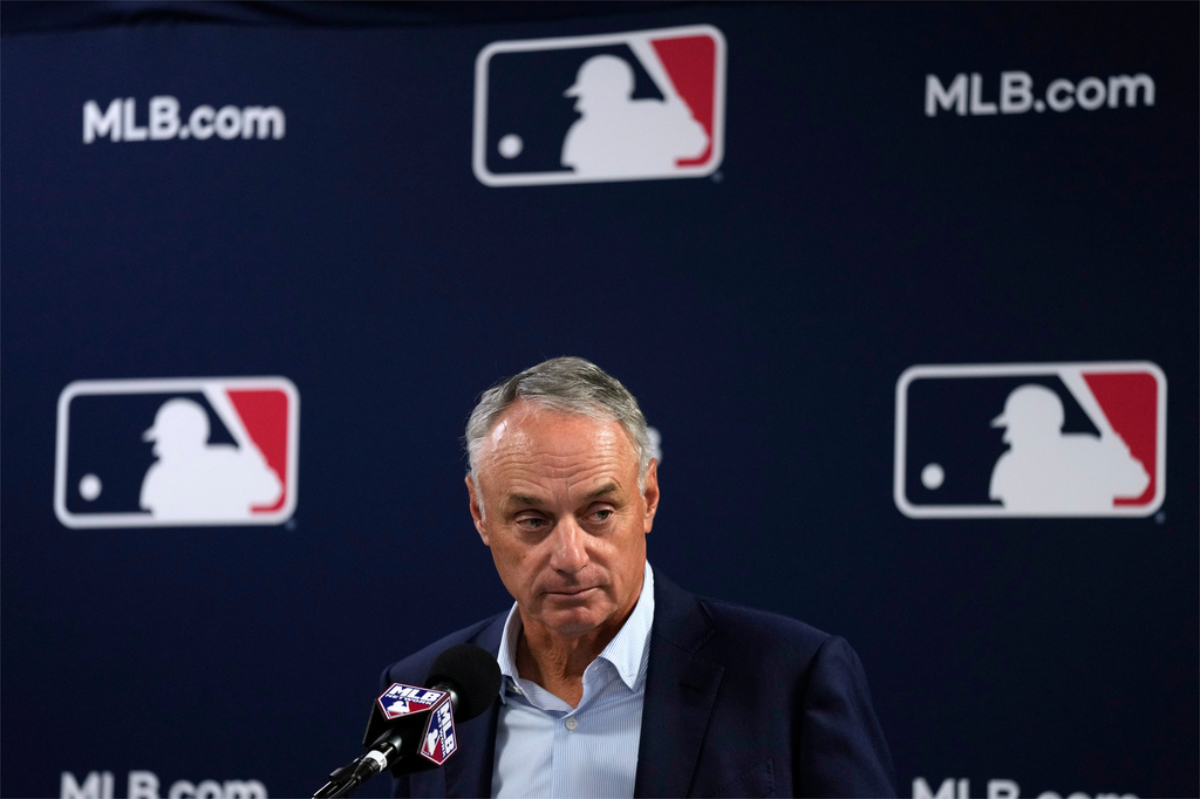
In a move that could reshape the economics of the sport, Major League Baseball has put forward a plan to delay the introduction of a salary cap until 2028, arguing that clubs need more time to align their financial commitments. The proposal, unveiled by owners on Tuesday—just a day after free agent negotiations for the 2026-27 offseason began—calls for a hard cap of $258.2 million and a floor of $180.2 million, calculated using luxury tax payrolls with average annual values.
Under the proposed system, teams would be permitted to spend as little as 90% of the floor in 2028, which equates to $162.18 million, but they would be required to meet the full floor amount over a three-year period. MLB spokesman Glen Caplin explained in a statement that the delay is intended to provide a "smoother transition" into the cap and floor system. He noted that the proposal would not postpone other player benefits, such as earlier free agency, a $1 million minimum salary, a 30% increase to the pre-arbitration bonus pool, and transactional reforms aimed at reducing roster churn.
The league's five-year labor contract, which was agreed upon in March 2022 after a 99-day lockout, is set to expire on December 1, and management is widely expected to lock out the union once again. Notably, MLB had not proposed a salary cap since the negotiations that preceded the 1994 strike, which lasted 7½ months and led to the cancellation of the World Series for the first time in 90 years. The players' association has consistently stated it will never accept a cap.
In a sharply worded statement, the union accused owners of trying to dismantle the current system. "Coming off another incredible season of baseball, MLB owners continue to propose blowing up the current system and replacing it with one designed to line their pockets and increase their franchise values," the union said. "Players stand ready to negotiate in good faith toward a new CBA that will capitalize on our sport's unprecedented momentum and benefit players, clubs, and fans alike."
Management's proposal is tied to a 50-50 split of revenue with players, but the union disputes management's definitions of revenue and expenses. The cap and floor figures would be adjusted downward if a work stoppage causes MLB revenue to decline. In May, management had proposed a fixed cap of $245.3 million and a floor of $171.2 million, also with the provision that a club could spend as little as 90% of the floor.
Caplin defended the plan, saying, "The projected salary cap and floor for 2028 continues to provide more money for major league players while leveling the playing field and giving more teams the ability to participate in the free agent market and retain their homegrown stars so that every fan believes their team has a fair chance to win it all."
According to management, eight teams would need to cut their current payrolls by a combined $528 million to get under the 2028 cap: Boston, the Chicago Cubs, the Los Angeles Dodgers, the New York Mets and Yankees, Philadelphia, San Diego, and Toronto. Conversely, twelve teams would have to increase spending by $636 million to reach the floor: the Athletics, the Chicago White Sox, Cincinnati, Cleveland, Colorado, Miami, World Series champion Milwaukee, Minnesota, Pittsburgh, St. Louis, AL champion Tampa Bay, and Washington.
MLB indicated it is open to discussing phase-in timelines and procedures. The current luxury tax system and revenue-sharing plan would remain in place for 2027 with the same thresholds and tax rates as in 2026, and MLB media revenue would be centralized for 2028.
Players argue that the cap proposal would effectively eliminate guaranteed contracts due to an escrow provision that would claw back salary money if the players' share of defined revenue exceeds 50% in a given year. The union described the plan as a "replacement of market-based fundamentals with a zero-sum system that harms the middle class and pits player against player" and said it would lead to "stripping current competitive advantages for smaller market teams." The players also claimed the proposal would cause a $400 million reduction in amateur signing bonuses for 2027.
On other issues, owners said they would accept the union's proposal to reduce service time for free-agent eligibility from six seasons to five for players at least 30 years old, but the player's team would retain the right to make a qualifying offer under current rules. If a player rejects the qualifying offer, he would become eligible for salary arbitration. MLB would also accept the union's proposal to eliminate qualifying offers for other free agents.
Management would raise the minimum salary from $780,000 to $1 million for players with two years of service and to $900,000 for others—those others would earn an additional $100,000 from the pre-arbitration bonus pool if they accrue a full year of service, provided they are not on the injured list for half a season or more. Minor league minimums would increase from $63,600 to $73,400 for initial big league deals and from $127,100 to $146,700 for additional contracts.
MLB proposed a one-time bonus payment to players, funded by luxury tax proceeds that the current labor agreement earmarks for players' 401(k) accounts. The bonus would be based on 2026 service time, with players in the majors for at least 172 of the 187-day regular season receiving $285,000. The bonus would be $213,400 for three-quarters of a year, $142,300 for half, and $71,100 for a quarter.
The league would increase the pre-arbitration bonus pool from $50 million in 2026 to $65 million in 2027, then to $75 million over the term of a seven-year labor agreement through the 2033 season. It would include Prospect Promotion Incentive draft picks in the international draft MLB is seeking and allow a player to earn his team two PPI picks—one in the amateur draft and another in the international draft. MLB would accept the union's proposal to exclude foreign professionals, such as Japanese players, from the calculation if a player earns additional service time based on his finish in Rookie of the Year voting.
Owners would eliminate a player's fourth option year and reduce optional assignments per season from five to four. They would also decrease by one the number of years before a player must be protected from the Rule 5 draft and allow a player selected in the Rule 5 draft to be optioned.
Key Analysis
The proposal sets the stage for a contentious labor battle, with the union firmly opposed to any cap system. The delayed start to the cap is seen as a concession to teams burdened by long-term contracts, but the union views it as a ploy to shift money from players to owners. With the current CBA expiring in December, the sport braces for another potential work stoppage.
Originally reported by tribtoday.