

 foxnews
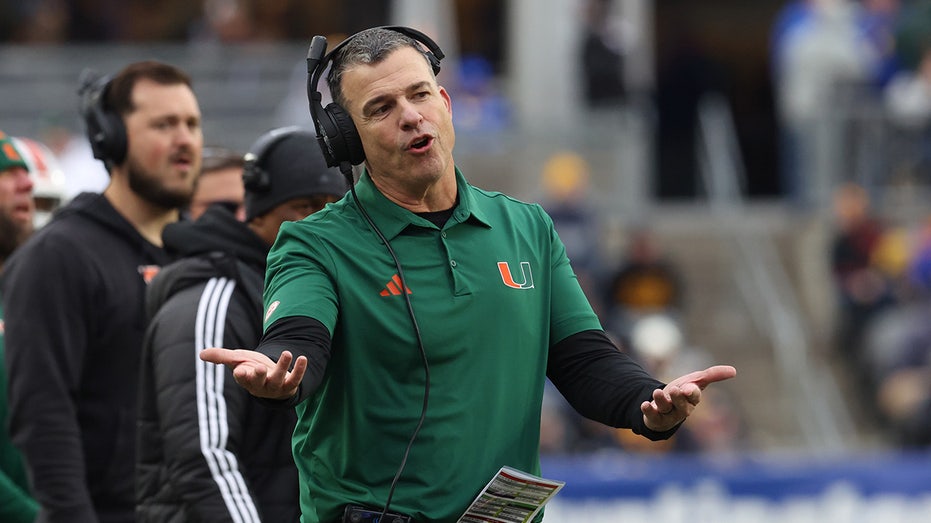
The 2026 college football season may serve as the clearest example yet of why preseason polls are problematic. With the influence of NIL and the transfer portal making early assessments of top teams nearly impossible, and the stunning 2025 Indiana Hoosiers national title run proving that surprise contenders can emerge, preseason rankings have become increasingly obsolete.
Miami Hurricanes offensive coordinator Shannon Dawson recently voiced his opposition to preseason polls, pointing out their consistent bias toward one particular conference—the SEC—which already receives disproportionate benefit of the doubt from voters.
During a press conference, Dawson did not mince words: 'First of all, there should be no such thing as preseason rankings. That's the most ridiculous thing on the planet. That is the stupidest thing, because people weigh those things way heavier than they should.' He continued, 'You shouldn't have a ranking until October. How do you know? (Texas) A&M was ranked in the top-five, but how does that look right now? If anything, it isn't predictable for the future, it's the past. Go look at the top-10 last year. I did. Five of them weren't even in the (end of season) top-25.'
Dawson's argument is hard to refute. Despite Texas A&M and others falling short of preseason expectations, the initial rankings continue to shape perceptions in the early weeks. For instance, Texas A&M's loss to LSU is used to prop up LSU, simply because the Aggies were a preseason top-5 team. Similarly, Missouri's preseason ranking led some to believe Mississippi State is a quality team after beating a top-25 squad.
The preseason poll's impact isn't limited to the SEC; Big Ten teams like Michigan, Penn State, and Washington have also underperformed relative to their preseason hype. Meanwhile, Nebraska and Wake Forest have received little recognition despite deserving it, simply because they didn't start in the top-25.
Dawson specifically called out the SEC and its weekly fluctuations: 'So we sit here and look at schedules, and obviously everything is SEC, SEC. Well look they have all of their teams in the top-25. Guess what. Good for you. At the end of the year, half of them won't be in the top-30. That's just the way it is. We can't sit here and say, hey, we play X number of top-25 teams. We don't know that. Well count those chips up at the end of the year.'
He added, 'That's why there shouldn't be rankings, because you give people talking points that are idiots. They don't know what they're doing. Play the game. Play every week.'
Dawson's frustration mirrors that of many analysts who have long criticized the polls. Voters are human and inherently biased; they don't always watch every game, and some have even neglected to rank elite teams like Miami. ESPN's Heather Dinich, for example, emphasized the importance of winning 'SEC road games,' as if that were a remarkable feat. Her example, Kentucky, beat a subpar Texas A&M team and a weak South Carolina team—hardly worthy of a No. 17 ranking simply because those programs have large stadiums and play in the SEC.
Ultimately, a system combining analytics and efficiency metrics would yield more accurate rankings than relying on biased human voters, especially before any games have been played. However, vested interests ensure that preseason polls will persist. Many cherished college football traditions have faded in the modern era, yet this one inexplicably remains.
Originally reported by foxnews.