

 miamiherald
Miamis 2026 sports calendar has been packed.
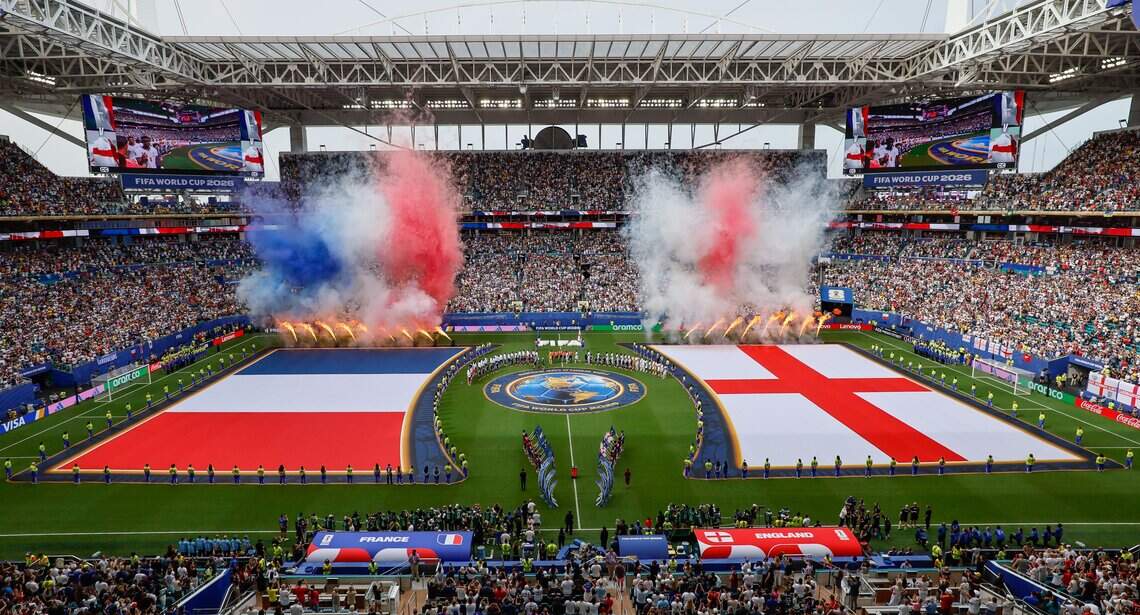
For more than a month, fans from around the globe poured into South Florida as Miami hosted seven World Cup matches, drawing more than 500,000 fans to the region, according to Miami-Dade officials.
Every match will be a home match for some of these countries, said David Whitaker, president and CEO of the Greater Miami Convention & Visitors Bureau ahead of the World Cup.
The worlds largest soccer tournament was only the latest stop in a year that has made Miamis case as one of the worlds premier destinations for sports biggest events.
In January, the NHL turned loanDepot park into an ice rink for the Winter Classic.
Just more than two weeks later, the lights at Hard Rock Stadium shined on college footballs biggest stage, where Miami native Fernando Mendoza returned home with Indiana to face the Miami Hurricanes for a national championship.
By March, packed crowds were bouncing inside loanDepot park during the World Baseball Classic while the Miami Open brought two weeks of top-level tennis to Hard Rock Stadium.
In May, Formula 1 cars screamed around the same complex for the fifth Miami Grand Prix.
Ice hockey.
College football.
International baseball.
Tennis.
Formula 1.
The World Cup.
All in half a year.
The impact of that packed calendar has stretched beyond the stadium gates, with local officials pointing to the boost major events have provided businesses across the county.
So many businesses did record-breaking days and weeks thanks to World Cup, but its not just the short-term, its the long-term, Miami-Dade Mayor Daniella Levine Cava said after the tournament.
And the party isnt over yet.
In November, NASCARs championship weekend returns to Homestead-Miami Speedway for the first time since 2019 For a city already known as a vacation destination, its packed 2026 sports calendar has added yet another draw: becoming a rotating stage for the worlds biggest sporting events.
Sports boom built to last? This is set up to be more than a one-year sports binge.
With Formula 1 locked in through 2041, the Miami Open under a 30-year agreement at Hard Rock Stadium, College Football Playoff games continuing to come through Miami through 2032 and NASCARs championship expected to remain there in 2027, the momentum seems positioned to last past this years packed calendar.
At the center of much of the transformation is one place: Hard Rock Stadium.
Within a matter of months, the Miami Gardens complex hosted college footballs national championship, transformed its grounds into a tennis campus for the Miami Open, surrounded itself with a Formula 1 circuit and then became Miami Stadium for seven World Cup matches.
That versatility allows Miami to compete for a wide range of events that traditionally require vastly different venues and infrastructure.
The Miami Open has called the stadium complex home since 2019, while Formula 1 built the Miami International Autodrome around the property beginning in 2022.
That versatility extends across South Florida, from loanDepot parks ability to host both the Winter Classic and World Baseball Classic to Homestead-Miami Speedways return as NASCARs championship venue.
None of those events needed South Beach as a backdrop to attract fans from around the world.
Between Formula 1, the World Cup and the World Baseball Classic, combined attendance across Miami-Dade totaled roughly 1.27 million in 2026, showing that the citys pull as a sports destination now extends far beyond its beaches and nightlife.
For Whitaker, that turnout offered proof that Miamis ability to host major events is no longer tied to any particular sport or venue, and a glimpse of what could become the citys new normal.
Miami was ready, because we were built for this, Whitaker said of the recent events.
It just reinstates and re-emphasizes our ability to host major events.