

 awfulannouncing
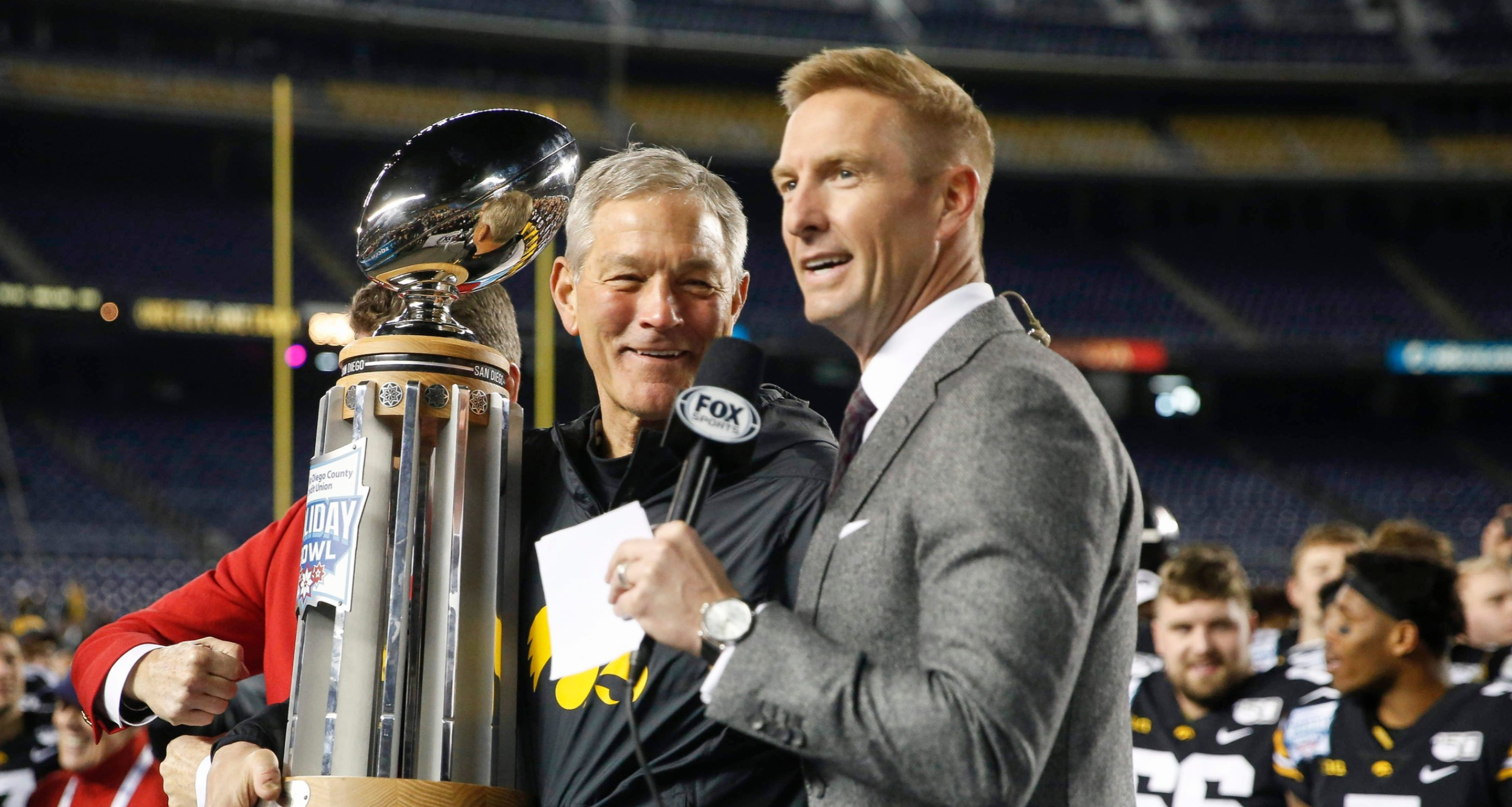
Iowa head coach Kirk Ferentz didn't exactly mark his calendar for the first College Football Playoff rankings release of the season, which ESPN was set to unveil on Tuesday night. When asked during his weekly press conference if he planned to tune in, Ferentz responded with a heavy dose of sarcasm: “Oh jeez, I can’t wait,” before confirming that the show was indeed scheduled for that evening.
A follow-up question probed whether the rankings would give the Hawkeyes a barometer for their standing and whether a first-ever playoff berth was a target. Ferentz initially stuck to the coaching playbook, stressing that winning takes care of everything and that no one could have foreseen the season's twists back in July. “I’m a lot more worried about getting ready for Northwestern, quite frankly, and then we’ll see where we’re at on Sunday, and then we’ll turn the page on to the next one,” he said. “But my experience is if you’re looking down the road, it’s a good time to really go out there and perform badly.”
After delivering the obligatory one-game-at-a-time mantra, Ferentz shifted his focus from the selection committee to ESPN's tendency to spotlight the sports it broadcasts. He pointed to the World Series, which aired exclusively on Fox and concluded last Wednesday when the Milwaukee Brewers defeated the Tampa Bay Rays in five games. “Not to make fun of it, but it’s great for TV, right?” Ferentz remarked. “ESPN’s loving it, I’m sure, and next time I look at my iPad, I’m sure I’ll be reading all about it and can’t wait. I did notice they seem to promote the sports that they carry. Is that correct? I’m figuring that out. You couldn’t find anything on the baseball World Series until the last game—I’m living in the same world, right?”
Ferentz's gripe isn't unique to coaches; it has echoed in network boardrooms as well. This summer, anonymous Fox executives complained to Front Office Sports that ESPN underplayed the World Cup, prompting ESPN to publicly champion its extensive coverage despite FIFA restrictions on highlight usage for non-rights holders. Fox, for its part, publicly denied any friction with ESPN over the matter.
Having needled ESPN for its sparse coverage of a championship it didn't air, Ferentz wondered if similar favoritism could influence the rankings and penalize Iowa for its Fox allegiance. “I’m like, are they still playing the World Series or what? Like, oh yeah, Fox, ESPN. I got it,” he continued. “And I better watch out because Fox is—well, I’m pro-Fox, right? I mean, you know, we’re a Fox conference and several others, but we’re not ESPN, so we probably won’t make the rankings. I haven’t gone that far, but anyway, I’m not too worried about it.”
Key Analysis
The Big Ten has not been an ESPN conference since 2022, when the network exited the league's media rights negotiations, leading the Big Ten to finalize deals with Fox, CBS, and NBC. That left ESPN without Big Ten football and basketball for the first time in about four decades. Fox became the conference's primary partner and, through its majority stake in the Big Ten Network, effectively controls the league's media inventory. This spring, Fox was reportedly close to a deal to buy back the 2026 Big Ten Championship Game from NBC, which had sublicensed it from Fox originally.
The playoff, however, remains ESPN's domain, including the Tuesday night rankings show that Ferentz was mocking. The weekly rankings shows are part of ESPN's CFP media rights agreement, and their average of roughly 1.7 million viewers per week last season gives the network little incentive to drop them. Those viewers keep returning despite years of growing frustration with the show. Critics, including Awful Announcing's Matt Yoder, have argued it should be scrapped and exists mainly to generate content for ESPN, and Kirk Herbstreit, the network's most prominent college football analyst, has called for its end.
That frustration peaked last December when Miami leapfrogged Notre Dame for the final at-large spot between the last weekly reveal and Selection Sunday, even though neither team played in a conference championship game. Committee chair Hunter Yurachek gave Rece Davis a confusing, unconvincing explanation for the switch, then rejected the notion that the weekly format needed an overhaul. Four months later, the committee was reportedly considering delaying the first release, eliminating rankings before championship weekend, and reducing the chair's on-air questioning from Davis.
Ferentz was only half-joking when he suggested the committee might penalize Iowa for its television home, but the quip touches on a sore subject that past committee chairs have done little to alleviate. Before last season's first reveal, then-chair Mack Rhoades explained BYU and Texas Tech's top-10 placements on the CFP conference call by referencing College GameDay's scheduled trip to Lubbock that weekend. “We tried to help ESPN out with their ratings by getting BYU and Texas Tech together with GameDay in Lubbock, so enjoy that,” Rhoades said at the time. Rhoades was being lighthearted, but the remark only reinforced a long-simmering suspicion that the network and the committee operate in uncomfortably close quarters. ESPN pays the SEC billions, owns the SEC Network, and broadcasts the playoff, and every November its studio analysts advocate for multi-loss SEC teams over one-loss challengers from other conferences.
That mistrust has occasionally escalated beyond talk-show complaints. In 2023, after undefeated Florida State was left out of the four-team field, Florida's attorney general went as far as requesting communications between the CFP committee and ESPN. Of course, the committee's Fox aversion didn't prevent it from placing Ohio State and Indiana at No. 1 and No. 2 in last season's opening rankings, but Ferentz still has a point about who benefits most from the weekly spectacle. Whether Davis and company take the bait tonight hardly matters to Ferentz, whose attention is already fixed on Saturday's trip to Evanston, Illinois.
Originally reported by awfulannouncing.