

 si
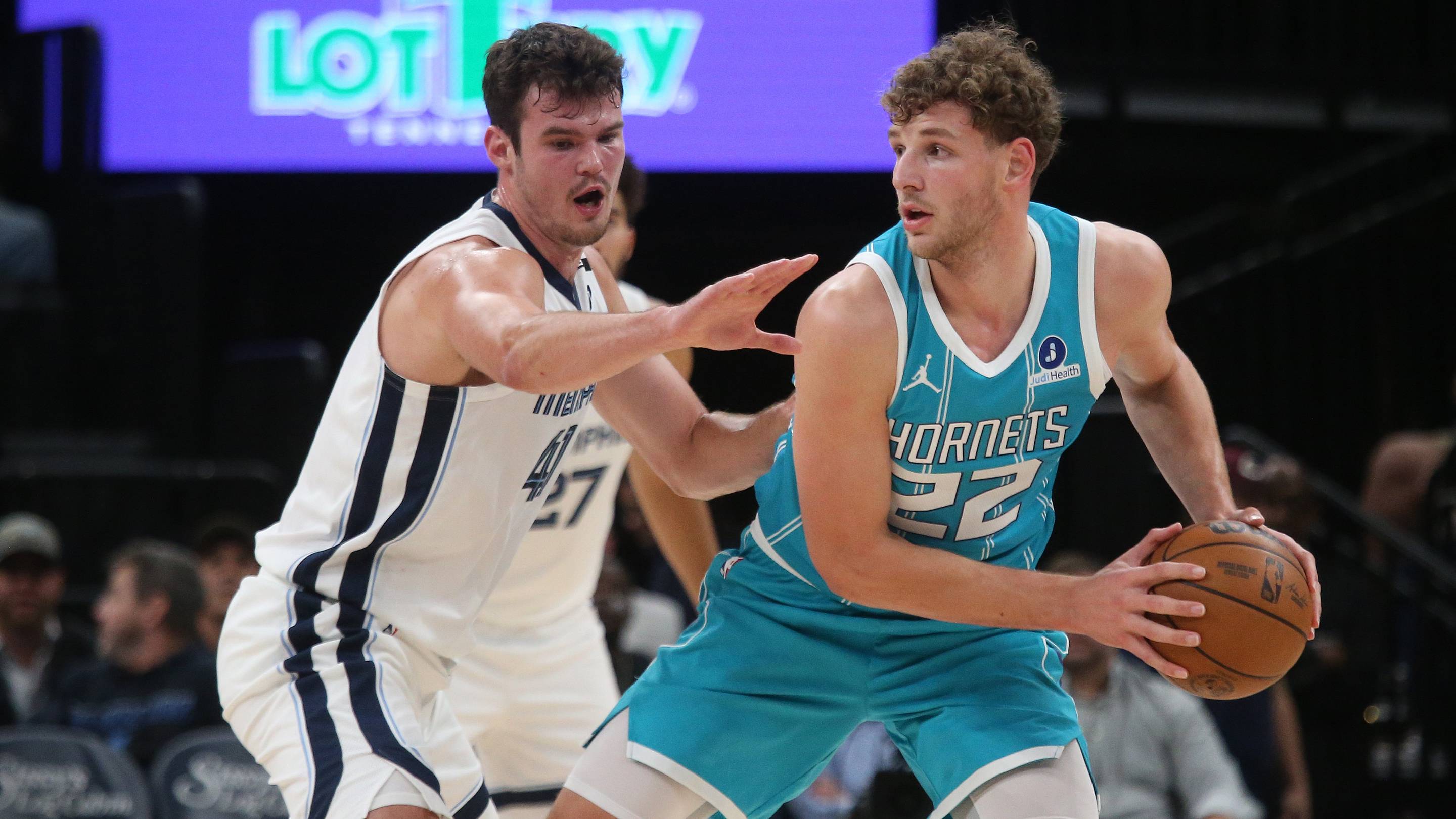
The Charlotte Hornets raised eyebrows by not playing rookie Hannes Steinbach, the No. 14 overall pick in the NBA draft, in their season opener earlier this week. The selection of the former University of Washington big man was expected to bring immediate contributions to the franchise, yet he remained on the bench throughout the contest.
In that game, the Hornets utilized 10 players and secured a 110-103 road victory over the Brooklyn Nets on Wednesday night without Steinbach seeing any action. The decision left analysts and fans puzzled, especially given the team's investment in the 6-foot-11 German prospect.
Two nights later, Steinbach finally made his American professional debut, but the team suffered a lopsided 128-81 defeat to the Quin Snyder-coached Atlanta Hawks in Atlanta. In 12 minutes of play, Steinbach scored 6 points on 3-of-5 shooting and grabbed 5 rebounds.
Analysts covering the team, including those from the Sports Illustrated network, scrambled to explain Steinbach's opening-night absence. Some suggested that his inability to shoot the 3-pointer with sufficient accuracy was a barrier to immediate playing time, while others pointed to his defensive limitations, noting that he is not a prolific shot blocker or rim protector.
However, these critiques are not new revelations about the European player. Steinbach is primarily a rebounder with footwork that allows him to score near the basket, possesses a mid-range shot, and is fundamentally sound enough to be an effective player in his own right.
Evan Campos of Charlotte Hornets on SI reported that during the preseason, the coaching staff showed little interest in playing Steinbach at the power forward position, where he was drafted, or experimenting with lineups featuring a non-shooting big man like him. This raises the question: why draft him if not to utilize his strengths?
Steinbach's game is built on outworking opponents inside and scoring in subtle ways that many big men cannot match. It would be a shame if his talents are wasted because the Hornets fail to recognize what they have.
Key Analysis
The Hornets' handling of Steinbach's playing time reflects a broader pattern of questionable decision-making that has plagued the franchise. With 17 losing seasons in 22 years, including eight of the past 10, the organization's mismanagement is well-documented. Steinbach's skill set—rebounding, interior scoring, and fundamental soundness—deserves a chance to develop, and his limited role in the first two games may signal a disconnect between the front office's draft strategy and the coaching staff's rotation plans.