

 si
si
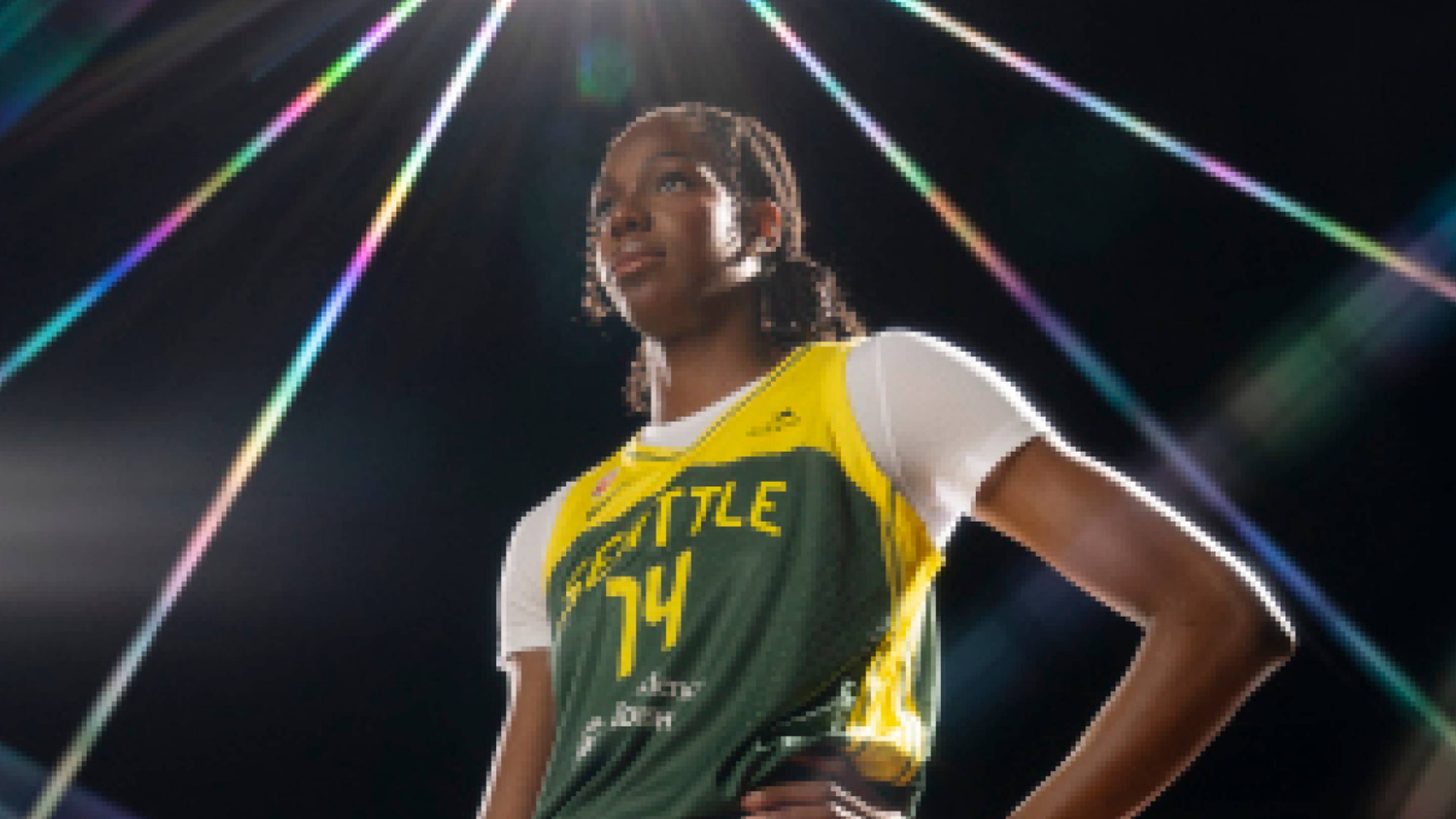
Long before Dominique Malonga became a critical element of the Storms rebuild ..
before she started dunking in games (as a teenager!) ..
before she was born, Malonga was playing basketball.
Her mother, Agathe NNindjem-Yolemp, competed professionally in Europe for more than a decade.
Mom was a physical 6' 4" center.
Mom grabbed boards.
Mom suffocated opponents on defense.
Mom was Dominiques first teammate.
For the 200405 season, NNindjem-Yolemp went to Spain, joining a team in Valencia.
She hadnt reached the midpoint of her career yet.
But she needed a break.
Shes not entirely sure why.
She just remembers repeating the same prayer almost every night: God, I just need something to stop basketball right now.
At 25, she got pregnant with a fourth child.
This baby would be fed basketball, same as all the others.
Inadvertently, Dom gave her mother the desired break that season.
But not before NNindjem-Yolemp competed for five months with a baby growing in her belly.
In the Malonga basketball universe, this all makes perfect sense.
NNindjem-Yolemp met Doms father, Thalance Malonga, in Cameroon some 30 years ago.
Thalance, who played semi-professionally, was born in France but studied in Africa.
(Picture this next part as if delivered by a narrator.) Thalance speaks with a deep baritone, rich and soothing, every word measured.
Basketball is in our blood, is our tradition.
Every child was born into a basketball family.
One afternoon, when Dom was 11 or maybe 12, she and two siblings went to a court near their home in Le Chesnay, about 13 miles west of Paris.
The plan: hoist some jumpers, have some fun.
Then another kid showed up.
Malonga cant remember if he was alone or with a crew.
She does recall his skill set, best described then and now as vast.
This was just park basketball, informal, goofing off.
But this kid! She couldnt guard him.
He scored at will.
She didnt score a single point.
His game, his fluidity, at that size, well, all Malonga can say now is, It just messed with my eyes.
She wasnt alone in drawing that conclusion.
This kid would grow to 7' 4", 235 pounds; would go first in the 2023 NBA draft; would realize, while still a teenager, the superstardom for which he had been destined.
His name was Victor Wembanyama.
He was a basketball prodigy.
Shedespite all her familys history suggesting otherwisewas not.
Malonga wouldnt consider following her mothers career path for another year.
Malongas parents still half-jokingly refer to her as their blessed child.
She was born with a congenital condition called laryngomalacia, which doctors often refer to as noisy breathing.
This forced an immediate, monthlong hospital stay.
Both parents worried, but Malonga healed quickly.
As she grew up, everything came easily.
Still does.
Malonga loved school.
Loved to draw and escape into anime, sketching her favorite characters.
Loved to read, especially psychological thrillers.
Took piano lessons.
Taught herself songs by watching YouTube.
Even then, she admits that she was, I wont say a really, really hardworking child.
The response, given her bona fides, is laughter.
Malonga clarifies immediately: No, really.
Her path to an international basketball career: Circuitous.
Born in Cameroon.
Lived in France while NNindjem-Yolemp was still playing.
Went back and forthand often.
When her mom retired in 2012, the family moved back to Cameroon.
Her parents opened a training academy, in order to, Thalance says, transfer [our] heritage of basketball to young peopleand on a continent he still believes desperately needs exactly that.
Their children went to almost every training session.
But, says Dom, I wasnt really into it.
The Accidental Prodigy is asked if there is one momentsomething, anythingthat pointed her toward basketball.
She thinks.
And thinks.
Buys time.
Not really, is her response.
This is the closest thing Malonga has to an origin story.
The family moved back to France in 2016.
After her 13th birthday, many who knew basketball and made careers in the sport all sounded the same theme, that her potential far exceeded her nonexistent career expectations.
That got Malongas brain churning.
Shed always enjoyed playing basketball.
Shed just never enjoyed watching or reading about it.
Soon, Frances top training program, INSEP, offered her the chance to develop her game and remain in school.
Its leaders told her she was meant for basketball.
You gotta start believing, her coaches said.
She joined INSEP, which is the closest French equivalent to American college basketball, before her last year of middle school.
They train, practice (twice a day), play and studynothing else.
Despite her age, even on that first day, her mindset had already completely shifted.
Basketball wouldnt become her life.
But it would become her main focus, to see how far she could go.
She would approach development with understated, clinical, typhoon-like force.
For two years, Malonga practiced and honed a disciplined training schedule.
That came naturally to her, too.
She loved every part of this newfound hoops-first paradigm.
Then, Tony Parker called.
Yes, the NBA Hall of Famer.
No, she did not expect that.
It was really him.
Parker had seen her play and wanted her to join another academyhis.
Parker, one of Frances most transcendent sports stars, wanted the accidental prodigy to turn pro.
And not just soon or down the road.
He wanted her to turn pro, right then.
At 15.
Parker was comparing Malonga to the prodigy who had decimated her in that friendly pickup game at their local park.
His comparison stuck, immediately, which only bolstered her self-confidence.
If Tony Parker says that about me, it might be true, she told herself.
Malonga immediately enrolled at the Tony Parker Adequat Academy and moved to Lyon in 2021.
She joined ASVEL Feminin and spent two years there alongside many of Frances top female hoopers.
That team would loan Malonga to another outfit in Frances First Division, its highest level of basketball competition.
Tarbes Gespe Bigorre was not a perennial playoff contender but had finished closer to the postseason the previous year.
Most of her teammates werent as young as she was.
But they were also just beginning their pro careers.
Their squad wasnt expected to make the playoffs but did, and also made the French Cup semifinals.
Malonga was named the leagues Best Young Player and one of its five best players, regardless of age.
Four pro seasons in her teens taught Malonga how to approach a game like a job.
She became more versatile, in lockstep with her understanding of basketballs technical nuances, like how to set a proper screen.
She summoned fluid movements more naturally each week.
And discovered she already possessed great hands.
The Wemby comps no longer seemed so far-fetched.
Malongas full embrace of basketball created ever-deepening connections to the game.
She found out shed been selected for Olympic competition about two weeks before the 2024 Paris Games and was the youngest player on Frances roster.
The best basketball experience of my life, she says.
Right now, she adds, quietly and quickly.
She does add that, though, and the subtext, of whats possible, is the important part.
This transformative portion of her career began on April 14, 2025, when the Storm drafted her with the No.
2 pick.
All the Malongas gathered in New York City.
Thalance still cant find words to describe that night, spent inside the WNBAs green room, everyone together, same as always, and yet entirely different than ever before.
The family celebrated with a quiet dinner.
Its happening, she told them.
Malonga had never visited Seattle, didnt know anything about Seattle.
Couldnt find it on a map.
She did not yet understand the Emerald City and its infatuation with womens basketball.
The Storm franchise, run by an all-female ownership group.
Attendance, essentially locked.
City and future superstar, the fit, like a gloveand not to be confused with The Glove, Gary Payton, another dominant basketball force who called Seattle home.
Her rookie season felt like one giant blur.
Malonga adjusted to the pace of WNBA basketball and the leagues travel schedulemore games than shed ever played (she was used to just a game a week in France), which robbed her of the practice time she needed.
She set out to add tools to my bag, she sayspost moves, pick-and-roll expertise, rhythm and flow.
And she began working with a sports psychologist, focusing on breathing techniques.
She made the WNBA All-Rookie team and her 55.1% field goal percentage was eighth in the league.
That massive commitment to basketball remains.
This winter, she stayed stateside and joined Unrivaled.
Its three-on-three format forced her to create shots with ball in hand, to carve space and twist her body and charge at or slip by opponents.
Her rhythm felt even more natural afterward.
Malonga created better scoring opps for herself and teammates, while bolstering her one-on-one defense.
Malonga says she gained physicality this winter and perfected rolling off screens, too.
It started to be really fun for me, she says.
Because I changed my mindset.
I really worked for [this].
But I didnt plan it at all.
Malonga exits an SUV in downtown Seattle and strolls into a cafe.
Its the best kind of spring afternoonthat strange yellow orb makes a rare, glorious appearance overhead.
Inside Mirabelle by Orphee, Malonga is greeted by name, in French, with hugs.
She would never say this next sentence.
But Dom knows the owner.
She discovered Mirabelle on an endless search for the best French food in Greater Seattle.
Plus, Parisians consider croissants essential items, more water than breakfast.
Like a little religion, she says.
For unnecessary proof, Malonga, 20, orders four favorites for the tablethree pastries (croissant, chausson aux pommes, kouign-amann) and a ham-and-cheese baguette.
Her explanation of the order unspools like a college thesis paper, heavy on details and history.
(For the record: delicious.) Her parents long ago developed what Thalance describes as an image for each of their six children.
Those images formed from individual interests, aptitudes, dreams.
It is a vision, Thalance says.
A global vision for the future.
Malongas parents have standards, and those standards are exacting.
Beyond that, theyre adaptable and supportive.
In their own careers, her parents played sports, trained athletes, became doctors and entered politics.
My parents, she says, had like 10 lives.
They see their daughter, her success and her potential, and they also consider future aims, which are international in scope.
Thats a college degree.
Thats more Storm championships.
(The franchise has won four, while showcasing some of the leagues best players: Sue Bird, Lauren Jackson, Jewell Loyd, Breanna Stewart.) Thats a statue in Seattle for her exploits, just like Bird.
And thats Dom, thats all their children, returning to Africa.
Thats where her parents believe Malongas largest future impact lies, in amplifying womens basketball in Cameroon and throughout Africa.
But Malongas not thinking like her parents, not considering statues or intercontinental impacts.
Shell compare where she is to what theyd all mapped out when she pivoted her focus to basketball seven years ago.
Thats proof of concept.
Imagine what its going to be like?, Malonga will ask herself.
Shes already working on completing her computer science degree through online classes.
One current class focuses on digital communities and digital literacy.
Basically, she says, its kind of boring, but I love it! For their next project, students will analyze a specific community.
Hers: sports fandoms.
A case study, in other words, within a case studyher career.
Specifically, where its headed.
Malonga didnt rush her rookie year.
She notched two double-doubles in last seasons playoffs against Las Vegas.
How about 20 more of those? Or half that many dunksshe had three this winter in Unrivaled.
This season Malonga aims to be more aggressive.
She wants to create space for teammates, fashion her own scoring opps and continue her other studiesthe on-court dissertation.
She will need to.
After the Storms top five players from last season left in free agency, the team has stepped into a new era.
Seattle used its No.
3 pick on Awa Fam, a 6' 4" post player from Spain, and re-signed Ezi Magbegor, a veteran 6' 4" forward/center.
(Talk about a towering frontcourt.) Team brass also got Flaujae Johnson, LSUs former star player and a Roc Nationsigned rapper, on draft night.
At the center of it all is Malonga, who had two 21-point performances in the seasons first week (she averaged 7.7 last year).
And yes, she watches basketball now.
But only because she must.
Part of the gig.
On the night she joined the WNBA, Malonga felt ..
joy.
For her family, career, ambitions.
For the present and the future.
She has hardly begun to realize her potential, let alone whatever her top potential will look like.
Soon, more fans across the world will love her as Malonga continues to broaden her impact.
And yet, she herself says she wont work in basketball after she retires.
Malonga loves a lot of things.
And she doesnt achieve anything by accident.
More WNBA from Sports Illustrated Greg Bishop is a senior writer for Sports Illustrated who has covered every kind of sport and every major event across six continents for more than two decades.
He previously worked for The Seattle Times and The New York Times.
He is the co-author of two books: Jim Grays memoir, Talking to GOATs; and Laurent Duvernay Tardifs Red Zone.
Bishop has written for Showtime Sports, Prime Video and DAZN, and has been nominated for eight sports Emmys, winning two, both for production.
He has completed more than a dozen documentary film projects, with a wide range of duties.
Bishop, who graduated from the Newhouse School at Syracuse University, is based in Seattle.