

 yardbarker
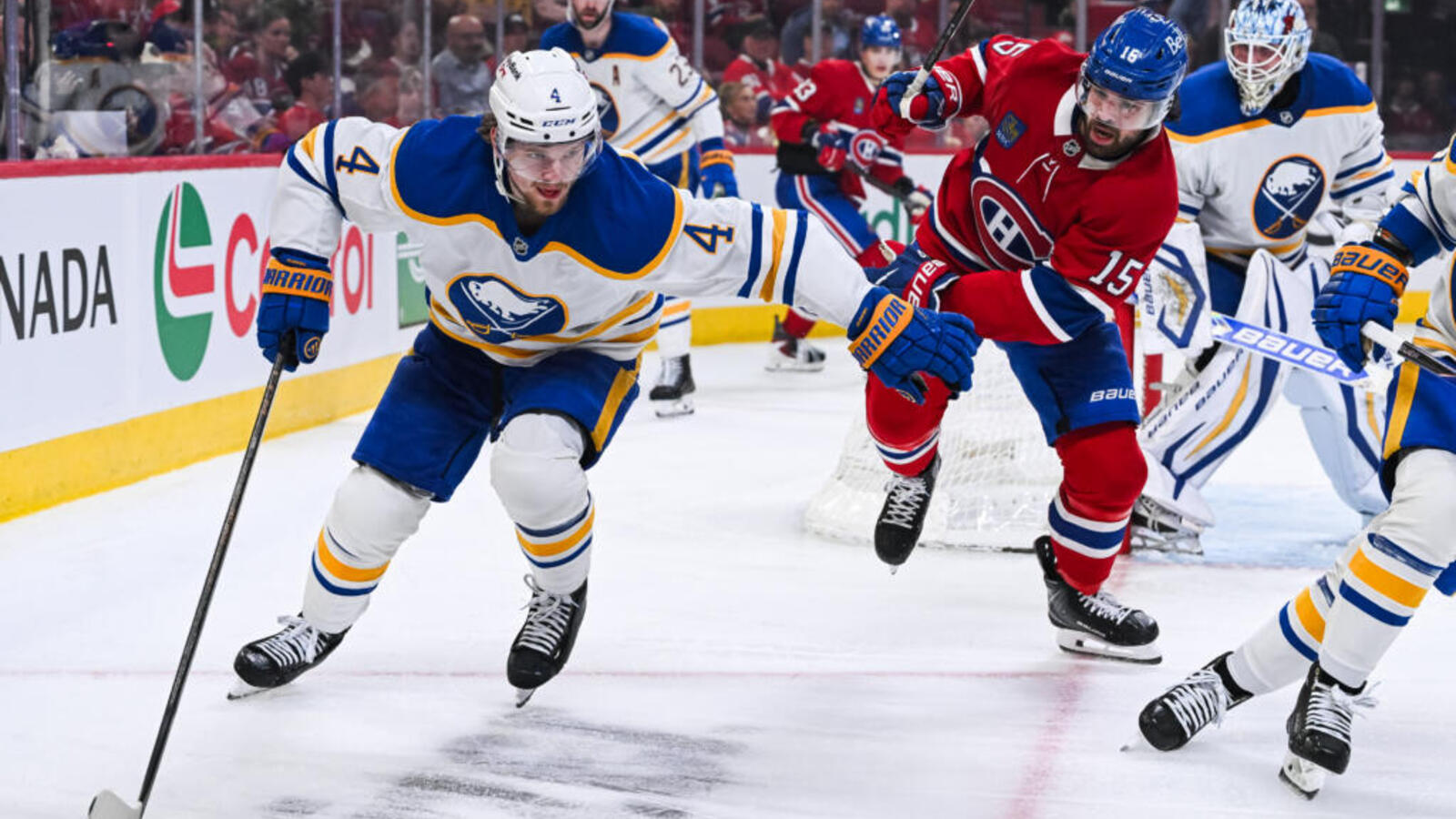
With free agency in full swing and Jarmo Kekalainen relatively quiet aside from the Bowen Byram trade, the question becomes: what should the Buffalo Sabres prioritize next? This offseason, the Sabres significantly strengthened their blue line by adding Olen Zellweger, Wyatt Crevier, and Dennis Gilbert.
Those additions provide valuable depth, push Conor Timmins further down the lineup, and inject some much-needed youth into the defensive corps following the departure of Bowen Byram.
While few players can truly replace what Byram brought, Mattias Samuelssons strong offensive campaign has eased many concerns about the teams ability to generate offense from the back end.
The bigger question now lies up front and in goal.
With Alex Tuch gone and uncertainty surrounding the goaltending situation, Buffalo enters its first offseason after ending a 14-year playoff drought with several important questions to answer.
Up front, Peyton Krebs future remains uncertain, and his value is primarily as a defensive forward.
That raises the question: can a full season from Noah Ostlund, Konsta Helenius, and Jiri Kulich (assuming hes healthy) replace Tuchs production? The short answer is probably notat least not individually.
One thing that may have gone unnoticed is that Ostlund already played 60 NHL games last season, an impressive workload for a second-year player.
With the NHL moving to an 84-game schedule next season, his 27 points over 60 games would project to roughly 38 points.
While thats encouraging, asking a young player to replace everything Tuch brought offensively is probably unrealistic.
Ostlund will undoubtedly make an impact, but he shouldnt be expected to carry that burden alone.
Helenius is perhaps the biggest wildcard.
Buffalo limited him to nine NHL games to avoid burning the first year of his entry-level contract, but in hindsight, one could argue he had earned a longer look after producing at a similar pace to Ostlund.
Although all four of his career points came in Games 2 and 3 of his NHL career, his two playoff goals against Montreal were enormous, and his overall presence gave Buffalo an added dimension.
Then theres Kulich.
While he hasnt been skating recently, assuming hes healthy next season, its reasonable to expect him to rebound after a somewhat rusty start and challenge the 20-25 goal mark.
Tuch scored 33 goals last season.
If Kulich contributes around 20 goals, while both Ostlund and Helenius approach the 40-point mark with roughly 10 goals apiece, Buffalo may be able to replace Tuchs offensive production by committee rather than relying on one player to do it all.
Of course, that projection assumes Josh Norris remains healthy and produces at the same level he did last season.
Thats far from guaranteed.
Norris has unfortunately built a reputation for spending significant time on injured reserve, and Buffalo will need him in the lineup if theyre going to remain a legitimate playoff team.
There have also been continued rumors connecting Robert Thomas to Buffalo.
Acquiring him, however, would likely require a substantial package.
Unless the Sabres are willing to move one of their young defensemenperhaps Radim Mrtkaalong with multiple prospects or even Jack Quinn, its difficult to see St.
Louis agreeing to a deal.
The previous discussions surrounding Colton Parayko suggested the Blues place an extremely high value on their core players, and Thomas also holds a no-trade clause.
That said, perhaps Buffalos playoff breakthrough this spring has made the organization a more attractive destination than it was a year ago.
While replacing Tuchs offense is important, I believe the more pressing issue is in goal.
At the beginning of last season, Alex Lyon appeared to be the favorite to start in the playoffs before Ukko-Pekka Luukkonen gradually took over the crease.
By playoff time, however, it largely came down to whichever goalie was hotter.
Unfortunately for Buffalo, Luukkonen struggled.
He was pulled twice during the postseason, compared to just once for Lyon.
While Lyon posted a respectable .907 save percentage during the regular season, Luukkonen finished at .876a number thats simply not sustainable for a playoff contender.
As someone who watched Luukkonen develop during his OHL days in Sudbury, its difficult to say, but Buffalo needs him to bounce back in a major way.
Colten Ellis remains an intriguing prospect with room to grow, but I dont believe a three-goalie rotation is the right approach.
Ideally, Ellis should return to Rochester as the Americans starter while serving as the organizations primary call-up when injuries occur.
Health will also be critical.
Throughout last season there were stretches where injuries forced Buffalos remaining goaltenders into heavier workloads than intended.
A more stable tandem would go a long way toward avoiding those situations.
After weighing both needs, I believe the Sabres biggest priority should be upgrading in goal.
Connor Hellebuyck has been mentioned as a potential target, but the cost would almost certainly be enormous.
Beyond the assets required to acquire him, his $8.5 million cap hit would leave Buffalo with virtually no financial flexibility, making it difficult to address any additional needs up front.
A more realistic option could be Charlie Lindgren.
At a $3.5 million cap hit, hed provide a proven veteran presence without completely eliminating Buffalos cap flexibility.
Perhaps a package centered around Colten Ellis and a late-round draft pick would interest Washington, giving them another young goaltender to develop alongside Brock University alumnus Logan Thompson.
As the Sabres continue evaluating their goaltending options and the #Sabrehood waits to see whether the Patrick Kane rumors become reality, Jarmo Kekalainen finds himself in a fascinating position.
Buffalo has already taken meaningful steps to improve its defense, and its young forwards should collectively help replace some of Alex Tuchs production.
But if the Sabres want last seasons playoff appearance to become the beginning of sustained success rather than a one-year breakthrough, stabilizing the crease should be the organizations next priority.
More must-reads:.