

 si
si
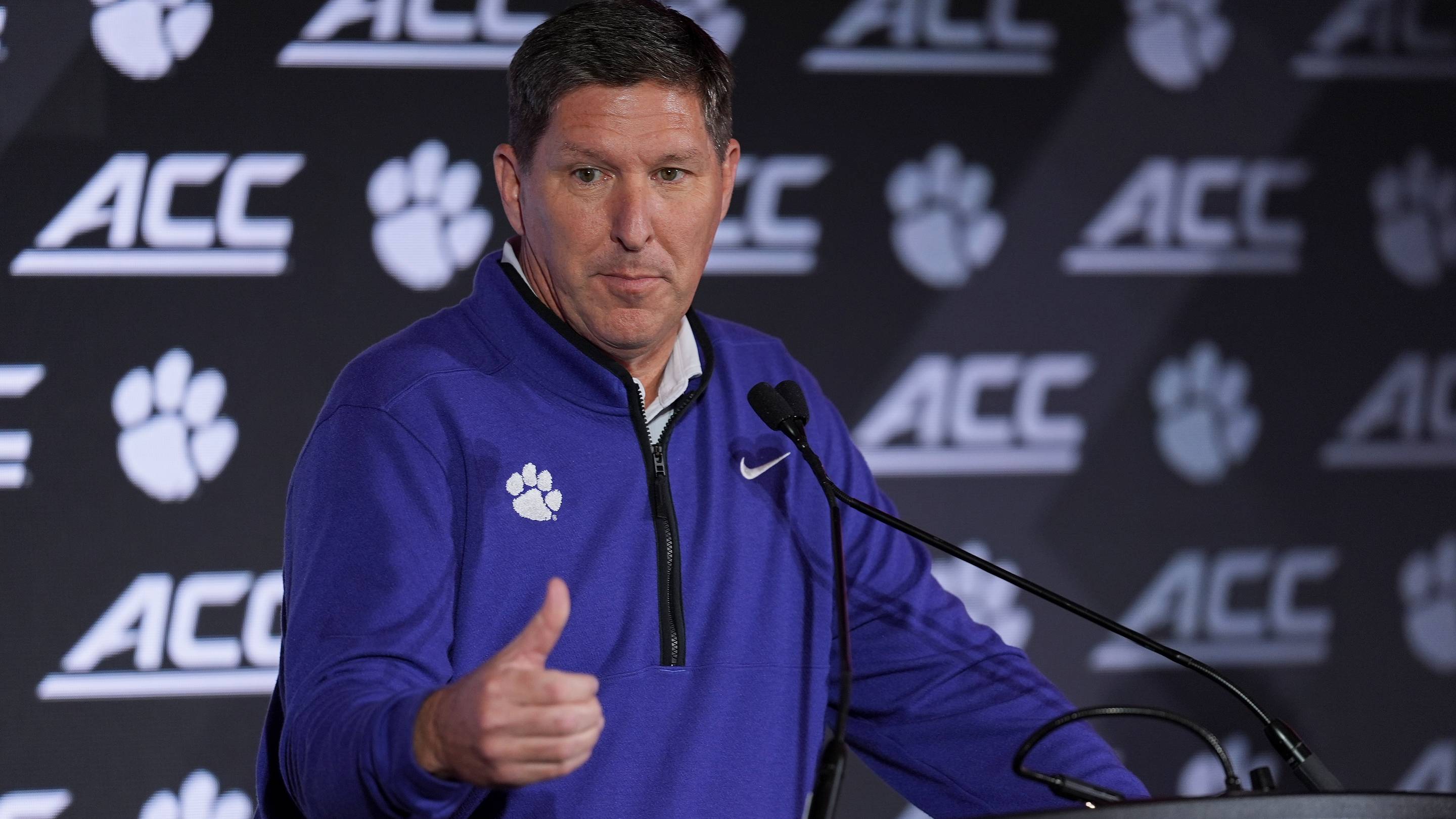
Clemson basketball fans got their first glimpse of the 2026-27 squad on Wednesday afternoon as the program traveled to Charlotte for the annual ACC Tipoff.
Head coach Brad Brownell, along with guard Ace Buckner and center Carter Welling, spoke to the media about a revamped roster that includes four transfers and three freshmen, complemented by a few key returners.
Brownell shared his thoughts on the team's evolving identity and the challenges posed by offseason injuries. "This year I think we kind of have an idea of what our identity could be," he said. "We just haven't done it yet because we haven't had everybody out there practicing every day."
The Tigers have been banged up throughout the offseason, and Brownell remains uncertain about the team's ceiling next season. That uncertainty stems from the absence of expected starting backcourt members Buckner and Zac Foster, both dealing with injuries. Welling won't be ready until the new year, meaning Clemson may not fully figure things out until March—the most critical time of the season.
Ideally, Brownell would have clarity by conference play, but that appears unlikely this season. "This year's team is just a little slower," Brownell noted. "We're going to get there. We just need more practice time with all the guys available."
While Brownell knows his system well, he can't fully implement it until Welling and others return. This isn't about game speed but rather scheme installation. The Tigers will have time to install their system as the head coach wants, but that mirrors last season's situation.
Clemson returns only one player who saw significant action the previous year in guard Dillon Hunter, yet the team still reached the NCAA Tournament and the ACC Tournament semifinals. Growing pains are inevitable, especially in practice, but based on what was heard about how the Tigers will play in 2026-27, the final product should be worth it.
"We want to have that blend throughout my time at Clemson in terms of building the culture and doing it with a roster that has that kind of makeup," Brownell said. The team is balanced from a class standpoint: four seniors, three juniors, four sophomores, and three freshmen. Brownell said this composition was fully intentional.
He pointed to former forwards Ian Schieffelin, PJ Hall, and Hunter Tyson—all All-ACC players recruited out of high school—as examples of the program's developmental success. This year's team is similar, but transfers could make the Tigers an under-the-radar ACC title contender.
"I think we've recruited some really good shooters and worked really hard in that area to be able to space the floor," Brownell said. That spacing is expected to define Clemson's offensive identity. Foster and Buckner will lead the backcourt, while Notre Dame transfer Cole Certa and TCU forward Liutauras Lelevicius add shooting—both shot over 37% from beyond the arc last season.
Brownell wants to score more, a departure from last year's team that finished 236th nationally in points per game. With the current roster, it wouldn't be surprising if the Tigers crack the top 100 in scoring by season's end, perhaps even higher—provided everyone gets healthy first.
"If we can come together and be connected and defend like most of the Clemson teams that I've coached, we have a chance to achieve the kind of things you talked about," Brownell said. The potential is evident, and Brownell is well aware. If the team defends like last season, success is attainable.
Brownell has coached a variety of teams, but blending the best offensive and defensive qualities could propel Clemson to its fourth consecutive NCAA Tournament appearance. If both sides of the ball exceed expectations, there's no telling how far this group could go.