

 kansascity
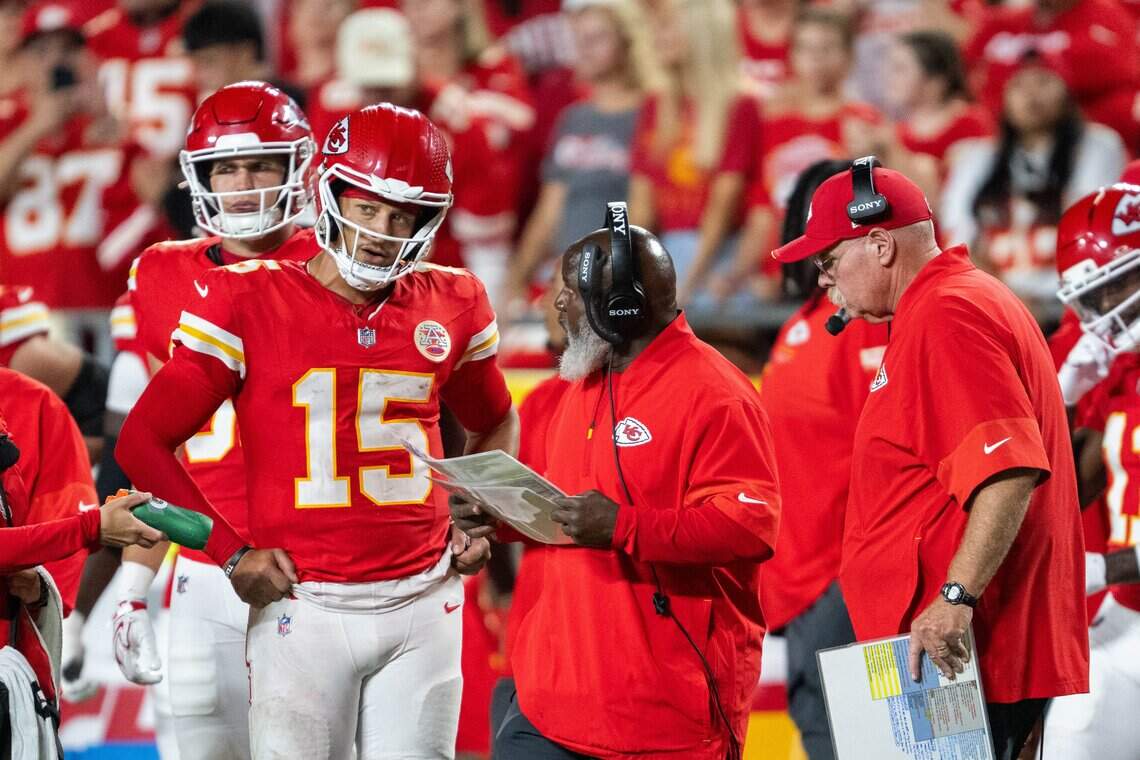
Patrick Mahomes stormed to the sideline, helmet already off, after a critical three-and-out in Las Vegas. There, he unleashed roughly a dozen seconds of frustration at offensive coordinator Eric Bieniemy, who simply nodded. That moment, caught on camera during the NFL's most-watched game, sparked questions about whether the two were arguing. Bieniemy later admitted with a smile, "We may have been. It doesn't matter." In truth, Bieniemy welcomes such interactions. "I can hoop and holler," he said. "So if something is on the players' minds, they can hoop and holler at me. Maybe they're seeing something on the field that I need to know."
This is exactly what the Chiefs sought after a 6-11 season, despite outside calls for a different approach. They could have preferred the exchange stay behind the scenes, but the cameras catching it only underscored the team's new embrace of discomfort. Just last December, in a cold Arrowhead Stadium loss to the Texans, Mahomes showed no frustration after an interception, simply bowing his head. The offense hit rock bottom that night, with Mahomes throwing 10 straight incompletions. "We got too comfortable," wide receiver Rashee Rice said. That complacency led to the sideline firestorm in Las Vegas, a public example of the Chiefs' renewed emphasis on accountability.
After offensive coordinator Matt Nagy left in January to pursue other jobs—eventually landing in New York—the Chiefs faced their most significant coaching decision in a decade. A defective offense needed repair, but the question was what kind. The Chargers, this week's opponent, opted for a seismic shift by hiring Mike McDaniel as offensive coordinator, a move some in Kansas City had demanded. It has been a disaster: Los Angeles ranks among the four worst teams in rushing and passing EPA per play. The Chiefs briefly considered a similar overhaul but ultimately prioritized a change in personality over scheme. They knew that personality would bring a different dynamic—one that could make things less comfortable.
That sideline interaction was nothing new during Bieniemy's first stint in Kansas City, which spanned a decade before he left for one-year stops in Washington, UCLA, and Chicago. Mahomes and Bieniemy had argued on the sideline before—if you can call it that. So when Andy Reid looped in Mahomes on his planned next steps at offensive coordinator, the quarterback interjected: "We need E.B. back." After the Bears were eliminated from the playoffs, Reid immediately called Bieniemy, who was coaching running backs. "Anybody else would've called, and I'd still be up the hill right there in Chicago," Bieniemy said. The two had stayed in touch over the past three years, talking football, life, and everything in between. "Everybody thinks I left on bad terms," Bieniemy said, "but I didn't leave on bad terms. It was just time for me to go. And it was time for me to come home."
Bieniemy hasn't returned with a back-of-the-napkin set of new plays; he's helped restore the culture. Reid calls it a demanding coaching style, while Mahomes refers to it as accountability. Players have their examples: Bieniemy can be vocal, loud, and can raise the volume over the smallest detail. There's a certain on-field yin and yang with Reid and Bieniemy, even if Bieniemy says with a hint of seriousness that it's well within Reid's playbook to chew someone out. Bieniemy's presence was missed during training camp when he left to be with his wife, Mia, who was recovering from a shooting for which their son, Elijah, was charged. While home, Bieniemy called general manager Brett Veach during practice and asked him to pass the phone to Reid. As Veach recounted to The Star's Vahe Gregorian, Bieniemy thought rookie running back Emmett Johnson was lining up too shallow in the backfield. "Am I demanding? Yes," Bieniemy said. "I want these guys to understand that, yes, I am going to be hard on you. But I don't want you leaving this place with any regret. I'm going to demand that I get everything I can out of you."
There's a reason the Chiefs prioritized personality over scheme, though Bieniemy's fingerprints are on this offense. They are running the ball 7% more than last season, and more effectively. That's easier with Kenneth Walker in the backfield, but in Las Vegas, they kept running even when it wasn't working. Walker's initial seven carries totaled 15 yards; he'd finish with a career-high. Bieniemy is stubborn about the running game—and that isn't a bad thing. The Chiefs made this move after a 6-11 season, but they had won a lot and expected to win a lot. "Every window closes fast," Bieniemy said. "Once you step on that stage, as soon as you're walking down off the stage, everybody's building a team and pursuing that same dream. They're envious of what you've accomplished. They want that opportunity to sit in the limelight. We don't have time to waste."
Originally reported by kansascity.