

 si
si
When a sports dynasty crumbles, it's rarely due to rebellion, envy, or laziness. It's Father Time, the unbeatable foe, that ultimately brings it down. The Los Angeles Dodgers are now experiencing this firsthand, as their reign appears to be ending.
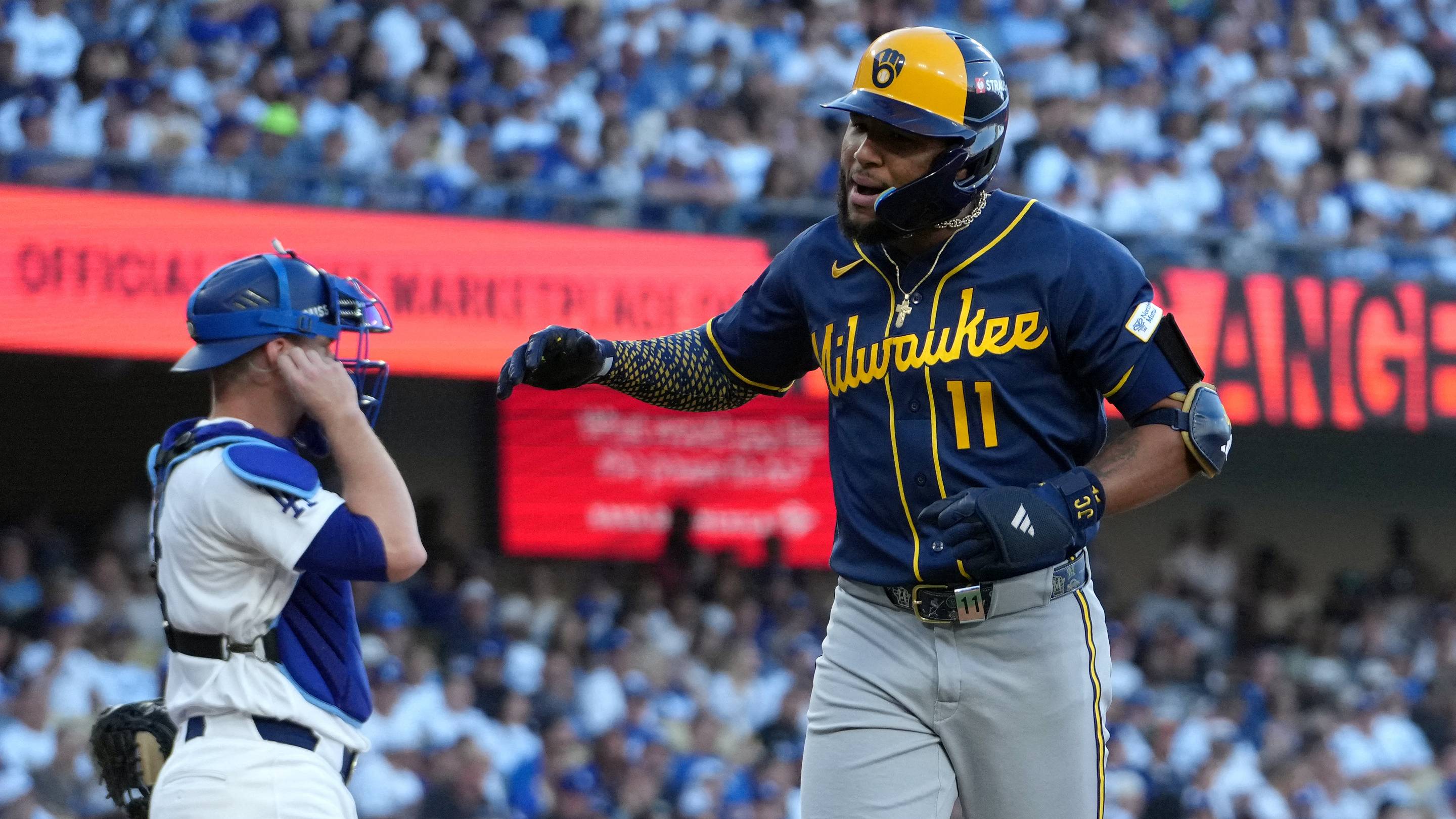
The Milwaukee Brewers have made it clear they are the superior and younger team, securing a 6-2 victory in Game 3 on Wednesday to complete a trio of comeback wins in the National League Championship Series. In three consecutive games, the Dodgers sent Tarik Skubal, Yoshinobu Yamamoto, and Blake Snell to the mound with leads, only to lose each time. Despite investing $95 million, possessing four Cy Young awards, and a World Series MVP in their pitching staff, they couldn't contain Milwaukee any more than one could hold back water with bare hands.
The primary reason for the Brewers' success is their youthful and powerful pitching staff, the youngest in baseball and the hardest-throwing in postseason history, which has stifled the oldest team in the league. Milwaukee is overwhelming the Dodgers' veteran lineup with a mix of fastballs, particularly power sinkers. They are throwing 66.8% fastballs at an average speed of 97.9 mph. The Dodgers' only hope is to hit for power, but the Brewers are not allowing it.
Dodgers infielder Miguel Rojas commented, "I just think they're really good pitchers. A lot of their pitchers throw three different fastballs. They throw hard, and they've been locating the ball really well. They haven't really given us too much of an opportunity to kind of build momentum. They've been attacking the zone. They throw their stuff in the zone—and with all three fastballs. A lot of guys have a cutter, a sinker and a four-seam fastball. It's really hard to put barrels on the ball. At the end of the day, it's just the velocity of their stuff. They throw the ball really hard. And we all know when you throw that hard, it's really hard."
The Brewers anticipated that older players struggle against elite fastballs, making this matchup favorable for them. But the extent of their dominance in the NLCS is surprising: the Dodgers have only two extra-base hits in 105 plate appearances, have been out-homered 5-0, and are the first team in franchise history to lose three straight postseason games without a home run or a stolen base attempt. They are batting .228 against fastballs and are 2-for-16 with runners in scoring position, part of a 3-for-32 postseason slump in such situations.
This season marks a significant shift in baseball's emphasis on speed. Younger players are thriving, and the widespread use of various fastballs has transformed the game. Fast-twitch athleticism and youth are now essential, as is a generation of players who understand velocity instinctively. Defensive range is also critical. Statistics show that players 30 and under hit .247 this year, while those aged 31-35 hit .237, their worst performance ever. Front offices once prized 31-35-year-olds for their experience and physical tools, but that era is over.
The contrast in Game 3 was stark. The Brewers are the fastest team in baseball by sprint speed, while the Dodgers rank 24th. Milwaukee started a lineup and pitcher with an average age of 26.1, becoming the first team in history to start three players 22 or younger in a second postseason game: left fielder Jackson Chourio, shortstop Cooper Pratt, and right fielder Luis Lara. Chourio led off with a first-pitch homer, Pratt had three hits, a stolen base, and a run scored, and Lara covered right field like a hawk, catching everything in his vicinity. Watching Chourio (22), Garrett Mitchell (28), and Lara (21) patrol the outfield was like watching an Olympic sprint relay.
Meanwhile, the Dodgers, especially their hitters, looked old and slow. Their starting 10 averaged 32.3 years old, over six years older than Milwaukee's group. Only two Dodgers starters were in their 20s: center fielder Andy Pages (25) and Kyle Tucker (29), who has been playing older than his age due to diminished range and baserunning. By starting eight players 31 and older, the Dodgers joined the 2023 Dodgers as the only teams in the past 19 postseasons to field so many older starters in a game.
Appropriately, the old team played an outdated style. Ninth-place hitter Tommy Edman twice batted after the leadoff runner reached first, and twice manager Dave Roberts chose not to have him bunt. "I thought about it, but it's just, he had a good pitch to hit. Flew out," Roberts said. "I just didn't feel giving up an out right there. Early in the game, I wanted Tommy to hit .. We haven't been getting hits with runners in scoring position. To give up an out, to bank on getting a hit with runners in scoring position, I'd rather just try to maybe slug, hit a double."
Edman was a below-average hitter (97 OPS+) with a .385 slug this season. Roberts and the Dodgers continue to wait for power at the expense of situational baseball, which the other three remaining teams—the youthful Brewers, Guardians, and Rays—employ. The Dodgers may still be waiting on Thanksgiving morning.
For instance, in the sixth inning, down 1-0, Roberts sent 36-year-old Max Muncy to hit for Pages with runners on first and second and no outs. In that situation, the Brewers would bunt, playing get-em-over, get-em-in ball. The Dodgers? No way. Muncy is a three-true-outcome player and not going to bunt. Again, the Dodgers played for slug and got nothing. Muncy struck out. Will Smith, 31, did save the rally with a two-run double, but the Dodgers would go 1-for-12 after that against hard-throwing relievers D.L. Hall and Trevor Megill. The lineup remained cold.
Shohei Ohtani, 32, cannot pull a baseball due to lower-half injuries that prevent him from properly turning his hips and getting to a firm front side. Freeman, 37, has three extra-base hits since Aug. 31. "[Our] pitching staff has been great, to be honest," Rojas said. "It's really hard to put it into context when you have to pitch and have to play defense with a one run lead every single time. It's like asking these guys to just throw a perfect inning every single time. It's not sustainable. So, the blame is on the offense. We all know we could've done better, but nothing we can do now."
How has Milwaukee made Los Angeles look so bad? "It's pretty simple," Muncy said. "We've played like [poop]. They've played great."
Beyond that, the one-sided NLCS represents a changing of the guard, reminiscent of the 1964 World Series when the St. Louis Cardinals, representing the National League's embrace of Black and Latin American players, ended the dynasty of an aging New York Yankees team, then the second oldest in baseball. The younger, faster, harder-throwing, more creative team has been, without a doubt, the better team.
Tom Verducci is a senior writer for Sports Illustrated who has covered Major League Baseball since 1981. He also serves as an analyst for FOX Sports and the MLB Network; is a New York Times best-selling author; and cohosts The Book of Joe podcast with Joe Maddon. A five-time Emmy Award winner across three categories (studio analyst, reporter, short form writing) and nominated in a fourth (game analyst), he is a three-time National Sportswriter of the Year winner, two-time National Magazine Award finalist, and a Penn State Distinguished Alumnus Award recipient. Verducci is a member of the National Sports Media Hall of Fame, Baseball Writers Association of America (including past New York chapter chairman) and a Baseball Hall of Fame voter since 1993. He also is the only writer to be a game analyst for World Series telecasts. He lives in New Jersey with his wife, with whom he has two children.