

 wmur
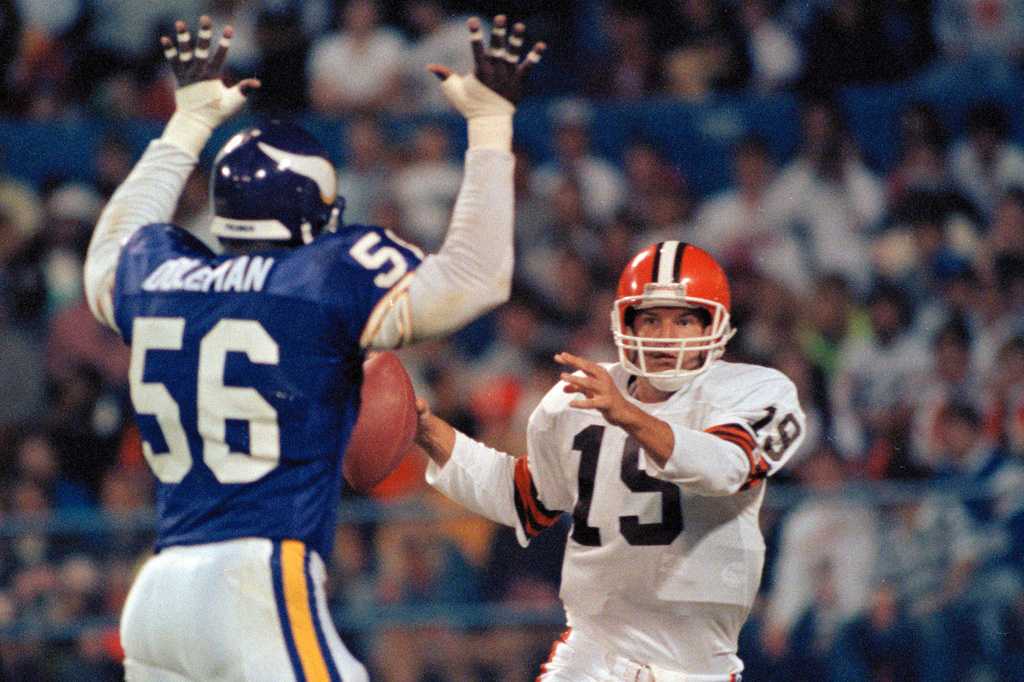
During his nine seasons as the Cleveland Browns' quarterback, Bernie Kosar engineered nine fourth-quarter comeback victories at Cleveland Stadium. On Wednesday, he achieved a far more significant comeback, walking into the auditorium at UH Cleveland Medical Center with his granddaughter, Alia Rose Kosar-Beck, in his arms—exactly 366 days after receiving a liver transplant.
Kosar's physical condition has visibly improved, and his mental sharpness has also returned. He and Dr. Zoe Stewart Lewis, chief of transplant and hepatobiliary surgery at University Hospitals, held a news conference to commemorate the one-year milestone.
"I did kind of think that I'd be sitting here a year from now genuinely not feeling as good and maybe trying to put on my actor hat to project real health, happiness and healing," Kosar said. "So I'm happily surprised, blessed that it really isn't any attempt at acting, that it really is working and that I kind of yearn to get out and keep healing and keep getting stronger."
In 2024, Kosar disclosed that he had been diagnosed with cirrhosis of the liver and Parkinson's disease. He was placed on the transplant waiting list in July 2024 but faced multiple hospitalizations due to life-threatening complications before the transplant took place on November 17, 2025.
The 62-year-old Youngstown native played 12 seasons in the NFL after leading the University of Miami to its first national championship in the 1983 season. He grew up as a Browns fan, and the team selected him in the 1985 NFL supplemental draft. Kosar played for Cleveland from 1985 to 1993, guiding the franchise to three AFC Championship Game appearances (1986, 1987, and 1989), all losses to the Denver Broncos. He ranks third in franchise history with 21,904 passing yards.
After the Browns released him, Kosar finished the 1993 season with the Dallas Cowboys and earned a Super Bowl ring. He then played for the Miami Dolphins from 1994 to 1996.
Kosar's new liver came from 21-year-old Bryce Dunlap, who died of a brain injury. Kosar has maintained contact with Dunlap's parents, Adam and Kimberly.
"I have this responsibility to keep carrying forward not only what I'm doing with this second and possibly third or fourth chance in life, but to inspire because of the unfulfilled life that Bryce wasn't able to have," Kosar said.
Before the transplant, Kosar had also been diagnosed with early stage dementia. He had stopped making radio and television appearances due to midbrain paralysis and difficulty holding conversations.
"Now I'm borderline too chatty, but at least I'm able to respond and be cognitively present when I want to interact with people, whether it's something like this or with your family," he said.
Kosar's recovery regimen has included holistic methods, such as partnering with the Crowley Center for Regenerative Biotherapeutics to improve brain health.
Stewart Lewis noted that the most immediate benefit of a transplant is that patients' brains function properly again after end-stage liver disease had clouded their thinking. Kosar was taking as many as 50 pills daily after the transplant, but that number has been significantly reduced. He undergoes blood tests every six weeks to ensure the liver is functioning correctly.
Stewart Lewis called Kosar a model patient—except for when he appeared at a wrestling show in April and entered the ring before striking someone with a steel chair.
"He's one of the many examples with what happens with a transplant and how it can transform patients' lives," Stewart Lewis said. "Not just the physical way how they carry themselves, but it really restores them to their lives and families and to their grandchildren."
Kosar, who turns 63 next Wednesday, said he will continue advocating for organ donors while also assisting former athletes affected by cognitive issues.
"I think we've been able to figure out a great way to give people second chances in life, and I really think it's my responsibility to pass it forward," he said. "I like to look into people's eyes and give them the self-confidence and self-esteem that they really matter and it gives them the confidence to go forward."
Key Analysis
Kosar's journey underscores the transformative impact of organ donation, both physically and cognitively. His advocacy highlights the importance of donor registration and support for athletes facing long-term health challenges.
Originally reported by wmur.