

 si
si
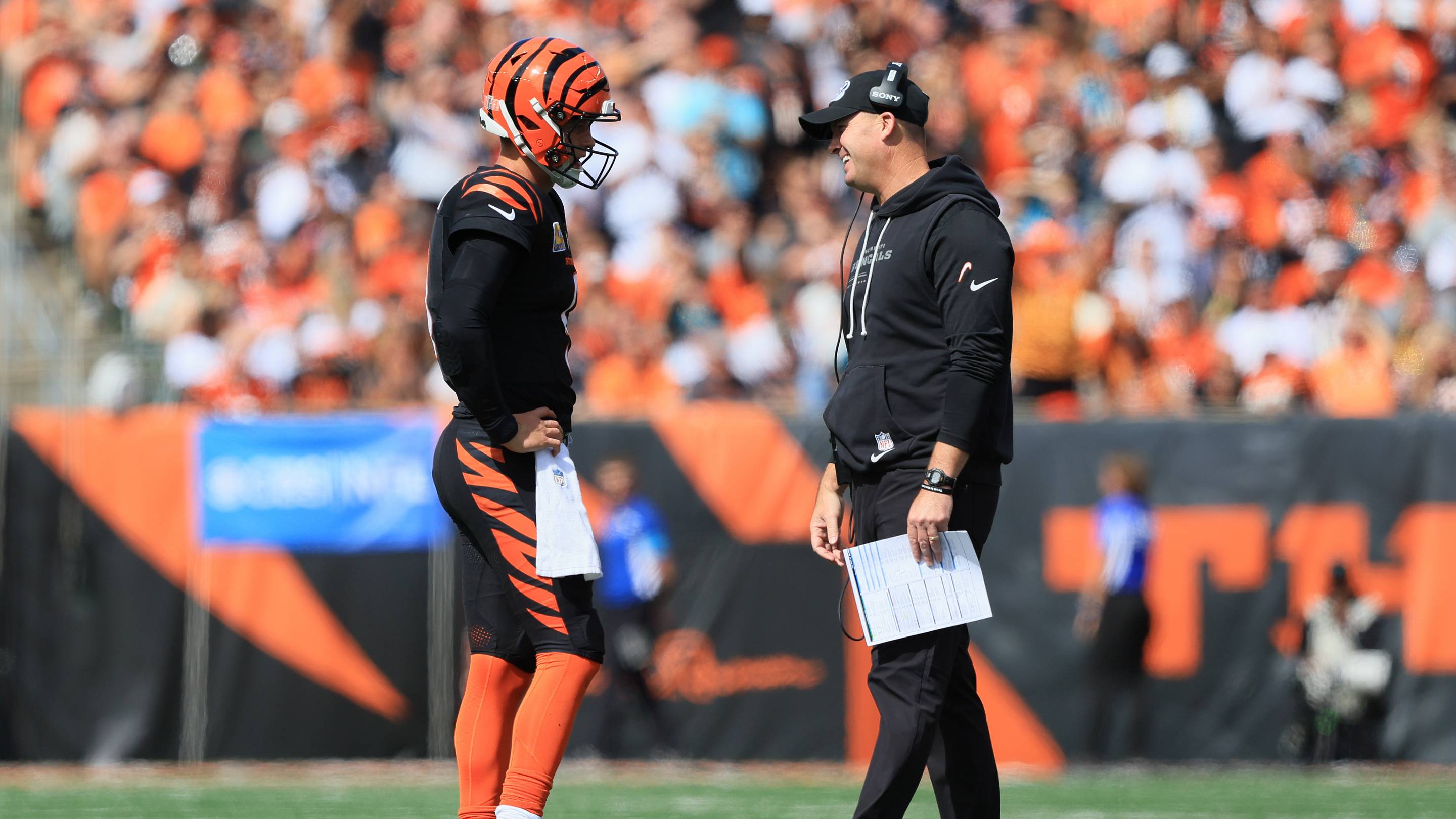
With a 3-2 record through five games, the Cincinnati Bengals are using their bye week to conduct a thorough self-evaluation. Instead of preparing for an upcoming opponent, the focus shifts inward to assess what has worked and what requires adjustment.
Offensive Highlights
The Bengals' offense has avoided a sluggish start, ranking 10th in EPA per play and earning the fifth-highest grade from Pro Football Focus. Quarterback Joe Burrow continues to excel, particularly without play-action, where he is PFF's highest-graded passer. He has held that top spot in 2021, 2022, 2024, 2025, and now 2026.
Burrow's deep passing has been lethal: he leads the NFL with five touchdown passes of 20+ yards and boasts a 137.9 passer rating on deep balls, highest in the league. He is also one of four quarterbacks without a turnover-worthy throw on deep attempts. However, his real damage comes in the intermediate range (10-19 yards), where 22.8% of his passes are targeted. He leads all quarterbacks with a 95.7 PFF grade and a 74.4% completion rate in that area, averaging 12.0 yards per attempt.
Protection has been a key factor. The offensive line ranks sixth in PFF's Pass Block Efficiency, with a 4.5% sack rate that is fifth-best in the NFL—a significant improvement from 10th last year and 19th in 2024. Right tackle Amarius Mims has a 98.8% pass block efficiency, second among all tackles, while right guard Dalton Risner is the fifth-highest graded pass-blocking guard in true pass sets and is enjoying a career year as a run blocker.
Despite allowing pressure on just 36.3% of dropbacks (seventh-best), the Bengals face pressure on 51.9% of third-down passes, which is concerning. They convert 50% of third downs (tied for second-best), but they see the 11th-most third downs in the league. The other top third-down teams, Buffalo and San Francisco, face third downs at the lowest rate.
Run Game Struggles
The running game has been a major topic, as Chase Brown has struggled to get going despite decent blocking. Brown averages only 2.1 yards after contact, ranking outside the top 35 running backs, and his PFF Elusive Rating ranks 22nd among 32 starters. Last season, he averaged 3.4 yards after contact per carry. As a team, the Bengals rank 31st in average rush yards after contact (2.03).
The scheme should be helping: they are stuffed on only 13.2% of rushing plays (eighth-best), a stark improvement from their league-leading 10% stuffed rate last season. However, they are not converting this into explosive or successful runs, with a 39.5% rushing success rate (20th) compared to 42.8% (11th) last year. Blocking issues persist: Amarius Mims is the fourth-lowest graded offensive tackle in run blocking, while tight ends Drew Sample (37th) and Erick All (44th) rank poorly among 51 tight ends.
Due to the lack of success, the offseason plan to run more under center and use play-action has been abandoned. The Bengals have the second-lowest play-action rate in the NFL, reverting to their old shotgun offense. Even if the run game improves, the shotgun approach will likely lead the way, which isn't necessarily bad. Since 2021, the Bengals have been the best offense in the league (EPA per play) from Weeks 6 through 12, a five-year stretch of elite production that includes 10 games started by Jake Browning and Joe Flacco.
Defensive Assessment
Defensively, the Bengals rank 12th in EPA per play, which would be acceptable over a full season. They are fifth in passing EPA but rank 26th in PFF defense, dragged down by the 28th-ranked coverage grade and 26th-ranked tackling grade. In base 3-4, they are the seventh-best defense by EPA per play, but that drops to 22nd in nickel.
The run defense leads the league with a 30% run stuff rate but has also allowed 21 runs of 10+ yards, most in the NFL. They are high-risk, high-reward. This is partly due to a light box: they lead the league in light box rate at 59.6%, which explains some long runs. Dexter Lawrence makes this possible by occupying double teams, enjoying a bounce-back season. He is on pace for 65 pressures and 10 sacks, with PFF's second-highest grade for defensive tackles.
The defense generates pressure on 41.6% of pass plays (12th-best), thanks largely to free agent addition Boye Mafe, who has 25 pressures in five games—a pace of 85 for the season. Only three players had more last season, and 83 is the most Trey Hendrickson ever had with the Bengals (2024). They achieve this with the lowest blitz rate in the NFL (17.3%).
In coverage, they play the 10th-most single-high safety coverages and the 9th-most man coverage, but they don't disguise well, rotating safety coverage at the snap on only 29% of plays (9th-least). Coverage has been tight, with DJ Turner performing well but avoided by quarterbacks. Instead, opponents target linebackers and safeties: Demetrius Knight, Barrett Carter, and Jordan Battle have allowed 46 completions on 58 targets (79.3%). The defense contests 15.9% of throws (7th-best), but playing so much man leaves them vulnerable up the middle, allowing 145 QB scramble yards (3rd-most). They must fix this before facing Lamar Jackson.
Penalties are also a concern: they average 8 per game (19th-worst), up from 5 per game last season. Under Zac Taylor, penalties have historically been low, so this is expected to be corrected, but it has affected early games.
Overall, the Bengals have areas to clean up, as every team does. Taylor's teams tend to improve as the season progresses. Since 2021, Taylor and Burrow have won 75% of games after the bye week. With 12 games remaining, that projects to nine more wins and a 12-5 record, even if it feels tougher than it should.
Joe Goodberry has been analyzing, critiquing, and writing about the Bengals for over a decade. His work has appeared on major football media outlets, including The Athletic, and he is known for his draft prognostications, player evaluations, and film reviews. Follow JoeGoodberry.