

 si
si
With No. 6 Alabama set to welcome No. 2 Georgia to Bryant-Denny Stadium on Saturday at 6:30 p.m. CT, the threat of severe weather looms large. Although the university stated on Tuesday night that it has no plans to change the game's time or location, Tropical Storm Isaias was upgraded early Wednesday, bringing the possibility of heavy rain, strong winds, and even a tornado. As the Crimson Tide and Bulldogs prepare for a top-10 showdown that could be affected by the elements, it's worth recalling three of the most brutal weather games in Alabama football history.
1964 Sugar Bowl: A Snowy Battle
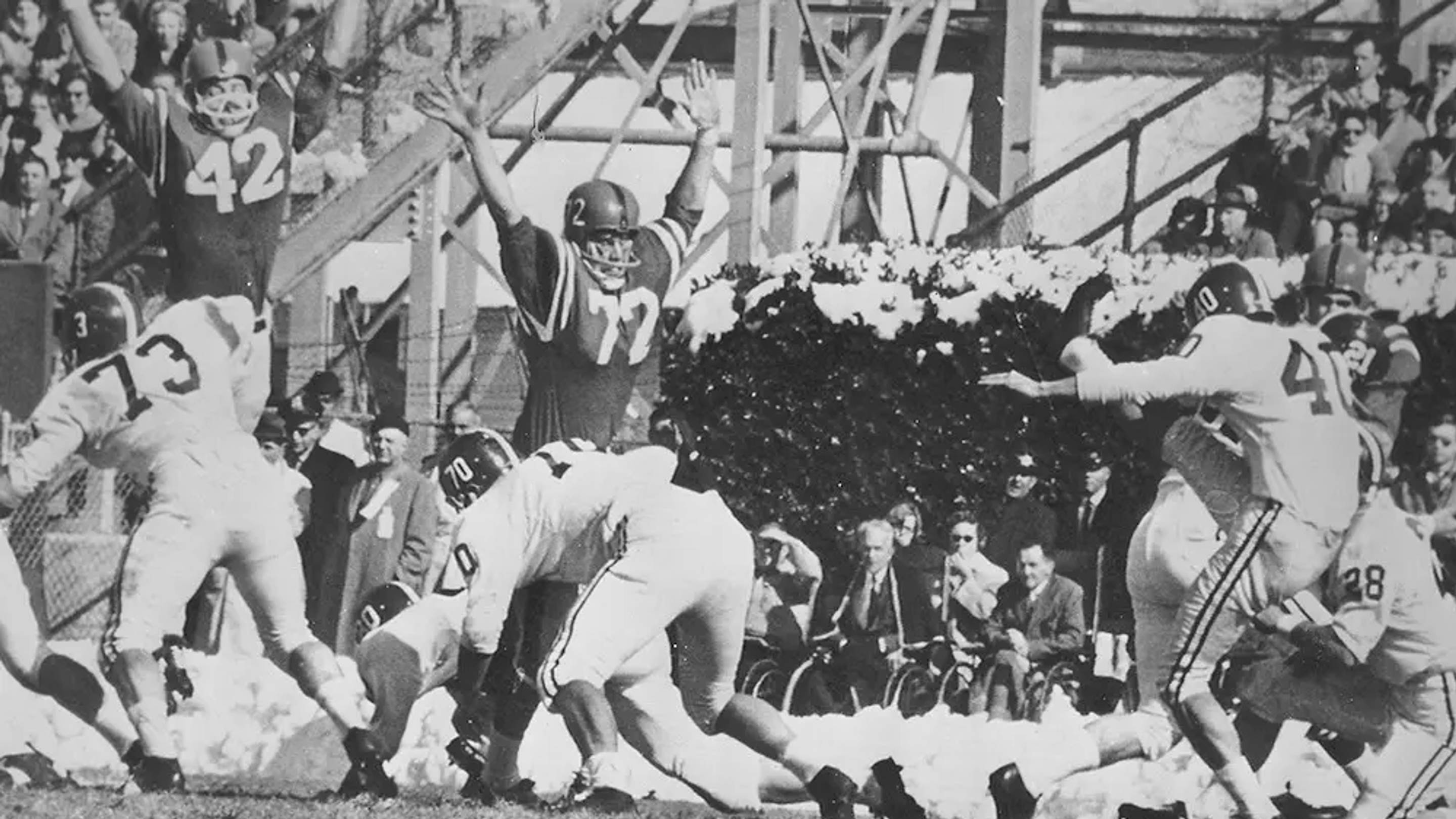
On New Year's Day 62 years ago, Tulane Stadium in New Orleans hosted the Sugar Bowl between Alabama and Ole Miss under conditions more suited to the Arctic than the South. Temperatures hovered between 40 and 45 degrees, and over four inches of snow covered the field. The night before, record snowfall blanketed Alabama and the Tennessee Valley, with some areas receiving more than a foot. The wind chill made it feel like 38 degrees, but that didn't stop Alabama kicker Tim Davis from delivering a legendary performance. Davis accounted for all of the Crimson Tide's points, booting four field goals (31, 46, 22, and 48 yards) in a 12-7 victory over the Rebels. The 48-yarder set a bowl record. The messy conditions led to a total of 17 fumbles, 11 of which were committed by Ole Miss. With starting quarterback Joe Namath suspended, 18-year-old Steve Sloan stepped in under center for coach Paul 'Bear' Bryant, but it was Davis who earned the Miller-Digby Award as the game's Most Outstanding Player.
1983 Iron Bowl: Stormy Showdown
At the start of Alabama's annual clash with Auburn at Legion Field in Birmingham, the sun was shining brightly despite severe flooding the night before that dumped over nine inches of rain. But as the game progressed, the sky turned ominous and rain began to pour early in the third quarter. The wind picked up, and a thunderstorm struck near the stadium. A tornado warning was issued for Jefferson County, about 10 miles away, and fans were informed over the PA system that it was headed toward Legion Field. Yet the game continued. The downpour was so intense that on-field cameras struggled to capture clear images. Seven tornadoes touched down across the state that day, but western Birmingham was spared. Auburn won 23-20, led by running back Bo Jackson, who rushed for 246 yards and two touchdowns on 16 carries.
2000 Iron Bowl: Frozen in Tuscaloosa
The high temperature on Nov. 18, 2000, was a mere 39 degrees, with 37 degrees at kickoff. Unlike the 1964 Sugar Bowl, the skies were not clear; instead, a mix of sleet and rain fell, leaving fans at Bryant-Denny Stadium both freezing and soaked. The game marked the final outing for head coach Mike DuBose, as Alabama entered with a 3-7 record while Auburn was 8-2. The Tigers emerged victorious, 9-0, with kicker/punter Damon Duval connecting on three field goals. Auburn leaned heavily on running back Rudi Johnson, who carried the ball 37 times for 130 yards and a touchdown.
Key Analysis
These three games illustrate how extreme weather can shape the outcome and atmosphere of college football's biggest matchups. From snow to thunderstorms to freezing rain, the Crimson Tide has endured it all. As Alabama and Georgia prepare to face off this Saturday, the possibility of tropical storm conditions adds another layer of intrigue to an already highly anticipated game. If history is any indication, the elements could play a pivotal role in determining the winner.