

 cbssports
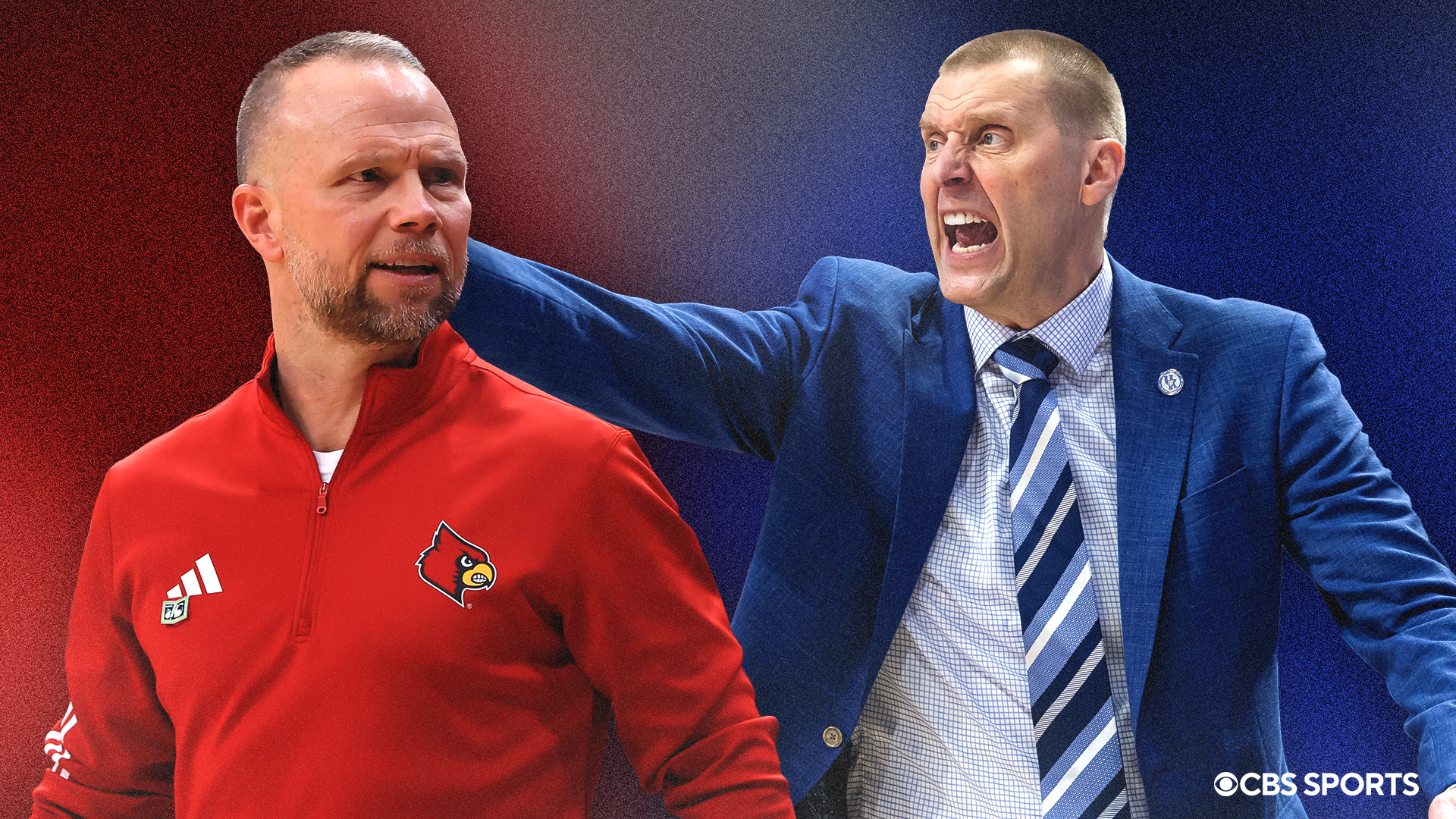
It feels like free agency in college basketball never truly stops.
Just this week, Ole Miss landed Ben Henshall, a 22-year-old Australian guard who impressed many (myself included) at the 2025 NBA Draft Combine.
That's a Day One starter for Chris Beard and the Rebels.
This is the best time to play college basketball, which is why everybody across the world is trying to parachute in or use lawyers to stay for one more year.
But the 2026 transfer portal class has a lot of work to do if it wants to one-up the 2025 iteration.
There were 17 (!) transfers from the 2025 portal haul who became NBA Draft picks last month: Michigan's Yaxel Lendeborg, Iowa's Bennett Stirtz, Tennessee's Ja'Kobi Gillespie, Kentucky's Jayden Quaintance, UNC's Henri Veesaar, Texas' Dailyn Swain, Michigan's Aday Mara, Michigan's Morez Johnson, Baylor's Cameron Carr, Cincinnati's Baba Miller, Louisville's Ryan Conwell, St.
John's Dillon Mitchell, St.
John's Bryce Hopkins, South Florida's Izaiyah Nelson, Virginia's Ugonna Onyenso, Florida State's Lajae Jones and SMU's Jaron Pierre.
The general consensus is that the 2026 portal haul was not quite as talent-rich as 2025 (retention was a priority for tons of teams), but let's dive into some transfer portal superlatives to put a bow on one of the most lavish roster-building windows in college basketball history.
Favorite haul: Texas Texas landed one of the top offensive players in the portal in Colorado spark plug Isaiah Johnson and one of the top defensive players in the portal in TCU's David Punch.
Pretty good, no? Oh, and it added three more legit dudes from top-40 teams in high-flying wing Elyjah Freeman from Auburn, shot-making guard Mikey Lewis from Saint Mary's and physical defensive stalwart Amari Evans from Tennessee.
All five of these transfers look poised to be in Texas' rotation from the very jump, but Punch is the one who will drive winning.
The 6-foot-7, 245-pound forward plays so much bigger than his measurables.
Punch guards every single position, while doubling as a rugged rebounder, a secondary creator and a total burr in the saddle.
The motor is always revving, and he's figured out how to score at the high-major ranks now.
I'd expect his averages to hover around 14 points, eight rebounds, three assists with a ton of steals and blocks.
Texas' passive defense will get a facelift with a defensive playmaker like Punch in the fold.
If Punch is not in the mix for SEC Defensive Player of the Year, just abolish the award.
There won't be another Michigan portal class, but if there were, it would be ____: Louisville Michigan using the No.
1 portal class to kickstart a run toward the National Championship that culminated in three lottery picks (Morez Johnson, Yaxel Lendeborg and Aday Mara) is historic stuff.
That's not going to happen again for a hot minute, but Louisville's collection of raw talent possesses a very high ceiling if it all clicks.
The mere presence of top-rated transfer Flory Bidunga gives Louisville a shot to have a top-15 defense just because he's on the floor.
Bidunga has a 7-foot-3 wingspan and insane athleticism, which helps him create problems and douse fires inside, outside and everywhere in between.
Louisville also used the portal to get really, really old.
All six of Pat Kelsey's transfers are upperclassmen, and Louisville won't ask any of them to be something they aren't.
Oregon transfer guard Jackson Shelstad is comfortable being the head honcho of an outfit.
Karter Knox should buy right into his role as a 3-and-D wing who smashes in transition.
Iowa transfer forward Alvaro Folgueiras should have a bit more freedom in Louisville's scheme compared to the rigorous, effective bootcamp that is a Ben McCollum offense.
His offensive creativity and secondary playmaking should be useful, and Folgueiras is a nice complement to Bidunga on offense.
Dayton transfer guard De'Shayne Montgomery has some eye-popping moments while leaving you wanting a bit more.
But as a second-unit bucket-getter? Sign me up.
Questions still abound with this group.
Who makes everyone else better? Shelstad has to turn a corner in that department after operating as a bucket-getting guard for his whole life.
Is this group actually physical enough to go toe-to-toe with the brutes down in Florida or Arizona? It wasn't always pretty for Michigan, but Dusty May problem-solved his way to the top of the mountain.
Can Pat Kelsey do the same? The talent is certainly in the gym.
Texts from rival general managers These were some of the top individual moves that elicited more than a few texts from rival college basketball front-office staffers.
Duke lands No.
32-rated Belmont transfer big man Drew Scharnowski: Scharnowski was one of the best mid-major big men in the portal.
His combination of size, athleticism, nastiness and playmaking was very attractive, and he had a sterling market.
But when Duke swooped in, it was a wrap.
Duke was able to convince Scharnowski to buy into an off-the-bench role instead of taking a starting center gig at numerous other high-major schools.
Scharnowski is going to play the Maliq Brown role for Jon Scheyer.
It was a double-edged sword in roster-building.
Duke now has constructed one of the deepest and best frontcourts in the country, while forcing numerous other programs to go back to the drawing board in the overpriced big man market.
Ironically, Duke's backup center would start for arch-rival North Carolina.
St.
John's lands No.
4-rated Baylor transfer Tounde Yessoufou: Yessoufou's reps were resolute on staying in the 2026 NBA Draft, but the feedback from the league was eye-opening, so they made the last-second decision to exit and pick St.
John's.
The consensus around the country is that this is going to work really, really well.
Yessoufou has some skill deficiencies that he needs to iron out, specifically with his handle and also his jumper.
Rick Pitino's player development is unquestioned (see: three NBA Draft picks last month).
But Yessoufou plays ridiculously hard and has the tools to be a hellacious defender.
That is exactly what Pitino craves.
St.
John's also has a potential stretch 5 in the mix in Ruben Prey, who should keep the paint free for Yessoufou to deck it and pressure the rim religiously.
This is going to work.
Illinois lands No.
14-rated Providence transfer Stefan Vaaks: The work that Brad Underwood, Tyler Underwood and the Illini do with lead guards -- i.e., Keaton Wagler and Kasparas Jakucionis -- has made an awfully strong impression, so when Vaaks hopped on board, there were more than a few four-letter reactions.
Vaaks is Estonian, not Balkan, but the 6-foot-7 guard is expected to be a major coup for the Illini.
Vaaks' combination of pull-up shooting and sharp vision in pick-and-rolls should pop in an Illinois scheme that will have one of the best-spaced offenses in America.
Illinois' combination of center Tomi Ivisic (50 3s) and 4-man David Mirkovic (57 3s) can draw shot-blockers away from the paint, which opens up acres to find cracks in the defense.
If Vaaks can clean up his body, lock in defensively, and improve his ability to consistently turn the corner, he's going to have a tremendous year in this scheme.
Role Player U: Virginia Hunting for stars in the portal wasn't necessary this time, but the right role players can make or break the 2026-27 outlook.
The Big Four of Chance Mallory, Sam Lewis, Thijs de Ridder and Johann Grunloh will be Virginia's head honchos, but Odom craves optionality and depth.
This portal class should provide just that.
UC Irvine transfer Jurian Dixon and Arkansas State transfer Christian Harmon are both plus 3-point shooters with positional size.
Dixon can comfortably play on the ball, while Harmon offers some off-movement shooting to help replace Jacari White.
6-foot-6 Loyola Marymount transfer Jan Vide provides real positional size as a backup point guard.
Virginia will be fast but small with Mallory starting at PG1.
It can go big with Vide in a snap.
You can toss Saint Louis transfer Kalu Anya into the mix as another playable backup option, too.
None of Virginia's transfers are making the All-ACC team next year, but they are vets who will do their jobs and allow Mallory, Lewis and de Ridder the chance to hum.
Fake ceiling: Indiana Darian DeVries didn't waste much time flexing his muscles this spring, landing six high-major transfers and showing that IU still has some of the best resources in the country.
The biggest coups were Notre Dame transfer guard Markus Burton and Alabama transfer big man Aiden Sherrell, who both could be All-Big Ten players next season.
IU also outbid numerous other center-needy teams for 7-foot-2 transfer Samet Yigitoglu.
DeVries was clearly out to right some wrongs after he built a far too small squad last year.
Indiana will have a double-big lineup of Sherrell and Yigitoglu surrounded by a shot-creating guru in Burton and a trio of playable secondary guards in Villanova transfer Bryce Lindsay, Georgia Tech transfer Jaeden Mustaf and Duke transfer Darren Harris.
Indiana is going to be good; is it going to be great? I'm hesitant to go there.
These moves look more like floor-raisers than something that catapults Indiana into the National Championship discussion.
Is there a no-doubt NBA player on this roster? This is also a very top-heavy team that needs some young guys to pop to round out the rotation.
The money moves are obvious, but Indiana isn't entering 2026-27 as a Tier 1 National Championship contender, even if it spent like one.
The "get off the bus" portal haul: Missouri Missouri loaded up on brute force this spring.
Providence transfer Jamier Jones is the top dawg here.
The 6-foot-6 power wing isn't afraid to go through you and figures to be one of the top transition scorers in the SEC from the jump.
He's a lean, mean, dunking machine.
Tennessee transfer big man Jaylen Carey could double as a defensive end.
He should help Mizzou buff up its defensive rebounding after some porous efforts on that end last season.
Kansas turncoat Bryson Tiller is all of 6-foot-11 and 240 pounds.
If he chooses to play like he's 6-11 and 240, Tiller will be an impact player for this Mizzou frontcourt with NBA potential down the road.
There's also a good chance that BYU transfer Kennard Davis gets a ton of run at the 2-spot next to five-star freshman Jason Crowe Jr., and Davis is 6-foot-6 and 220 pounds.
Missouri could trot out some really physical lineups next year with four guys who are 6-foot-6 or taller insulating Crowe.
Can anyone else make decisions? Is there enough shooting? We'll cross those bridges when we get there, but make no mistake, you will feel Missouri this year.
When Carey and Jones are on the floor together, the Tigers are going to hit you.
This is so risky: Georgetown Georgetown has exited free agency with serious risks at the two most important positions on the floor: point guard and center.
Jaland Lowe's talent is obvious.
The Kentucky transfer point guard can get into the paint whenever he wants and should be a talent upgrade for the Hoyas, but can his shoulder stay healthy for the full season? If so, Georgetown has a chance.
If not, Ed Cooley's group could be in hot water because the backup point guard on this roster is currently ..
Elmarko Jackson? I guess? The big man situation is just as murky.
Charleston transfer Chol Machot is expected to be the man in the middle after Julius Halaifonua said he was returning, changed his mind, hit the portal and landed at Oklahoma State for a bag.
Machot is a toolsy 7-footer who can run the floor, catch lobs, block shots (he was second nationally with an absurd 14.5 block percentage) and step out to the 3-point stripe once or twice, but he's 190 pounds soaking wet.
He was Charleston's second-best big man last year, never played more than 29 minutes, and now he's expected to be a Big East interior enforcer? Georgetown has some useful secondary pieces here, especially if scoring Oklahoma State transfer guard Vyctorius Miller and physical FAU transfer forward Josiah Parker pop, but none of it matters if the point guard and center situations don't pan out.
With little depth accrued, Georgetown's hopes to rise out of the Big East cellar rest mainly on Lowe and Machot.
The make-or-break haul: Kentucky Mark Pope changed the entire tenor of the offseason by reeling in No.
2-rated Iowa State transfer Milan Momcilovic.
He is quite possibly the best shooter that Pope has ever coached, and the offseason moves make a whole lot more sense now.
Kentucky added two point guards in Zoom Diallo and Alex Wilkins after only having one true point guard on the roster last year.
Kentucky added three vets who can shoot with Momcilovic, Justin McBride and Jerone Morton.
Kentucky added a rotation big man in Franck Kepnang.
"Uncle Franck" will turn 25 before the season starts, but he'll help this team with his rim protection and rebounding.
He's an SEC thumper.
But Kentucky's outlook hinges on Diallo.
He is UK's most important player, not Momcilovic.
The Washington transfer was not Kentucky's first choice to be Mark Pope's new point guard.
That was BYU's Rob Wright, who took a visit to Lexington before choosing to pull his name out of the portal to return to Provo.
After losing Wright, Kentucky pivoted to Diallo.
The 6-foot-4 guard posted awesome counting stats, averaging 15.7 points, 4.5 assists and 3.9 rebounds, but Washington wasn't very good, even though it had a lottery pick in big man Hannes Steinbach.
How much of that should fall on the starting point guard? And is it predictive of what's to come? As usual, the truth is usually somewhere in the middle, and the situation is everything.
Diallo will have more space to operate this year because Kentucky's shooting personnel will be so much better than what Washington trotted out last year, but there's no doubt that he has to improve his decision-making both as a scorer and as a playmaker.
The tape is a rollercoaster ride.
Diallo only made 19 3s last year, so relentless, to-the-rack drives are an essential aspect of his game.
He scored 51% of his points last year in the paint, but it came at a cost.
He turned it over on nearly 20% of his rack attacks last season, and frequently got stuck in some awkward spots on the floor with little room to navigate out of trouble.
Turnovers are going to be death for this Kentucky group that does not profile as an elite offensive-rebounding team.
It can't afford to give away possessions because it isn't going to be a team that leads the SEC in second-chance points.
Diallo has some Lamont Butler qualities with his competitiveness and motor.
Butler's decision-making got better after transferring into Pope's offense in 2024-25.
Diallo has to follow a similar script.
The money is the elephant in the room here, too.
He will be one of the highest-paid point guards in the SEC.
Can he play like one of the highest-paid point guards in the SEC? Kentucky's chances to compete for the SEC crown (and more) rest on Diallo's ability to eliminate some of the F-minus plays from his portfolio.