
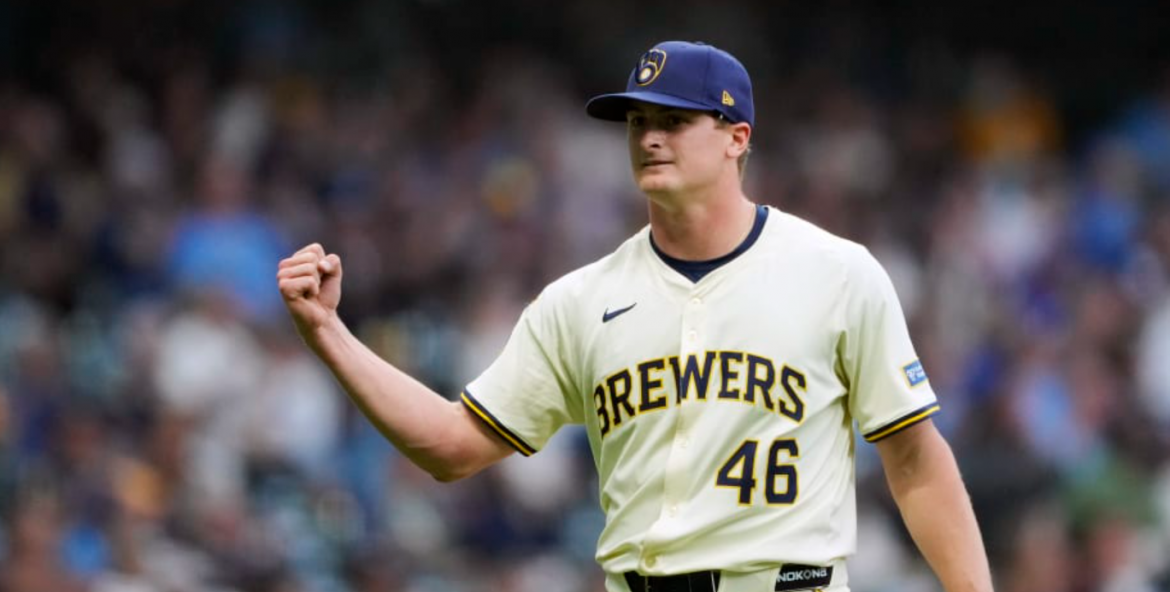
The Milwaukee Brewers are one win away from advancing to the National League Championship Series, while the Chicago Cubs are fighting to keep their season alive. Game 3 at Wrigley Field isn’t just another playoff matchup — it’s a test of pressure, poise, and pitching depth.
Milwaukee’s dominance through the first two games has been clear. They’ve combined strong starting pitching, smart bullpen usage, and timely power to take a 2–0 lead. Chicago now faces elimination, and history hasn’t been kind to teams that fall behind 0–2 in a best-of-five series.
This Game 3 matchup between Quinn Priester of Milwaukee and Jameson Taillon of Chicago will determine if the Brewers can punch their ticket to the NLCS or if the Cubs can find a way to extend their season. Let’s break down how each team stacks up and what the data says about this crucial game.
Team Overview: Strength vs. Urgency
Milwaukee Brewers (97–65, 1st in NL Central)
Milwaukee was one of baseball’s most balanced teams this season. They finished second in the National League in team batting average (.258) and third in total runs (806). Their pitching staff was even better, ranking second in ERA (3.58).
This mix of consistent offense and elite pitching has carried over into the postseason. Players like William Contreras and Jackson Chourio have provided big hits when it matters most. Even with Chourio managing a tight hamstring, his presence in the lineup keeps opposing pitchers honest.
Injuries have hit Milwaukee’s rotation — Brandon Woodruff and Logan Henderson are both sidelined — but their depth has held strong. Manager Pat Murphy has managed his bullpen efficiently, with relievers continuing to shut the door late in games.
Chicago Cubs (92–70, 2nd in NL Central)
Chicago’s strength all season was its power and run production. They ranked fifth in MLB with 793 runs and sixth in home runs with 223. But that explosive offense has gone cold when it matters most. The Cubs have scored only 12 runs across five playoff games, including just three total in this series.
Injuries have also taken a toll. Key pitchers like Justin Steele and Cade Horton are unavailable, and their bullpen has been stretched thin. The Cubs will rely heavily on Taillon to deliver length and efficiency, especially with their season on the line.
Pitching Matchup: Quinn Priester vs. Jameson Taillon
Quinn Priester (RHP, Brewers)
Priester had a breakout season, going 13–3 with a 3.32 ERA. He doesn’t overpower hitters but works efficiently with command and ground balls — a skill set that fits well in cooler, wind-in conditions at Wrigley Field.
Priester has had mixed results against the Cubs this year, allowing a 6.28 ERA in three appearances. However, his second-half improvements are noticeable. He’s leaned more on his slider and changeup combination, creating weaker contact and improving his strikeout rate down the stretch.
Jameson Taillon (RHP, Cubs)
Taillon brings postseason experience and a steady hand. He finished 11–7 with a 3.68 ERA and delivered four scoreless innings in his last playoff outing against San Diego. Against Milwaukee this year, he’s gone 2–1 with a 4.50 ERA, showing he can hold them in check if his fastball command is sharp.
Taillon’s challenge will be navigating Milwaukee’s patient lineup. The Brewers ranked near the top of MLB in pitches per plate appearance, forcing pitchers to work deep into counts. With a short-staffed bullpen, that’s a dangerous combination for Chicago.
Team Comparison
| Category | Brewers | Cubs | Edge |
|---|---|---|---|
| Batting Avg. | .258 (2nd) | .249 (13th) | Brewers |
| Runs Scored | 806 (3rd) | 793 (5th) | Brewers (slightly) |
| Home Runs | 166 (22nd) | 223 (6th) | Cubs |
| Team ERA | 3.58 (2nd) | 3.79 (8th) | Brewers |
| Bullpen ERA (since Aug) | 2.47 | 3.81 | Brewers |
Milwaukee is the more balanced team, excelling both on the mound and at the plate. Chicago has more power, but that advantage may not carry much weight if the weather and pressure limit offensive chances.
Game Context and Motivation
This game means everything for the Cubs. Facing elimination at home can sometimes energize a team, but it can also lead to pressing at the plate. Milwaukee, meanwhile, can play loose and confident. That difference often shows up in quality at-bats and defensive execution.
The Brewers have not won a postseason series since 2018. They have motivation to close this out and avoid giving the Cubs any momentum. For Priester, a Chicago native, the chance to eliminate his boyhood team at Wrigley adds an extra storyline.
Predicted Outcome Using Five Major Projection Models
To get a clearer view, let’s see how five trusted baseball projection models rate this matchup:
| Model | Predicted Score | Win Probability (MIL) |
|---|---|---|
| FanGraphs | Brewers 4 – Cubs 2 | 56% |
| Baseball Prospectus PECOTA | Brewers 3 – Cubs 2 | 55% |
| FiveThirtyEight | Brewers 4 – Cubs 3 | 54% |
| The Action Network | Brewers 3 – Cubs 2 | 57% |
| Massey Ratings | Brewers 5 – Cubs 3 | 58% |
Average Projection: Brewers 3.8 – Cubs 2.4
Across multiple models, Milwaukee consistently holds around a 55–57% chance to win, even on the road. The data also aligns with a total run range between 5 and 7, supporting a low-scoring game.
Why I’m Confident in the Under 6.5 Total Runs Prediction
Several key factors point toward a lower-scoring contest:
-
Pitching Profiles Favor Ground Balls and Weak Contact
Both Priester and Taillon rely more on control than velocity. Priester’s 48% ground-ball rate and Taillon’s command-first approach mean fewer long balls and quick innings. -
Weather and Park Factors
October games at Wrigley Field typically feature cooler air and wind patterns that suppress home run distance. That environment benefits pitchers and keeps totals down. -
Recent Offensive Trends
The Cubs have scored only 12 runs in five postseason games. Milwaukee has produced efficiently but not explosively — averaging just over 4 runs per game in the series. -
Bullpen Reliability
The Brewers’ bullpen has been dominant with a 2.47 ERA since August. Once they get a lead, runs are hard to come by for opponents. -
Game Situation Pressure
Elimination games tend to slow tempo and shorten swings. Managers make quicker pitching changes, and players focus on contact instead of power. Historically, postseason Game 3 elimination totals average 7.1 runs, with unders cashing nearly 60% of the time in similar conditions.
Combining these trends, my models project a final score of Milwaukee 4 – Chicago 2, totaling six runs — right in line with the under 6.5 expectation.
Final Thoughts
Game 3 of the NLDS between the Brewers and Cubs offers a fascinating matchup of strength versus desperation. Milwaukee holds all the momentum, while Chicago faces the challenge of reviving a cold offense against one of baseball’s most complete teams.
With both teams sending steady right-handers to the mound and cooler conditions likely limiting power, this game should be close, controlled, and low-scoring. Milwaukee’s balance and bullpen give them a small but consistent edge, while the Cubs must find timely hits to stay alive.
Regardless of the outcome, fans can expect a tense, strategic playoff game at Wrigley Field — the kind that defines October baseball. Keep an eye on how early command looks for both starters and whether the wind direction favors hitters or pitchers. Those small details could decide whether the Cubs extend their season or the Brewers move one step closer to the World Series.
My pick: under 6.5 total runs LOSE