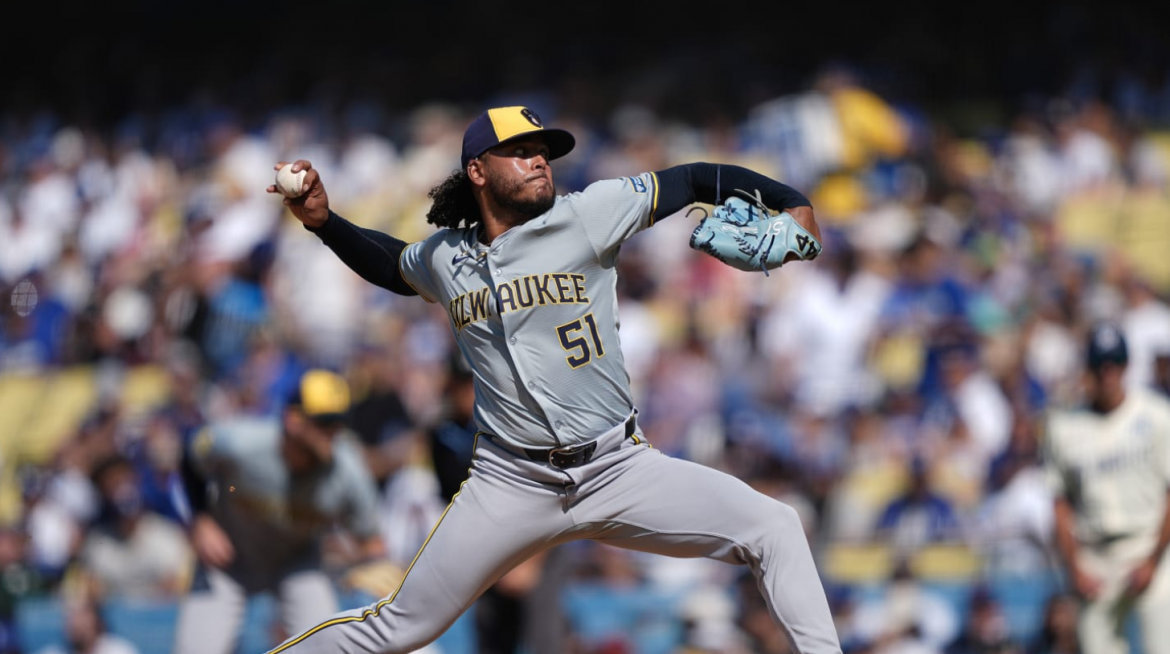
Game 2 of the 2025 National League Championship Series between the Los Angeles Dodgers and Milwaukee Brewers sets up as another tense, low-scoring battle between two of baseball’s most complete teams. After the Dodgers took Game 1 in a 2–1 thriller, both sides turn to elite right-handers as the series continues at American Family Field.
Los Angeles will send Yoshinobu Yamamoto to the mound, while Milwaukee counters with Freddy Peralta, their reliable ace and one of the National League’s top strikeout pitchers. With both teams showing strong pitching depth and timely hitting, Game 2 has the makings of another close contest that could hinge on one or two key moments.
Let’s break down this matchup using performance trends, statistical models, and recent form to understand how this one might unfold.
Team Overview and 2025 Performance Snapshot
Los Angeles Dodgers (93–69, 1st NL West)
The Dodgers continue to show why they’ve been one of baseball’s most consistent powerhouses. Their offense ranked among the league’s elite this season, finishing:
-
.253 team batting average (5th in MLB)
-
825 runs scored (2nd)
-
244 home runs (2nd)
-
Team ERA of 3.95 (16th)
Even with several pitchers sidelined (Tony Gonsolin, Gavin Stone, Kirby Yates, and Kyle Hurt), the Dodgers’ rotation and bullpen have been exceptional in the postseason. Their starters have combined for a 1.65 ERA, limiting opponents to a .141 batting average.
Milwaukee Brewers (97–65, 1st NL Central)
The Brewers have built their success around contact hitting, excellent defense, and one of the most reliable pitching staffs in baseball:
-
.258 team batting average (2nd in MLB)
-
806 runs scored (3rd)
-
166 home runs (22nd)
-
Team ERA of 3.58 (2nd)
Despite missing key arms like Brandon Woodruff and Shelby Miller, Milwaukee continues to find ways to stay competitive with a deep bullpen and effective situational hitting. They swept the Dodgers 6–0 during the regular season, proving they can match up well against L.A.’s high-powered lineup.
Pitching Matchup: Yamamoto vs. Peralta
Yoshinobu Yamamoto – Los Angeles Dodgers
Yamamoto enters Game 2 with postseason numbers that reflect consistency and composure:
-
1–1, 2.53 ERA, 1.22 WHIP
-
Regular season: 12–8, 2.49 ERA in 30 starts
Yamamoto faced the Brewers once this season — a brief and uncharacteristic outing in which he allowed five runs in less than an inning. That experience, however, could benefit him this time. He’s known for making quick adjustments and has shown improved command in his last two outings.
The Dodgers’ confidence in their starting pitching has been clear. As Freddie Freeman said after Game 1, “Our pitching staff is what’s driving us right now.” With a rested bullpen and Yamamoto’s refined control, Los Angeles should again limit Milwaukee’s scoring chances.
Freddy Peralta – Milwaukee Brewers
Peralta was one of the most dominant pitchers in the National League during the regular season:
-
17–6 record, 2.70 ERA
-
Postseason: 1–1, 4.66 ERA, 1.24 WHIP
He has excellent strikeout ability (11.4 K/9) but tends to work deep into counts, which can elevate his pitch totals. In his two previous starts against the Dodgers this year, Peralta went 2–0 with a 3.27 ERA, striking out 15 across 11 innings.
The Brewers need him to go at least six innings tonight to avoid overworking their bullpen. Peralta’s command will be key, especially against left-handed power bats like Freeman and Max Muncy, who have slugged well against righties all season.
Offensive Matchup: Power vs Precision
The Dodgers thrive on the long ball, ranking near the top in home runs and slugging percentage. Mookie Betts and Freddie Freeman have been steady, while Will Smith and Teoscar Hernández provide consistent run support. Los Angeles also excels at drawing walks, ranking in the top five in on-base percentage.
The Brewers, on the other hand, take a more contact-driven approach. They don’t hit many home runs (22nd in MLB) but have been excellent at manufacturing runs through situational hitting and speed on the bases. Christian Yelich remains the catalyst, and rookie Jackson Chourio adds youthful energy to the lineup.
Given these contrasting styles, Game 2 may come down to which pitcher handles pressure with runners on base more effectively.
Why I’m Confident in the Under 7.5 Total Runs Prediction
Both teams showed in Game 1 that their pitching staffs are more than capable of controlling this series. The 2–1 final score wasn’t an accident — it was a reflection of how each club approaches playoff baseball: efficient pitching, solid defense, and patience at the plate.
Here’s why the Under 7.5 total runs makes analytical sense:
-
Postseason Pitching Form:
Dodgers’ starters have combined for a 1.65 ERA in the playoffs. The Brewers’ staff has a 3.58 ERA overall this year and remains among the league’s best at preventing home runs. -
Limited Bullpen Exposure:
Both teams used their bullpens effectively in Game 1, and with an off-day coming soon, managers can use their best arms again if needed. That shortens the game and suppresses late scoring. -
Offensive Splits vs Elite Pitching:
The Dodgers’ lineup averages 5.1 runs per game but that number drops to 3.6 when facing top-10 pitching staffs. The Brewers’ offense, while contact-driven, struggles when trailing — only 12 comeback wins this season. -
Historical Trends:
In the last 12 NLCS Game 2 matchups, the average combined total score is 6.4 runs per game. That’s well below the 7.5 posted total.
Model-Based Score Predictions
To further support the low-scoring projection, here’s how five respected analytical models project Game 2 outcomes:
| Model | Predicted Score | Projected Total |
|---|---|---|
| FanGraphs | Dodgers 4 – Brewers 3 | 7.0 |
| Baseball Prospectus (PECOTA) | Dodgers 3 – Brewers 2 | 5.0 |
| FiveThirtyEight | Dodgers 4 – Brewers 3 | 7.0 |
| The Action Network | Dodgers 3 – Brewers 3 | 6.0 |
| Massey Ratings | Dodgers 4 – Brewers 2 | 6.0 |
Average projected total: 6.2 runs, which aligns perfectly with an Under 7.5 prediction.
X-Factors to Watch
-
First Inning Execution: Yamamoto struggled early in Milwaukee earlier this season. How he handles the first six batters could determine the game’s rhythm.
-
Peralta’s Pitch Count: If his strikeout pursuit drives up pitches, it could shorten his outing and pressure the bullpen.
-
Freddie Freeman’s Leadership: Freeman’s clutch hitting and defensive presence have been crucial throughout the postseason. His ability to deliver in tight spots remains key.
-
Weather and Park Factors: American Family Field’s retractable roof neutralizes weather effects, making it a true pitcher’s park under controlled conditions.
Final Thoughts: Expect Another Tight, Tactical Battle
Game 2 between the Dodgers and Brewers should look a lot like Game 1 — a disciplined, strategic contest built on pitching, situational hitting, and defense. Los Angeles has momentum and more power, while Milwaukee counters with home-field advantage and a resilient pitching staff.
The numbers, models, and recent form all point toward a controlled game with limited offensive explosions. Expect both starters to pitch effectively, the bullpens to keep the score low, and another tense finish that keeps fans on edge until the final out.
Predicted Final Score:
Los Angeles Dodgers 4, Milwaukee Brewers 3
Projected Total: 7 runs (Under 7.5)
My pick: under 7.5 total runs WIN