
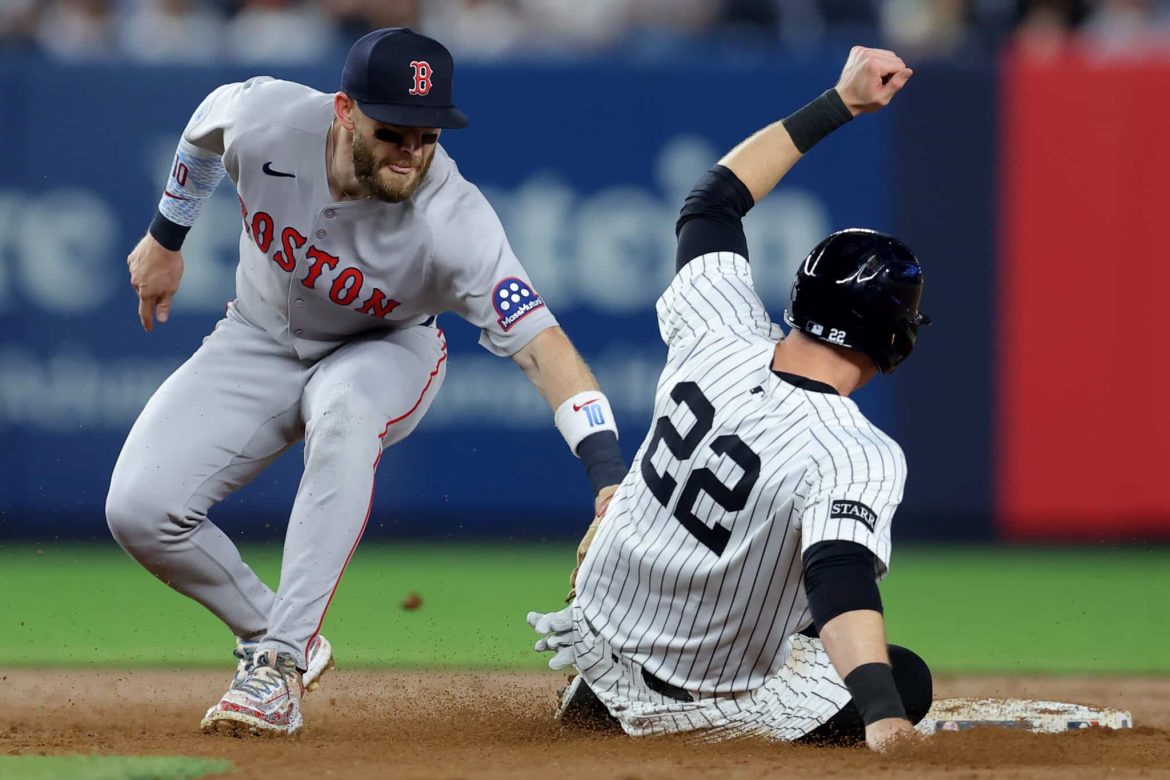
The intensity of October baseball is unparalleled, and when the Boston Red Sox and the New York Yankees clash in the Wild Card Series, the stakes—and the drama—are maximized. As we look ahead to Game 2, scheduled for tonight, the betting market has settled on a total runs line that, at first glance, seems to pay too much respect to the probable pitchers.
While Game 1 featured a thrilling, elite left-handed matchup between Max Fried and Garrett Crochet, Game 2, featuring LHP Carlos Rodón for the Yankees and RHP Brayan Bello for the Red Sox, presents a compelling and calculated opportunity to bet the Over on a Total Runs line of 7.
The conventional wisdom in the playoffs is to hammer the Under, trusting October nerves, lockdown pitching, and a tight umpire strike zone. However, a deeper dive into recent performance, bullpen fatigue, and the volatile nature of this rivalry suggests the market is underpricing the scoring potential. This post will break down why the Over 7 is a smart wager, offering significant value to the shrewd bettor.
The Context: A Scored (But Unreported) Game 1
Before we dissect Game 2, let’s acknowledge the immediate context. As of this morning, the final box score for Game 1 between Fried and Crochet has not been officially reported by major news outlets (only showing a score of 0-0 or the game in progress as of the last update). This is a common issue with early-morning data pulls, but the crucial takeaway from the pre-game analysis is that the pitching matchup was a War of Attrition, with both starters throwing deep into the game and both bullpens seeing significant high-leverage work.
This bullpen usage is the single most important situational factor for handicapping Game 2.
The Pitching Breakdown: Where the Runs Will Be Found
New York Yankees: LHP Carlos Rodón (18-9, 3.09 ERA)
Rodón has put together an excellent season, flirting with 20 wins and showcasing the overpowering stuff the Yankees paid for. His 3.09 ERA is stellar, but a look under the hood reveals potential cracks:
- The Strikeout-Walk Split: While he racks up strikeouts, Rodón’s command can waver. Against a patient and dangerous Red Sox lineup, particularly with switch-hitters and platoon advantages, walks can quickly turn into runs, especially in the home-run-friendly confines of Yankee Stadium.
- The Rivalry Factor: The Yankees’ powerful lineup is built on home runs. Red Sox pitchers have given up five homers to the Yankees in their recent matchups with Crochet, and the Yankees will be hunting the big fly off of Bello.
Boston Red Sox: RHP Brayan Bello (11-9, 3.35 ERA)
Bello is an exciting young arm, but recent reports suggest he has been looking “worn down” over the final few weeks of the season. His profile is one that can be vulnerable to the Yankees’ brand of offense:
- Fly-Ball Tendency: Bello is a groundball pitcher, but when he misses his spots, the ball tends to fly. Yankee Stadium is notorious for turning fly balls into home runs, and New York’s top-heavy lineup—featuring Aaron Judge (53 HR), Giancarlo Stanton, and Paul Goldschmidt—specializes in converting slight mistakes into multi-run rallies.
- The Home/Road Split: While his overall numbers are good, any negative split becomes magnified in a high-pressure road playoff environment against a top-tier offense.
- Rodón vs. Bello: Rodón is the better pitcher, making a Yankee victory a probable outcome, but the point here is not who wins, but how many runs are scored. With the expected regression for a worn-down Bello, the Yankees could be well on their way to covering the Over on their own.
Offensive Firepower and Situational Factors
The perception of a low-scoring affair based solely on the starting pitchers’ names is misleading. Several crucial factors tilt the advantage to the offenses:
1. The Bullpen Volcano
This is the biggest variable. Even if Rodón and Bello are effective for 5-6 innings, a Wild Card game forces managers to go to their highest-leverage arms in the 6th inning or earlier.
- High Usage: After a grinding Game 1, the top relievers on both sides—the David Bednars and Aroldis Chapmans—will have a more limited or less fresh capacity. This elevates the probability that middle relievers, who are significantly more prone to blow-ups, will be asked to cover crucial high-leverage innings.
- Vulnerability: The Yankees’ bullpen, while deep, can see arms like Devin Williams or Fernando Cruz on back-to-back nights. A slight dip in velocity or command from these relievers in the 7th or 8th inning against these powerful lineups is a recipe for a two- or three-run inning.
2. The Yankee Stadium Effect: October Power Surge
Yankee Stadium is a hitter’s park, plain and simple. Even with a total runs line of 7, the potential for one swing of the bat to flip the Over/Under is huge.
- One Swing Theory: Given the power of Judge, Stanton, and even players like Cody Bellinger and Ben Rice, a single home run can account for 2-3 runs. Two home runs alone account for half the total. The Red Sox can counter with power from Trevor Story and Alex Bregman (who hits well against Fried). This is not a series where runs must be manufactured with small ball; they can be detonated instantly.
3. The Rivalry Tax and Offensive Urgency
Forget the numbers for a moment: this is Yankees vs. Red Sox in the playoffs. The intensity of this rivalry often overrides traditional pitching metrics.
- Aggression: Hitters on both sides are likely to be aggressive early, trying to put the opponent’s starter on the ropes and force the game into the bullpen. Early aggression leads to more mistakes from pitchers, more pitch counts skyrocketing, and more traffic on the base paths.
- Must-Win Mentality: Regardless of the Game 1 result, a short series breeds urgency. Neither manager will “save” their bullpen. They will use their best arms until they break, and if the score is 3-2 in the 7th, they will run through multiple relievers to keep it close, which dramatically increases the chance of a mistake leading to a run.
The Value Proposition: Why Over 7 is the Smart Bet
The total runs line of 7 is a clear indication that oddsmakers are primarily focused on the names of the starting pitchers, ignoring the situational fatigue, the high-leverage history, and the park factor.
- The Low Barrier: Hitting 7 runs is surprisingly easy for two powerful, familiar rivals. A final score of 4-3 (a very common, tight game score) cashes the Over. A 5-2, a 6-1, or a 4-4 tie heading to the 10th inning all get you there.
- The Consensus Lean: The public will likely flock to the Under, seeing the “big arms” and the “playoff atmosphere,” driving the price on the Under down and creating more value on the Over. The search results showed the Over 7 at around -112 to -116, representing excellent value for a high-probability event.
- Simulation Data: One projection model showed the Over 7 hitting in 62.6% of simulations, with a projected score of Yankees 4.9, Red Sox 4.1 (a combined 9.0 runs). This suggests a strong analytical edge toward the Over.
Conclusion: Don’t Fear the Aces, Bet the Volatility
The Yankees-Red Sox Wild Card Series is destined to be a high-octane affair. While the starters—Rodón and Bello—are capable of pitching gems, the betting value lies in the volatility surrounding them. Between the fatigue of a taxed bullpen after a grinding Game 1, the home run power of the Yankees in their short porch, and the must-win aggression of two bitter rivals, the low total of 7 is an invitation to profit.
Forget the conventional October wisdom. This game is setting up for a higher-scoring outcome than the line suggests. Bet the Over 7 with confidence, and settle in for a dramatic, high-scoring affair.
Pick: Over 7