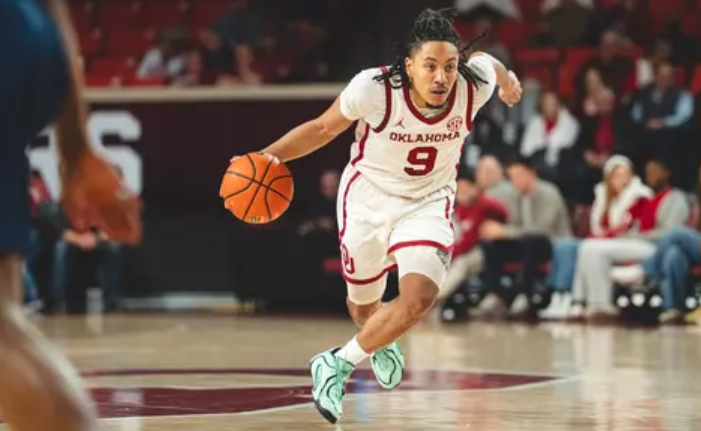
The inaugural College Basketball Crown quarterfinals in Las Vegas present a fascinating study in contrast. On one side, the Oklahoma Sooners (19-15) arrive at the Grand Garden Arena with a massive chip on their shoulder. After being named the “First Team Out” of the NCAA Tournament—a sting felt twice in three seasons—head coach Porter Moser has transformed that disappointment into a rallying cry. The Sooners were one of the hottest teams in the SEC down the stretch, winning eight of their last ten games, and they view this tournament as a platform to prove the selection committee made a grave error.
Conversely, the Colorado Buffaloes (17-15) enter the desert under a cloud of uncertainty. While they started the season strong, a second-half stumble has been compounded by a massive roster exodus. Head coach Tad Boyle is essentially navigating a rebuilding phase in real-time, as leading scorers Isaiah Johnson (16.9 PPG), Sebastian Rancik (12.3 PPG), and Bangot Dak (11.5 PPG) have all transitioned to the transfer portal. This leaves a staggering void in both scoring and interior presence, setting the stage for a matchup where individual excellence could dictate the outcome.
At ATSWins, our data-driven approach identifies this specific environment—a neutral-site tournament with high stakes and depleted defensive rotations—as the perfect storm for elite backcourt performers.
The Prime Target: Why Nijel Pack is Primed to Explode Past 17.5 Points
When analyzing the statistical landscape of this matchup, one name stands out above the rest: Nijel Pack. The Sooners’ veteran guard has historically thrived when the lights are brightest, and the current metrics suggest he is poised for a dominant performance that will comfortably clear the 17.5-point projection.
The Post-Season “Heat Map”
Looking at the most recent data from the SEC Tournament, Pack hasn’t just been a consistent contributor; he has been the focal point of a high-octane offense. Over his last three outings against elite SEC competition, Pack has reached a new level of scoring efficiency:
-
March 11 vs. South Carolina: 24 Points
-
March 12 vs. Texas A&M: 20 Points
-
March 13 vs. Arkansas: 19 Points
Averaging 21.0 PPG in the post-season, Pack has cleared the 17.5 mark in three consecutive games. He isn’t just hitting a baseline; he is consistently pushing toward the mid-20s, showing a level of aggression and shot-making that mirrors his legendary NCAA Tournament runs of the past.
Volume Meets Efficiency
At ATSWins, we prioritize “usage rate” and “shot quality” when projecting player impact. Over his last three games, Pack is averaging 14.3 field goal attempts and 8.3 three-point attempts. This isn’t empty volume; he is shooting 43.3% from deep during this stretch.
When a shooter of Pack’s caliber is seeing nearly nine looks from behind the arc per game, a 17.5-point threshold becomes a very manageable target. His ability to create his own shot off the dribble or thrive as a catch-and-shoot threat makes him nearly impossible to neutralize for a full 40 minutes—especially against a defense in transition.
The Defensive Mismatch: Colorado’s Perimeter Problem
The case for Pack’s scoring explosion is further bolstered by the defensive vulnerabilities of the Buffaloes. Statistically, Colorado has struggled to contain perimeter-oriented offenses all season, and those issues are likely to be magnified in Las Vegas.
-
3PT Defense: Colorado ranks 349th in the nation in opponent three-point percentage. They allow teams to shoot nearly 37% from deep, a catastrophic stat when facing a shooter like Pack who is currently in a rhythm.
-
The Depth Factor: The loss of Rancik and Dak isn’t just a blow to Colorado’s offense; it erases their primary rim protection. Without an interior deterrent, Colorado’s perimeter defenders will be forced to “sink” and help on drives from Xzayvier Brown. This defensive collapse inevitably leads to “kick-out” opportunities for Pack, who excels at punishing defenses that leave him even an inch of daylight.
In a neutral-site arena like the Grand Garden, which features “NBA-style” sightlines that historically favor shooters, Pack’s ability to exploit this bottom-tier perimeter defense is the primary X-factor for the Sooners.
Tactical Analysis: Tempo and Second Chances
Oklahoma enters this game with the #12 Adjusted Offensive Efficiency in the country (125.6). They are elite at maximizing possessions and minimizing turnovers. Colorado, ranking #137 in Adjusted Defensive Efficiency, simply does not have the personnel remaining to disrupt Oklahoma’s flow.
With Colorado’s top rebounders no longer in the rotation, the Sooners should dominate the glass. Second-chance opportunities often lead to “broken play” three-pointers—situations where Pack is most dangerous. If Oklahoma controls the boards as expected, Pack will receive even more high-value looks than his season average suggests.
Final Prediction and Value Outlook
Based on the synthesis of recent performance, roster attrition, and advanced efficiency metrics, the outlook for this matchup is clear. Oklahoma is motivated to make a statement, and Nijel Pack is the primary weapon they will use to deliver it.
-
Predicted Final Score: Oklahoma 86, Colorado 71
-
Primary Projection: Nijel Pack Over 17.5 Points
-
Confidence Level: High
ATSWins Analysis: We expect Pack to see 32–35 minutes of action. Given his 21.0 PPG post-season average and Colorado’s defensive gaps, he should reach the 18-point mark by the mid-second half. For those looking for even higher ceilings, the Alt-Line of 20+ Points for Pack offers significant historical value given his 70% “hit rate” over the last ten days.
The Sooners are on a mission to prove they belong among the nation’s elite, and in Las Vegas, the “Nijel Pack Show” is expected to be the main attraction.
My pick: Nijel Pack Over 17.5 Points WIN