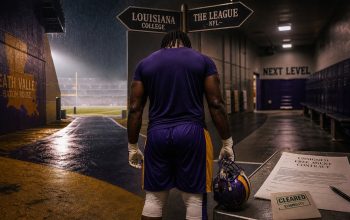
The NFL offseason has reached a familiar stage: the major player movement is mostly complete, but the impact of the biggest trades and signings will not be known until teams take the field in September. A recent roundup of the league’s top offseason moves, from blockbuster trades to high-profile additions, underscores how much roster construction still defines the sport even after the draft and the bulk of free agency have passed.
Big moves continue to shape the league
Across the NFL, front offices spent the spring trying to solve immediate problems and create long-term flexibility. Some teams attacked clear weaknesses by trading for established talent. Others committed significant money to free agents they believe can change the direction of a roster. The result is a league that looks noticeably different entering the summer, even before training camp offers the first real chance to evaluate those changes in live settings.
The recent ranking of the best offseason moves reflects a broader truth about NFL team building: one transaction can alter the outlook of a season if it addresses the right need. A veteran quarterback, a pass rusher, a cornerstone offensive lineman, or a defensive playmaker can transform the way a coaching staff approaches game planning. That is especially true in a league where margins are thin and roster depth is constantly tested by injuries.
Why trades and signings matter so much in the NFL
Unlike leagues with longer schedules and larger rotation groups, the NFL gives teams limited opportunities to recover from poor roster decisions. That is why offseason moves carry so much weight. A successful trade can accelerate a rebuild, stabilize a contender, or provide a team with the missing piece it could not find in the draft. Likewise, a splashy signing can raise a ceiling immediately, but it can also come with risk if the fit, health, or production does not match the investment.
This is also the period when teams reveal their priorities. Some organizations clearly value proven experience over development, especially when they believe the roster is close. Others are more selective, trying to preserve cap flexibility while adding targeted help at premium positions. The offseason rankings making the rounds this week largely highlight that strategic divide: the teams that improved most were generally the ones that identified a specific problem and acted decisively to fix it.
How front offices are balancing urgency and future planning
The most effective front offices tend to avoid one-size-fits-all roster building. Instead, they weigh age, contract structure, scheme fit, and long-term flexibility before making a deal. That approach has become even more important in recent years as teams try to avoid getting locked into expensive mistakes. A trade or signing that looks strong in June can become problematic by midseason if it blocks younger players, strains the salary structure, or fails to produce on the field.
At the same time, waiting too long can be costly. The best offseason moves often come from organizations that are willing to act before a market fully shifts. The teams cited in offseason roundups usually share one trait: they did not passively hope for internal improvement. They changed the roster in a way that reflects a clear competitive plan.
That is especially important in divisions where one or two games can determine playoff seeding. A quality veteran addition may not generate the same attention as a blockbuster trade, but it can still be the move that steadies an offense, strengthens a secondary, or improves a pass rush enough to swing tight games. In the NFL, those incremental gains can have outsized value.
What to watch once camps open
The next stage of evaluation begins when teams report for training camp. That is when offseason decisions are tested against actual practices, depth charts, and competition. Some additions will look like immediate fits from the start. Others may take weeks to settle into a role, particularly if a player is learning a new scheme or adjusting to a different supporting cast.
Coaches will also be watching how new arrivals affect the rest of the roster. A major trade or signing can push younger players into smaller roles, alter special-teams assignments, or change how a team approaches preseason reps. In some cases, those ripple effects matter almost as much as the headline addition itself. The offseason’s best move is not always the flashiest; it is the one that makes the entire roster better.
For fans, the value of these moves will become clearer only over time. July and August bring optimism to every building, but the real test comes when the games count. Still, the current wave of offseason rankings is a useful reminder that championships are not only won on Sundays. They are also shaped by the decisions made in conference rooms, in trade discussions, and in the first days of free agency.
The bigger NFL offseason picture
With training camp approaching, the league’s most consequential offseason decisions are already under review. The strongest reactions around the NFL tend to center on deals that solved a glaring weakness or pushed a contender closer to its goal. That is what makes offseason analysis useful: it does not predict every outcome, but it does explain which teams made their roster better in a meaningful way.
The latest roundup of top offseason moves is another snapshot of a league that never stops recalibrating. Every year brings a new set of trades, signings, and strategic gambles. Some work immediately. Some take time. A few will look far better in hindsight than they did at the moment they were made. For now, though, the teams that moved aggressively and with purpose have given themselves a chance to justify the attention they are receiving.
Sources
- Ranking the 14 best NFL offseason moves, from blockbuster trades to splashy signings – Lee News Central
- Ranking the 14 best NFL offseason moves, from blockbuster trades to splashy signings – Arizona Daily Star
- Ranking the 14 best NFL offseason moves, from blockbuster trades to splashy signings – SCNow