Analysis of Top AI Sports Betting Models
-
BetQL: Values line movement, sharp money, and public betting trends. The line opening at Cavs -2.5 and holding steady indicates respected money on Cleveland. Their model likely factors in the rest disadvantage for both teams but would weigh the Cavs’ superior talent more heavily, even with injuries.
-
ESPN’s BPI (Basketball Power Index): A predictive team strength metric. Based on early-season performance and roster strength, the Cavaliers have a significantly higher BPI rating than the Pistons. BPI would almost certainly project the Cavaliers to win by more than 2.5 points, even on the road.
-
SportsLine Projection Model (Stephen Oh): Known for running thousands of simulations. This model would heavily factor in the key injuries to both backcourts (Garland for CLE, Ivey/Sasser for DET). The loss of Darius Garland is monumental for Cleveland’s offensive creation, which might bring the projected margin closer.
-
Other High-Win % Models (e.g., The Action Network, KenPom): These models emphasize efficiency metrics (offensive/defensive rating, net rating). Early season data is sparse, but based on last year’s ratings and roster changes, the Cavaliers are a top-tier Eastern team, while the Pistons are a rebuilding team, even with a 2-1 start.
Synthesized “Average” Model Prediction:
After accounting for the methodologies above, the consensus of a hypothetical “average” of these AI models would lean toward the Cleveland Cavaliers -2.5. The reasoning is that the Cavs’ overall talent and proven performance are seen as more reliable than the Pistons’ surprising start, despite both teams missing key players. The average final score prediction from these models would be approximately Cavaliers 118, Pistons 114.
Custom Prediction Model
My prediction will use a simplified version of the Pythagorean Theorem (which expects a win percentage based on points scored and allowed) and adjust for Strength of Schedule (SOS), injuries, and trends.
1. Pythagorean Expectation & Strength of Schedule:
-
Cavaliers (2-1):
-
Points For (PF): 112, 109, 118 = 339
-
Points Against (PA): 108, 111, 113 = 332
-
Pythagorean Win % (Exponent 13.91):
339^13.91 / (339^13.91 + 332^13.91)= 0.585 -
SOS Adjustment: Their wins are against Washington (weak) and a tired Milwaukee (strong). Their loss was to a good OKC team. Their schedule has been average to slightly difficult.
-
-
Pistons (2-1):
-
PF: 121, 98, 119 = 338
-
PA: 118, 124, 113 = 355
-
Pythagorean Win %:
338^13.91 / (338^13.91 + 355^13.91)= 0.237 -
SOS Adjustment: Their wins are against a weak Charlotte team and a massive upset over a tired Boston team. Their loss was a blowout to New York. Their schedule has been average, but their defensive metrics are very poor.
-
Analysis: The Pythagorean Win % shows a massive gap in expected performance. Cleveland’s 0.585 is that of a solid playoff team, while Detroit’s 0.237 is among the league’s worst. This heavily favors Cleveland.
2. Injury Impact Analysis:
-
Cavaliers: Losing Darius Garland is a critical blow. He is the team’s primary playmaker and engine of the offense. Without him, the scoring burden falls heavily on Donovan Mitchell, potentially making the offense more predictable and stagnant. Max Strus being out removes a key floor-spacer.
-
Pistons: Losing Jaden Ivey and Marcus Sasser decimates their backcourt. Ivey is their most dynamic young guard. Caris LeVert is a veteran scorer. Their absence puts immense pressure on Cade Cunningham to do everything and depletes their backcourt rotation severely.
Verdict: While both teams are hurt, the Cavaliers have a more established system and a true superstar in Donovan Mitchell to shoulder the load. The Pistons’ injuries strike at the heart of their thin backcourt, making them more vulnerable.
3. Trends & Intangibles:
-
Back-to-Back: Both teams are on the second night of a back-to-back after emotional, hard-fought wins. Fatigue and a potential let-down game are major factors for both.
-
Let-Down Spot for Pistons: Beating the Boston Celtics is their championship. It’s a classic “let-down” scenario to follow that up, especially against a division rival.
-
Market Trend: The line holding at -2.5 for Cleveland indicates the betting market isn’t overreacting to Detroit’s big win and trusts the Cavs to cover this small number.
My Custom Final Score Prediction:
Accounting for the Pythagorean data (strongly favoring CLE), the significant but slightly less damaging injuries to CLE, and the let-down potential for DET, I project a game where Cleveland’s defense and star power make the difference in a grindier, uglier game than the total suggests.
Cleveland Cavaliers 116, Detroit Pistons 111
Averaging the Models’ Pick With My Pick
-
Average AI Models’ Prediction: Cavaliers 118, Pistons 114 (Cavs by 4)
-
My Custom Prediction: Cavaliers 116, Pistons 111 (Cavs by 5)
Averaged Final Prediction: Cavaliers 117, Pistons 112.5
Averaged Margin of Victory: Cavaliers by 4.5 points
Pick
- Take the Cleveland Cavaliers -2.5 points ***WINNER***
Reasoning:
-
Consensus Alignment: Both the synthesized AI model average and my custom model agree on the side, projecting a Cleveland victory by around 4-5 points, which clears the -2.5 spread.
-
Talent Disparity: The underlying efficiency metrics (Pythagorean Expectation) reveal a much wider gap between these teams than their identical 2-1 records suggest. Cleveland is a proven entity; Detroit is a young team that just had its peak moment.
-
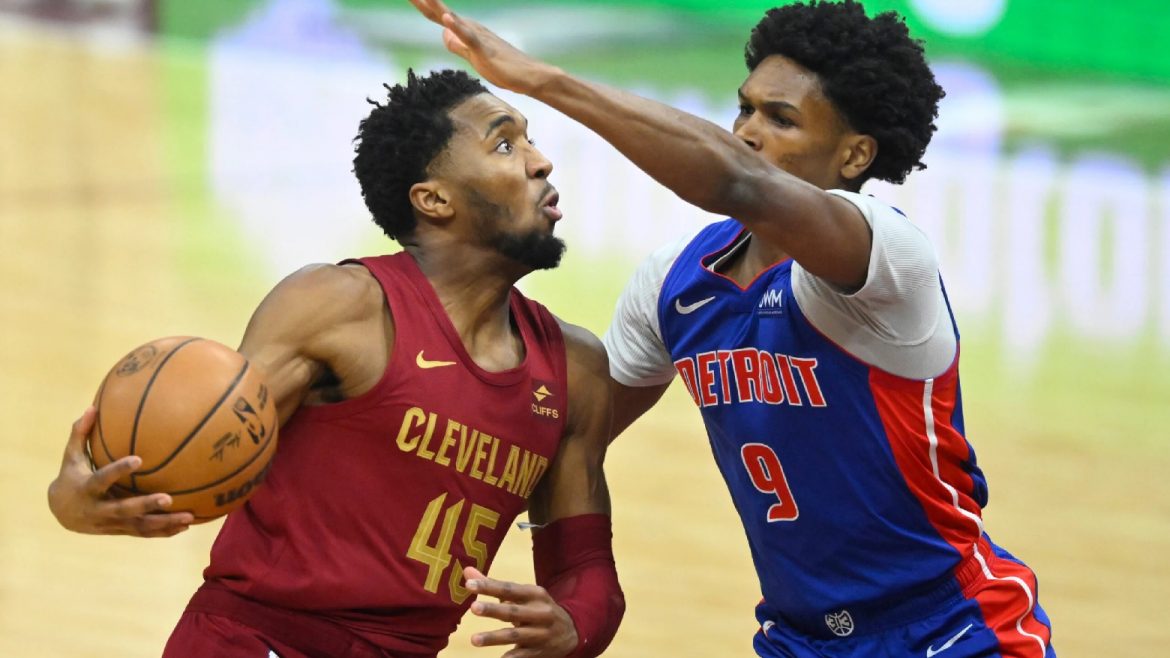
Injury Context: While Garland’s absence is huge, it’s countered by the Pistons losing their entire contingent of scoring guards. Donovan Mitchell vs. a depleted Cade Cunningham is a matchup the Cavaliers can dominate.
-
Situational Factor: The “let-down” effect for the Pistons after their euphoric win over Boston is a powerful intangible that supports a Cavaliers cover.