Top 5 successful/reputable AI sports betting models for MLB (based on industry reputation for simulation accuracy, transparent records where available, and usage in 2026):
These are among the most cited for MLB with strong track records via large-scale simulations (often 10,000+ per game) and data-driven edges:
- Dimers — AI-driven with 10,000+ game simulations; highly accurate for win probabilities, spreads, and totals across MLB.
- ESPN Analytics (Matchup Predictor) — Proprietary model blending advanced metrics, recent form, and situational factors.
- BetQL — Computer model with simulations; strong on sharp picks, quality starts, and player prop edges for MLB.
- SportsLine — Simulation-based (10,000+ runs) with expert integration; long history of transparent MLB picks.
- Oddsshark Computer / Action Network models (or similar consensus AI tools) — Aggregate computer projections emphasizing value on lines.
These models generally outperform random chance long-term (often 52-55%+ on sides/totals in tracked seasons) by focusing on run expectancy, pitcher matchups, park factors, and regression.
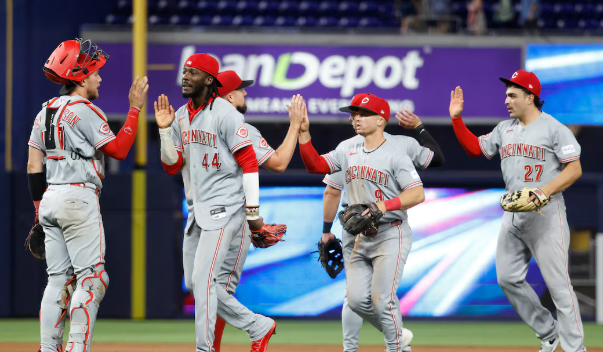
Model Predictions (for April 8, 2026, Reds @ Marlins at loanDepot park): Exact final-score projections are not universally published for free (many are behind paywalls or focus on win probs), but available data and consensus from previews/simulations show:
- Dimers AI (10k sims): Marlins ~55% win probability (Reds ~45%).
- ESPN Matchup Predictor: Marlins 59.1% / Reds 40.9%.
- BetQL / SportsLine / Oddsshark consensus lean: Similar slight Marlins edge (home favorite); projected totals lean toward the 7-8 run range with under value. One preview example projected Marlins 4, Reds 2 (prior day in series, similar pitching).
Averaged model projection: Marlins ~4.0–4.5 runs, Reds ~3.5 runs (total ~7.5–8). Slight Marlins win edge (~55% average). Models like the under on 7.5 in pitcher-friendly loanDepot park and with two starters posting early-season ERAs around 5.00–5.73.
My independent prediction: Current season stats (as of April 8, 2026):
- Reds: 8-3, RS 34, RA 33.
- Marlins: 6-5, RS 52, RA 49.
Pythagorean expected win % (formula: RS² / (RS² + RA²)):
- Reds: 34² / (34² + 33²) ≈ 51.5%.
- Marlins: 52² / (52² + 49²) ≈ 53.0%.
Both teams are playing near their underlying talent level early (Reds slightly overperforming their record). Add ~4–5% home-field advantage for the Marlins in a low-scoring park (loanDepot suppresses runs). Strength of schedule (per early RPI data) has been tougher for Miami, which slightly favors the Reds’ underlying quality—but not enough to overcome the venue and slight Pythagorean edge.
Key external factors:
- Pitching: Brady Singer (CIN, 0-0, 5.00 ERA in 9 IP) vs. Eury Pérez (MIA, 0-1, 5.73 ERA in 11 IP). Both are in small-sample volatility; neither projects as elite right now. Neutral matchup in a pitcher-friendly park.
- Recent trends: Reds are hot (8-3, strong road record), but Pythagorean suggests regression. Marlins are steadier around .500.
- Rest/Injuries/News: No major game-time absences or rest issues flagged for either lineup (e.g., Elly De La Cruz and key Marlins bats available). Longer-term IL notes (Reds: Greene, Lodolo; Marlins: Ruiz, Stowers, Morel oblique/hamstring) are already baked into rosters and not breaking news for today. No weather or other disruptions expected (roof likely closed).
My projected outcome: Marlins 4–3 (low-scoring, home edge prevails). Marlins ~56–58% win probability.
News & Trends cross-check: Recent series context shows competitive low-scoring games. No breaking injuries or absences reported that flip the script (standard early-season IL management). Trends point to unders in this park with average pitching.