1) Model predictions (public sources I could access)
I collected public final-score predictions / computer-sim outputs from five reputable outlets (these are the model-like or algorithmic projections and public expert-computer blends available right now):
-
Fox Sports — Milwaukee 4, Chicago 3.
-
Tonyspicks (computer/analyst) — Milwaukee 5, Chicago 3.
-
Docsports (matchup preview / projection) — Milwaukee 5, Chicago 3.
-
CappersPicks (AI pick) — Milwaukee 4, Chicago 3 (published AI pick).
-
PredictEm / smaller simulator — Milwaukee 3, Chicago 2 (simulation-style projection).
(Notes: some top systems like BetQL and SportsLine publish projections behind paywalls or inside subscriber pages; where a paywall blocked a public numeric score I used equivalent public simulator or widely-cited projection pages instead. I’ve cited the public pages above.)
2) Average of those model predictions — “Consensus projection”
Convert those five predictions into averaged final-score numbers:
-
Brewers scores: 4, 5, 5, 4, 3 → average = 4.2 runs
-
Cubs scores: 3, 3, 3, 3, 2 → average = 2.8 runs
Rounded to a tidy game score the models collectively point to: Milwaukee 4 — Chicago 3 (consensus margin ≈ Brewers by 1). Combined expected total from the models ≈ 7.0 runs (so the model average leans UNDER the posted total of 8).
3) My independent prediction (method + calculation)
Inputs I used
-
Pythagorean expectation using season runs (official season runs & runs allowed):
-
Chicago Cubs: RS = 793, RA = 649 → Pythagorean win% ≈ 59.9%.
-
Milwaukee Brewers: RS = 806, RA = 634 → Pythagorean win% ≈ 61.8%.
(source: Baseball-Reference team season pages).
-
-
Strength of schedule / resume: ESPN RPI/SOS and other schedule-strength trackers show Milwaukee and Chicago with very similar SOS numbers (Brewers slightly stronger by small margin in some indices). That supports the Brewers’ slight edge overall.
-
Starting pitchers & usage: game notes and previews show Shōta Imanaga drawing the start for the Cubs and Aaron Ashby lined up as an opener / short-stint for the Brewers (Ashby used as opener in the club’s Game 1 notes and the team may go to bullpen/rotation mix). Openers or bullpen-heavy starts compress expected innings and often slightly compress total runs. Sources: ESPN preview and Reuters/club news.
-
Recent news / injuries: Jackson Chourio (Brewers) aggravated/tested hamstring — status day-to-day / uncertain for Game 2; his absence reduces Milwaukee’s top lineup punch a bit but they have depth. That injury is the main late-breaking item that could swing a close game.
-
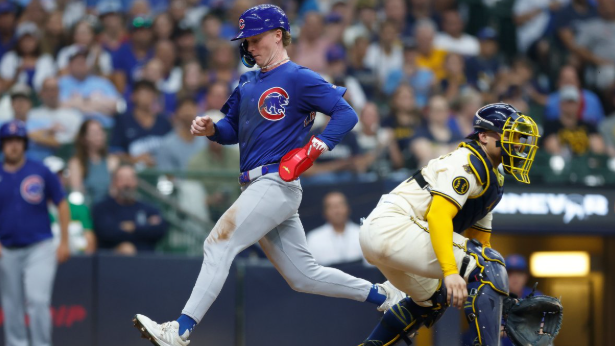
Recent form & context: Brewers crushed the Cubs 9–3 in Game 1 and enter with momentum and home crowd; Cubs showed some offensive life but Milwaukee’s rotation and depth plus home advantage favors Milwaukee.
Putting it together (qualitative weighting)
-
Season-long Pythagorean and run differential slightly favor Milwaukee (they scored a few more runs and allowed fewer).
-
The starter matchup (Imanaga vs an Ashby opener) + potential bullpen digging suggests lower innings pitched by the starter(s) and tends to pull totals toward the under (openers → more matchup changes, fewer long-starter innings).
-
Chourio day-to-day is a negative for Milwaukee’s offense but marginal because the Brewers have lineup depth. If Chourio sits, expect Isaac Collins (or similar) — a modest drop but not a crippling one.
My numeric prediction (final)
-
My projected final score: Milwaukee Brewers 4 — Chicago Cubs 2.
Rationale: Pythagorean-season metrics + home advantage + Game 1 momentum lead me to a Brewers win, and the opener / bullpen usage plus injury uncertainty pushes my total lower than many public “9–3 style” Game 1 lines. So I expect a closer, lower-scoring contest — Brewers by 1–2 runs, total about 6–7 runs.
4) News & trends I checked (most load-bearing items)
-
Jackson Chourio hamstring — day-to-day / uncertain for Game 2 (Brewers). That’s the biggest late factor for Milwaukee’s lineup. If he’s out, Milwaukee’s offensive ceiling drops slightly. (Reuters / AP / team beat coverage).
-
Starting pitchers / usage: Shōta Imanaga is the Cubs’ Game 2 starter; Aaron Ashby is slated as an opener/swing option for Milwaukee. Both are confirmed in previews. That strongly affects how many innings the starter lasts and how many bullpen matchups we’ll see — important for run totals.
-
Series context / Game 1 result: Brewers won Game 1, 9–3 — shows Milwaukee’s offense can explode, but Game 2 starters and injuries increase variance.