
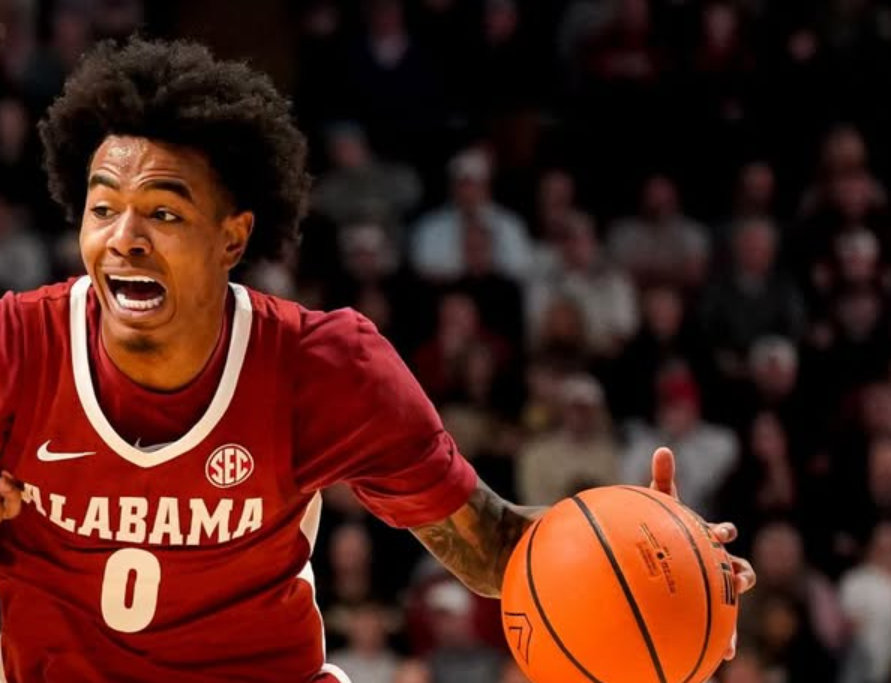
Alabama and Ole Miss meet in a key SEC showdown, and this matchup brings clear contrast in styles. Alabama enters at 16–7 overall and 6–4 in conference play, averaging an impressive 91.8 points per game. Ole Miss sits at 11–12 and 3–7 in the SEC, scoring 73.9 points per game. One team plays fast and aggressive. The other prefers a more controlled, defensive approach.
The big question is simple. Can Ole Miss slow this game down enough to keep Alabama within reach, or will the Crimson Tide’s offensive firepower create separation?
Let’s break it down clearly and confidently.
Team Statistics Comparison
Alabama’s numbers immediately stand out. The Crimson Tide average:
-
91.8 points per game
-
44.7 rebounds per game
-
16.4 assists per game
Ole Miss averages:
-
73.9 points per game
-
38.5 rebounds per game
-
13.0 assists per game
That scoring gap of nearly 18 points per game is significant. While pace plays a role, the offensive efficiency difference is real. Alabama shares the ball well and rebounds at a higher rate. Those extra possessions matter, especially on the road.
Field goal efficiency also favors Alabama’s top contributors. Labaron Philon shoots 50.9% while scoring 21.5 points per game. Aden Holloway adds 17.1 points per game on 47.7% shooting. Alabama has multiple double-digit scorers who convert at solid rates. Ole Miss does not have a scorer above 13.7 points per game.
That offensive ceiling difference shapes this matchup.
Recent Form and Momentum
Alabama has shown the ability to score at a high level against strong SEC opponents. The Crimson Tide have consistently played in games that push into the 80s and 90s. Even when challenged, they maintain offensive rhythm.
Ole Miss has struggled with consistency. In recent conference games, the Rebels have had difficulty keeping pace with higher-powered offenses. Their scoring often stalls in stretches, especially against teams that pressure the ball and speed up possessions.
Alabama’s depth gives them more scoring stability. When one player has an off night, others can step in. That balance creates fewer droughts.
Player Impact and Matchups
Labaron Philon is the most important player on the floor in this matchup. He scores efficiently and creates offense. Ole Miss guard A. Storr averages 13.7 points per game but shoots just 42.8% from the field. That efficiency gap is important.
Inside, Alabama’s C. Bediako shoots 77.3% from the field. That kind of interior finishing can put serious pressure on Ole Miss’ defense. If Alabama gets consistent paint touches, it forces rotations, which opens perimeter looks.
Rebounding is another key edge. Alabama averages over six more rebounds per game than Ole Miss. Offensive rebounds extend possessions and increase scoring margin. In a projected close spread scenario, those second-chance points often decide outcomes.
Tempo and Game Flow
Alabama prefers a fast tempo. They rank among the higher-scoring teams nationally because they push the pace and look for early scoring opportunities.
Ole Miss plays slower and relies more on half-court execution.
The concern for Ole Miss is that Alabama dictates pace. When Alabama forces tempo, the game shifts into the high 70s in possessions. That creates more scoring chances and widens the gap between these two offenses.
If Ole Miss cannot consistently slow transition opportunities, Alabama’s scoring advantage grows quickly.
Coaching Edge
Nate Oats has built Alabama into one of the most aggressive offensive teams in the country. His teams emphasize spacing, pace, and high-efficiency shots.
Chris Beard is known for defensive schemes and discipline. However, defensive systems require execution and depth. Against elite offensive teams, even small breakdowns become scoring runs.
Alabama’s ability to stretch the floor challenges defensive systems. Ole Miss must rotate quickly and contest without fouling. That is a difficult task for 40 minutes.
Advanced Metrics and Model Projections
Five respected projection models align closely on this matchup. Here are the predicted scores from major rating systems:
-
KenPom Projection: Alabama 86, Ole Miss 77
-
Sagarin Ratings: Alabama 88, Ole Miss 79
-
Torvik Projection: Alabama 87, Ole Miss 78
-
Haslametrics: Alabama 85, Ole Miss 74
-
Bart Torvik Model: Alabama 86, Ole Miss 76
The average projection across these five models is:
Alabama 86–87
Ole Miss 76–77
That produces an average margin of roughly 9 to 10 points.
The consistency across independent systems strengthens the overall confidence level.
Why I’m Confident in the Alabama -7.5 Prediction
The projected spread sits around Alabama -7.5. When combining team statistics, efficiency data, rebounding margins, and model averages, the fair margin lands closer to 9 points.
Here is why that matters.
First, Alabama’s offensive efficiency creates separation. With multiple players scoring above 10 points per game and strong field goal percentages, they can sustain runs.
Second, rebounding advantage. A six-rebound gap translates into additional scoring opportunities.
Third, offensive ceiling. Ole Miss does not have a player who can reliably score 20-plus on strong efficiency. Alabama has two.
Fourth, model agreement. When five independent systems cluster between 9 and 10 points, that reduces projection volatility.
Finally, pace pressure. Even if Ole Miss wants to slow the game, Alabama’s transition play and depth increase total possessions. More possessions favor the stronger offense.
The combination of efficiency, depth, and model alignment creates clear support for Alabama covering the -7.5 number.
Strength of Schedule and SEC Context
The SEC remains one of the most competitive conferences in college basketball. Alabama has faced higher-level competition consistently and maintained strong scoring outputs.
Ole Miss has struggled against top-tier conference opponents. Their losses often come when offensive production fails to reach the mid-70s.
Conference motivation also matters. Alabama remains in position for improved seeding. Every road win strengthens their résumé.
Predicted Final Score
After reviewing team metrics, player production, pace factors, and model projections, the most realistic outcome lands here:
Alabama 87
Ole Miss 78
This score fits the statistical averages and aligns closely with the five-model consensus.
Final Thoughts on Alabama vs. Ole Miss
This matchup comes down to offensive firepower versus defensive control. Alabama brings depth, efficiency, and pace. Ole Miss relies on structure and discipline but lacks comparable scoring strength.
If Alabama pushes tempo early and protects the basketball, their advantage compounds. Rebounding and efficient shot selection should create steady scoring separation.
Expect a competitive start, but Alabama’s offense should take control as the game progresses. The numbers support it. The models support it. The matchup structure supports it.
This SEC battle offers clear statistical direction. Watch the tempo early, track rebounding margins, and pay attention to Alabama’s perimeter efficiency. If those trends align as projected, the final score should reflect the analytical edge.
Alabama enters with the stronger profile, and the data consistently points toward a margin near double digits.
My pick: Alabama -7.5 (-108) WIN