
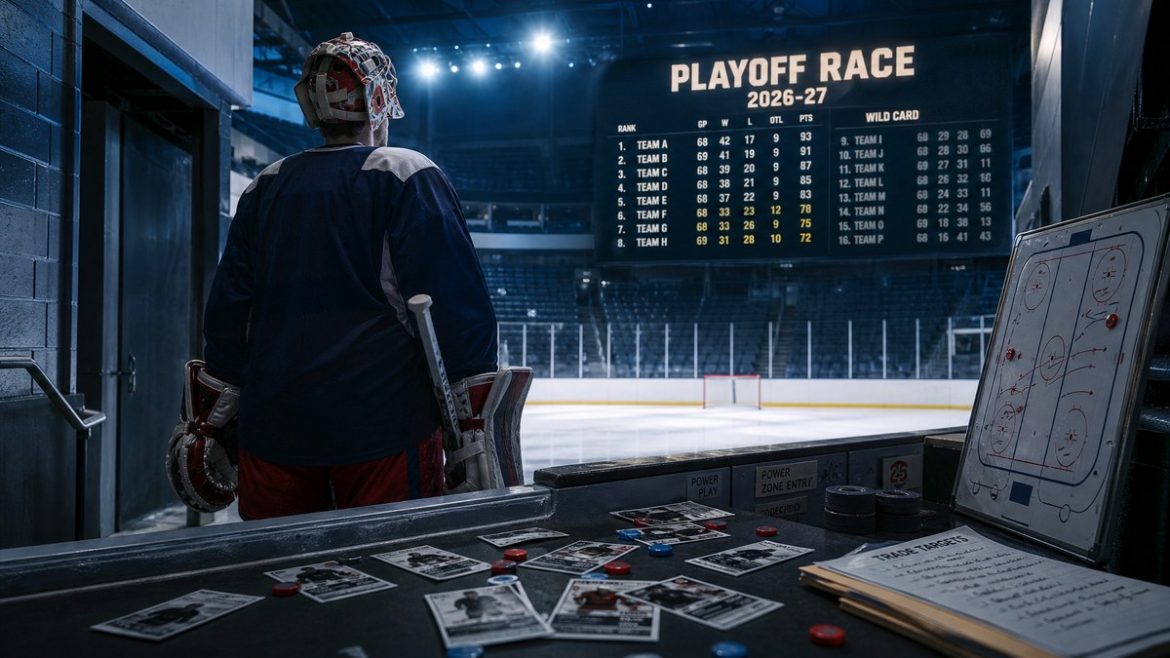
A new round of NHL season-preview coverage is examining which teams could return to the Stanley Cup Playoffs after missing the 2025-26 postseason. The question is an important one as the 2026-27 season approaches because playoff turnover is shaped not only by offseason additions, but also by health, goaltending, internal development and the strength of each conference.
NHL playoff comeback discussion moves into focus
Regional outlets including Channel 3000, the Richmond Times-Dispatch, the Chippewa Herald, the Independent Tribune and the Longview Daily News published similarly titled reports on Sept. 22 addressing potential playoff newcomers. The publicly available summaries do not identify the teams selected or provide the underlying analysis, so specific candidates cannot be attributed to those reports without additional confirmation.
What the coverage does establish is the central storyline: clubs that finished outside the previous postseason field are now being evaluated for possible returns. That annual exercise can be more complicated than comparing final point totals. A team that finished just below the cutoff may need only a modest improvement, while a club farther back could require progress in several areas at once.
The distinction also matters because missing the playoffs does not always signal a long-term decline. Injuries, unstable goaltending, poor special teams or a damaging stretch of close losses can quickly change a season. Conversely, a productive offseason does not guarantee that a team will gain ground if established playoff clubs remain healthy and effective.
NHL postseason format leaves little room for prolonged slumps
The NHL playoff field contains 16 teams, with eight qualifying from each conference. Under the league’s division and wild-card structure, the top three teams in each division earn places, while the next two teams in each conference qualify through the wild-card standings.
That format makes divisional context especially significant. A rebuilding or improving team can take a meaningful step forward and still remain outside the postseason if several division rivals are stronger. A club’s path is therefore influenced by both its own progress and the performance of the teams it faces most often.
The wild-card race creates another layer of pressure. Because teams from both divisions compete for the final two conference positions, a late-season surge by one club can affect several others. Points lost during the opening months can become difficult to recover once the standings tighten, particularly when multiple teams remain within reach of the same playoff places.
Roster health and lineup depth will shape potential turnarounds
For teams attempting to return to the playoffs, availability is often the first issue to monitor. A healthy top line or defense pairing can stabilize a lineup, but successful teams generally need enough depth to withstand injuries over a full season. The burden becomes heavier when too much scoring, puck movement or defensive responsibility is concentrated among a small group of players.
Depth evaluation extends beyond offseason acquisitions. Younger players who earned limited roles in the previous season may be positioned for larger assignments, while veterans returning from injury can function much like additions. Coaches must determine whether those internal changes can improve the club or merely preserve its previous level.
The blue line is particularly important for teams trying to make a substantial standings gain. Effective defense involves more than limiting shots. Breakout passing, puck retrievals and the ability to exit the defensive zone influence how much time a team spends under pressure. A defense corps that moves the puck efficiently can also help generate offense without requiring forwards to begin every attack deep in their own end.
At forward, secondary scoring often separates playoff teams from those that fall short. Top players will draw the most difficult matchups, making production from the middle and lower portions of the lineup essential. A club that relies heavily on one unit can be easier to contain during difficult stretches or when injuries alter line combinations.
Goaltending remains the biggest variable in an NHL playoff race
No position can change a team’s outlook more quickly than goaltender. Reliable play in net can keep a club competitive while other parts of its game develop. Inconsistent goaltending can erase otherwise encouraging gains in possession, scoring chances and defensive structure.
The evaluation is not limited to the projected starter. The workload available to the second goaltender affects how a team manages fatigue and difficult portions of the schedule. Clubs with confidence in both members of a tandem have greater flexibility, while those dependent on one goaltender can become vulnerable if performance declines or an injury occurs.
Team defense and goaltending must also be considered together. Save percentage alone does not explain whether a club is allowing too many high-quality chances, failing to clear rebounds or leaving opposing players unmarked near the net. Any credible assessment of a potential playoff return must separate individual goaltending performance from the environment created by the skaters in front of the crease.
Special teams and close games can determine the standings
Power-play and penalty-killing results are another common dividing line. A productive power play can rescue points on nights when five-on-five scoring is limited. A dependable penalty kill can protect narrow leads and prevent one mistake from changing the direction of a game.
Those situations become especially important in close contests. Teams that missed the postseason by a manageable margin will review games decided by one goal, overtime results and leads that were not protected. Improvement in those areas does not always require a dramatic roster overhaul; cleaner execution and better situational decisions can produce meaningful gains.
Close-game performance can fluctuate, however, and should not be treated as automatic evidence of future improvement. Teams must still demonstrate that they can create consistent offense, defend effectively and avoid relying on unsustainable results. Early success in tight games can help in the standings, but repeatable team play is a stronger foundation for a full-season push.
Early results will test NHL comeback cases
Season previews provide a useful starting point, but the first several weeks will begin to show which non-playoff teams have made genuine progress. Coaches will use that period to establish line combinations, defensive pairings, special-teams units and goaltending workloads. New players must also adjust to unfamiliar systems and teammates.
The most convincing potential return candidates will be teams that improve in several connected areas rather than depending on one major change. Better health can strengthen depth, cleaner defensive play can support goaltending, and improved puck possession can reduce pressure on both. Those links ultimately will matter more than preseason labels.
Until the full analyses behind the Sept. 22 reports are available, the specific teams highlighted by the syndicated coverage remain unconfirmed. The broader issue is clear: every club that missed the 2025-26 playoffs begins with an opportunity to re-enter the field, but that opportunity will be determined by sustained performance once the new season begins.
Sources
- Which NHL teams could make postseason after missing last season? — Channel 3000
- Which NHL teams could make postseason after missing last season? — Richmond Times-Dispatch
- Which NHL teams could make postseason after missing last season? — Chippewa Herald
- Which NHL teams could make postseason after missing last season? — Independent Tribune
- Which NHL teams could make postseason after missing last season? — Longview Daily News