
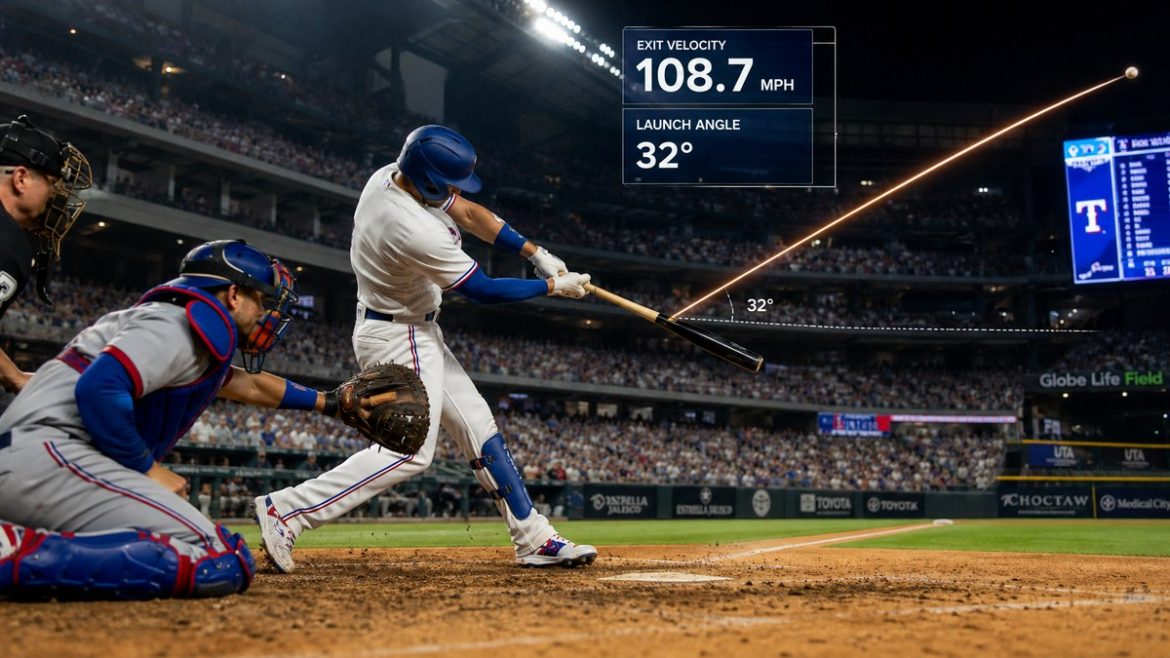
Texas Rangers catcher Jonah Heim returned to the offensive spotlight Saturday when MLB.com featured a breakdown of his latest home run. The available news-feed entries do not identify the opponent, inning or final score, but the highlighted swing is another reminder of why Heim’s production matters to a Texas lineup that relies on him to contribute while handling one of baseball’s most demanding defensive positions.
MLB.com spotlights Jonah Heim’s home run
MLB.com published its home run breakdown on Aug. 29, with two Google News entries carrying the same headline at different times. The supplied listings contain no additional play-by-play information or verified Statcast measurements, so details such as exit velocity, launch angle and projected distance should not be assumed.
What is clear is that Heim supplied a home run significant enough to receive a dedicated MLB video breakdown. Those features typically isolate the decisive elements of a swing, allowing viewers to examine the pitch location, hitter’s mechanics and ball flight more closely than they could during a live broadcast.
For Heim, the attention centers on a part of his game that can sometimes be overshadowed by his responsibilities behind the plate. He is primarily responsible for directing the pitching staff, controlling the running game and managing the physical burden of catching. Any consistent power he provides gives the Rangers additional value from a position where offense is often difficult to sustain over a full season.
Heim’s switch-hitting power adds flexibility for Texas
Heim is a switch hitter, an attribute that gives the Rangers more lineup flexibility against both right-handed and left-handed pitching. Switch hitting does not eliminate platoon differences, but it allows a manager to keep a regular catcher in the batting order without automatically creating a same-side matchup every time the opposition changes pitchers.
Home run production is especially useful in the lower or middle portions of a lineup. A catcher capable of driving the ball can prevent opposing pitchers from treating the bottom half of the order as a low-risk passage. One swing can convert a quiet inning into immediate scoring, while the threat of extra-base damage can force pitchers to work more carefully.
The physical requirements of catching make that contribution harder to maintain. Catchers repeatedly move from a crouch, absorb foul balls, block pitches in the dirt and make throws under pressure. They also spend extensive time preparing scouting reports and working with pitchers. That workload can affect bat speed, timing and lower-body stability, particularly late in the season. A late-August home run consequently carries context beyond the result of the individual plate appearance.
Jonah Heim has an established role with the Rangers
Heim has developed into a central figure for Texas since the Rangers acquired him from the Oakland Athletics before the 2021 season. He arrived in the trade that sent longtime Texas shortstop Elvis Andrus to Oakland and gradually took on a larger share of the catching duties.
His most prominent season came in 2023, when he was selected as an American League All-Star, won a Gold Glove and helped the Rangers capture the first World Series championship in franchise history. That combination of defensive recognition and team success established him as more than a temporary solution behind the plate.
Heim’s defensive reputation remains an important part of any evaluation. Catcher performance cannot be measured solely through batting statistics because the position influences nearly every pitch thrown by a club. Game planning, pitcher communication, receiving and situational awareness all affect run prevention, even when those responsibilities are less visible than a home run.
At the same time, Texas benefits when Heim can complement that defensive work with power. Catchers who contribute on both sides of the ball reduce the need for a manager to choose between offense and defense when setting the lineup. They also make it easier to use the designated hitter spot elsewhere rather than reserving it to keep a catcher’s bat available.
What a home run breakdown can reveal about Heim’s swing
A detailed replay of a home run can provide useful information even without a complete set of public metrics. The hitter’s balance, hand path and contact point can show whether he recognized the pitch early and stayed in position to drive it. The location of contact can also indicate whether the batter pulled the ball, used the opposite field or adjusted to a pitch away from his preferred zone.
For a switch hitter such as Heim, the batting side is another relevant piece of context. Mechanics and results can differ from one side of the plate to the other, and opposing clubs build game plans around those distinctions. Because the supplied source listings do not specify whether Heim batted left-handed or right-handed on the featured play, that detail remains unconfirmed.
The same caution applies to any conclusion about a broader trend. One home run can decide a game or signal that a hitter executed a particular matchup well, but it does not by itself establish a sustained hot streak. That determination requires a larger sample of plate appearances, including strikeout rate, quality of contact and performance against different pitch types.
Rangers need production without sacrificing catching stability
Texas must manage two priorities with Heim: extracting useful offense and keeping him physically capable of handling the pitching staff. Rest days, designated hitter appearances and starts by a backup catcher are all standard methods of balancing those demands. The objective is not simply to maximize the number of games Heim plays, but to preserve the quality of his work in the most important situations.
A productive swing late in the calendar can be encouraging because the cumulative effects of the catching position are substantial by August. It may also influence how opposing pitchers approach Heim in subsequent plate appearances. When a catcher demonstrates that mistakes in the strike zone can be driven for extra bases, pitchers have less room for imprecision.
The broader significance for the Rangers will depend on whether Heim can turn the featured home run into continued offensive production. His defensive duties ensure that he remains closely connected to the club’s run prevention. When he also supplies power, Texas receives impact from both sides of the game at a premium position.
Home run adds another visible contribution
The MLB.com breakdown gives Heim’s latest home run a clear place in the day’s baseball coverage, even though the syndicated listings offer limited game detail. It highlights the offensive dimension of a player whose daily value is often tied to less conspicuous work with pitchers and defensive preparation.
For Texas, that combination remains the key. Heim does not need to be evaluated as a one-dimensional power hitter to make a significant impact. His value comes from pairing the responsibilities of an everyday catcher with the ability to change an inning at the plate. The featured home run was the most visible example of that offensive potential.