
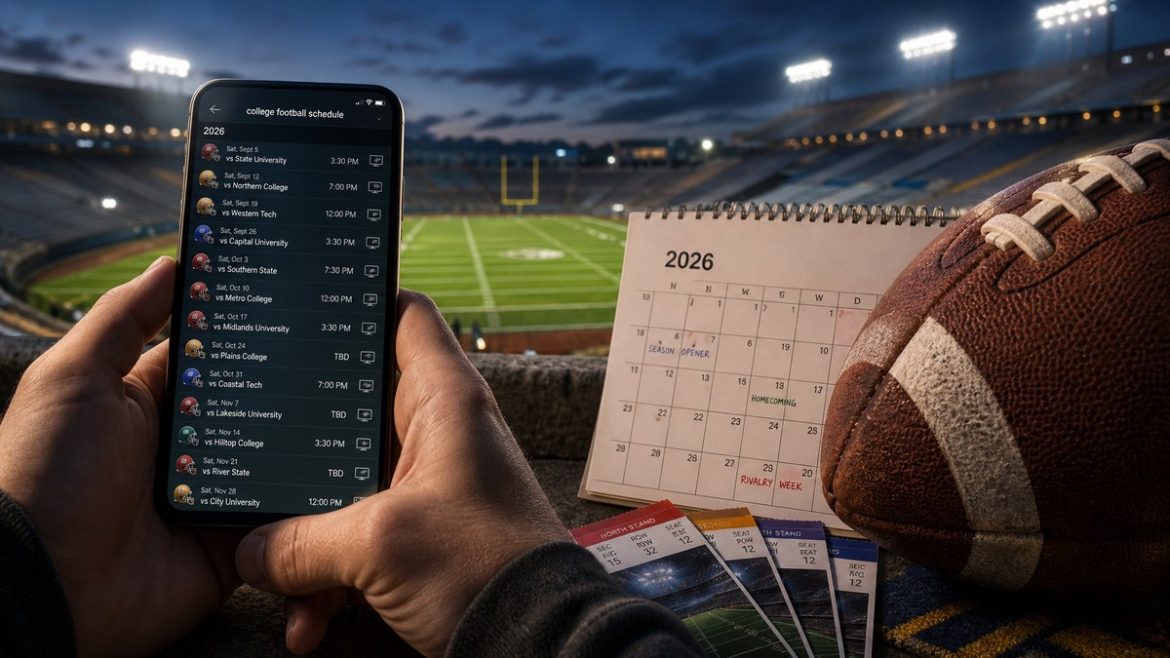
Interest in the 2026 college football schedule moved into the national spotlight Saturday, Aug. 15, when the phrase appeared in Google Trends data for the United States. The activity points to a familiar late-summer priority for fans: finding confirmed opponents, kickoff times and broadcast information as the season approaches.
College football schedule becomes a national search trend
The Google Trends listing identifies “college football schedule” as a subject drawing increased search attention in the United States. The feed does not single out a particular program, conference or game, and it does not provide enough information to determine which part of the schedule generated the interest.
That distinction matters because the phrase covers a wide range of possible searches. Some fans may be looking for a complete national calendar, while others may want the schedule for one school, conference or opening-week event. The search term also can encompass television assignments, kickoff times, neutral-site games and changes announced after an original schedule release.
Google Trends measures search activity rather than attendance, television audiences or team popularity. Its appearance in the feed therefore should not be read as a formal survey of college football fans. It does, however, provide a timely indication that schedule information has become a prominent subject as the sport moves deeper into August.
Kickoff times and television details drive schedule interest
A college football schedule is rarely a single, unchanging document. Dates and opponents often are established well in advance, but kickoff times and television designations can be announced on a different timetable. Some game windows remain unsettled until broadcasters and conferences make selections closer to the date of competition.
For supporters arranging travel, those details can be as important as the opponent. A morning or midday kickoff creates different transportation and lodging considerations than a night game. Television information also determines whether viewers can watch through a broadcast network, a cable channel or a streaming platform.
The search interest on Aug. 15 arrives at a point when fans typically begin moving from broad offseason planning to specific game-day preparation. Once a date, location and kickoff time are confirmed, ticket holders can make firmer plans. Viewers at home can identify which games overlap and which portions of the national schedule they will be able to follow.
Schedule questions also matter to the teams. Coaches build preseason practices around the opening date, while athletic departments prepare stadium operations, travel and event staffing. None of those internal plans can be measured through a public search trend, but they help explain why schedule information becomes more consequential as the calendar advances.
Official school and conference listings remain essential
Because college football scheduling information can be revised, official school and conference announcements remain the most reliable sources for game-specific details. Team schedule pages generally identify the opponent, date and location, with kickoff and broadcast fields added or updated when those assignments become official.
Fans comparing listings should pay particular attention to time zones. A kickoff displayed in the home team’s local time may appear differently on a national television guide or digital calendar. Neutral-site games can create another layer of confusion if a listing does not clearly identify the stadium and city.
Broadcast assignments also merit verification. Early schedule graphics and promotional materials may include confirmed dates without a final network or start time. A later announcement can fill those gaps, and an updated official listing should take precedence over an older image circulating on social media.
The Google Trends entry itself is not a schedule and does not verify any individual matchup. It records attention around the search phrase. Anyone seeking a particular game should confirm the information through the participating schools, the relevant conference and the announced broadcaster before making travel arrangements.
The national calendar shapes the season’s early storylines
Even without focusing on one team, schedule interest reflects how the college football season is consumed. The calendar establishes when programs first take the field, which games share the same broadcast windows and how quickly major conference or nonconference tests arrive.
Schedules also provide the framework for evaluating a team’s season, although meaningful conclusions require more than simply counting home and road games. Opponent quality can change from preseason expectations, and injuries, lineup decisions and player development can alter the difficulty of a matchup by the time it is played.
For that reason, schedule analysis before the season is best treated as context rather than a final judgment. Dates, travel demands and turnaround time are known factors once the calendar is confirmed. How well a team handles those conditions cannot be established until games begin.
The broad wording of the trending phrase also prevents any firm conclusion about whether fans are concentrating on opening weekend, rivalry games, conference play or the postseason. Google’s listing indicates heightened interest in the subject, not the motivation behind every search.
Schedule updates will continue through the season
The demand for schedule information is unlikely to end once the opening games arrive. College football’s weekly rhythm creates continuing interest in start times, television windows and any officially announced changes. Fans frequently revisit schedules to check the next opponent, confirm whether a game is at home or on the road, and review updated broadcast details.
Weather, operational issues and other unforeseen circumstances also can lead to changes, making current information more valuable than a schedule saved weeks or months earlier. When an adjustment occurs, schools and conferences generally issue a formal update, and those notices provide the necessary confirmation.
Digital calendars and third-party score applications are useful tools, but they can lag behind official announcements. The safest approach is to recheck the game listing as the date approaches, especially before traveling. That is particularly important when a kickoff time was not included in the initial schedule release.
Search activity signals the shift toward the 2026 season
The Aug. 15 trend offers a straightforward snapshot of where attention is turning. During much of the offseason, college football discussion centers on roster movement, coaching decisions, conference developments and preseason preparation. As games draw closer, the schedule becomes the organizing document for nearly every part of the sport.
It tells teams where they must be, gives broadcasters their programming framework and allows fans to plan how they will follow the season. The trending search does not reveal which programs are attracting the most attention, nor does it confirm a change to any game. It shows that people across the United States were actively looking for college football schedule information on Saturday.
With multiple versions of schedules circulating online, accuracy remains the central concern. Dates, venues, kickoff times and television assignments should be checked against current official information. The national rise in search interest is a sign that the focus is moving from offseason anticipation to the practical details of the 2026 college football calendar.