
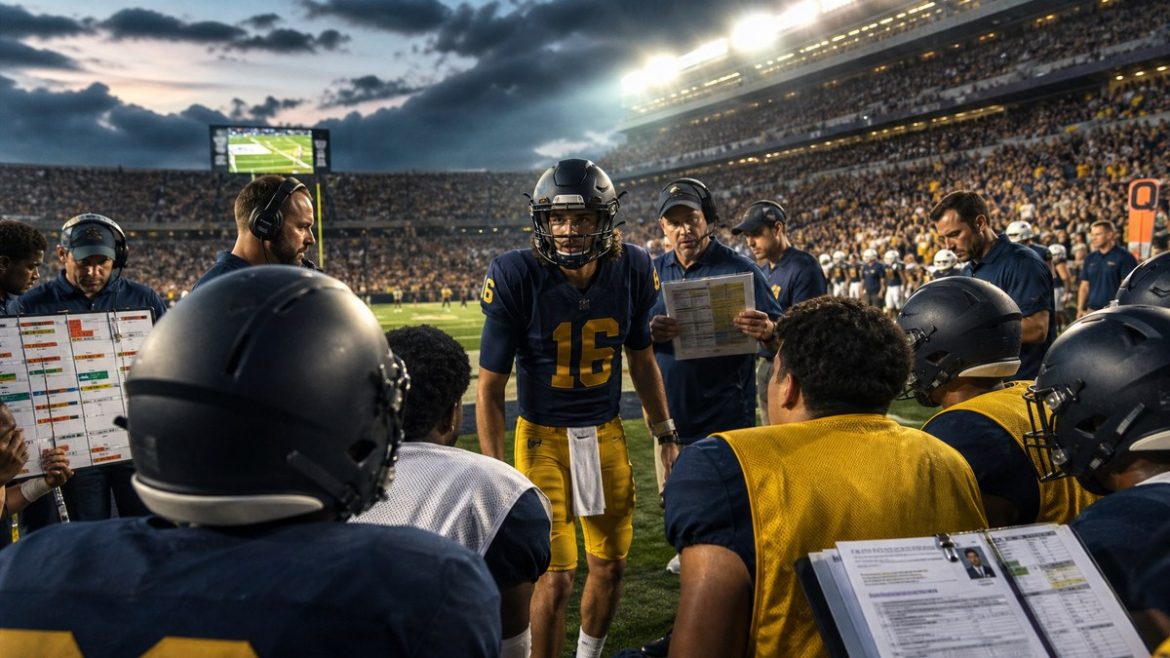
College football’s Week 1 schedule is bringing the sport’s annual roster reset into view, with transfer additions and personnel decisions becoming central parts of the opening-week evaluation. A 247Sports preview published Wednesday features analysis from a transfer portal expert and a former college director of player personnel, underscoring how much roster management now influences the way teams are assessed at the start of a season.
College Football Week 1 Tests Rebuilt Rosters
Opening weekend has always required some projection. Teams replace graduating players, promote reserves and introduce new coordinators, while freshmen encounter major college competition for the first time. The transfer portal has added another important layer by allowing programs to fill immediate needs with players who already have college experience.
That experience can shorten the adjustment period, but it does not eliminate it. A transfer must learn new terminology, establish timing with different teammates and understand how his role fits within a new coaching staff’s system. Those details are difficult to measure during preseason practices that are largely closed to the public. Week 1 provides the first meaningful look at whether a rebuilt unit is functioning as intended.
The early evaluation is not simply a count of how many transfers appear on a depth chart. The more significant questions involve where those players are being used, whether they have secured full-time roles and how effectively coaches have blended them with returning contributors. A smaller transfer class that addresses specific weaknesses can be more consequential than a larger group assembled without clearly defined responsibilities.
Transfer Portal Additions Carry Immediate Responsibilities
Transfers are often brought in to solve identifiable roster problems. Some arrive to compete for starting jobs, while others provide experienced depth at positions affected by graduation, injuries or previous departures. Their importance can be especially clear along the offensive and defensive lines, where continuity and communication are difficult to create quickly.
Quarterback changes receive the most attention, but the success of a new passer can depend heavily on the rest of the transition. Protection calls, route adjustments and the exchange of information before the snap must become routine. A quarterback with extensive college experience still faces a learning process when surrounded by a different group of receivers, linemen and coaches.
The same applies on defense. A newly added defender may understand the broad concepts of a scheme while still needing time to master checks, coverage responsibilities and pursuit rules. One missed assignment can distort the public assessment of an entire unit, even if the problem is correctable. That is why opening games tend to reveal as much about communication as they do about individual talent.
Week 1 also shows which newcomers have earned the staff’s trust. Starting designations matter, but snap distribution can offer a clearer picture. Coaches may rotate multiple players at a position, use specialized packages or limit a newcomer’s workload while he becomes more comfortable in the system.
Player Personnel Evaluation Extends Beyond Recruiting Rankings
The involvement of a former director of player personnel in the 247Sports analysis reflects the broader way college rosters are now constructed. Although responsibilities differ by school, personnel departments commonly help staffs organize evaluations, monitor roster needs and gather information on prospective additions. Their work connects traditional high school recruiting with the more immediate demands of transfer acquisition.
Evaluating a transfer is different from projecting a high school prospect. College game footage provides evidence of how a player has performed against older competition, but evaluators must also determine whether that performance will translate into a different system or level of responsibility. Previous production offers useful context without guaranteeing the same result at the next stop.
Fit remains a critical part of the process. A receiver moving from one offensive structure to another may be asked to run a different route tree. An offensive lineman may switch blocking systems or positions. A defensive back accustomed to one coverage approach may take on new communication duties. Those changes can affect how quickly an established college player contributes.
Personnel staffs must also consider the returning roster. Adding an experienced player can improve competition, but it can change the development path for younger teammates. Coaches enter the season balancing immediate performance with the need to preserve depth and prepare players who could be required later in the year.
Opening Games Provide Evidence but Not Final Answers
The first full weekend offers genuine information, though it should not be treated as a complete judgment on a team. Early mistakes can come from unfamiliar combinations, first-game conditioning demands or communication that has not yet been tested under pressure. Conversely, a smooth debut does not guarantee that the same unit will respond as well when opponents create different tactical problems.
For coaching staffs, the practical value of Week 1 lies in identifying what carried over from preseason work and what did not. Substitution patterns, protection breakdowns, defensive alignment and special-teams organization can all expose areas requiring attention. The response during the following week can be as revealing as the initial performance.
Transfer-heavy teams may receive additional scrutiny because so many roles are new, but continuity alone does not ensure success. Returning groups can struggle with a new scheme, while a collection of newcomers can settle quickly if responsibilities are clearly assigned. The relevant issue is how well the pieces operate together once the game becomes unscripted.
Transfer Era Changes the Week 1 Evaluation
The portal has not diminished the importance of recruiting and player development. Programs still depend on multi-year growth, particularly at positions where strength, technique and system knowledge take time to build. What has changed is the range of options available when a roster has an immediate opening.
That makes the opening week a public review of several connected decisions: which needs a staff identified, which players it added and how those newcomers were prepared. It also places greater emphasis on personnel departments whose work often occurs outside public view but becomes visible when the depth chart takes shape.
The 247Sports Week 1 feature arrives at a point when preseason projections are giving way to on-field evidence. The first games will not settle every question surrounding reconstructed rosters, but they will establish an initial record of how effectively teams managed change. In the transfer era, that has become one of the defining stories of every college football season.