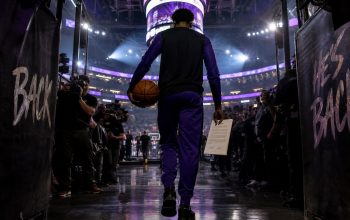

NBA Summer League 2026 opens with rosters, viewing options and a full slate of development games
NBA Summer League 2026 is underway, giving teams an early summer stage to evaluate rookies, second-year players and other prospects competing for roster spots and larger roles. According to ABC7 Los Angeles and ABC7 Chicago, the event includes schedule, roster and viewing information as clubs and fans turn their attention to the league’s annual laboratory for player development.
While summer league results rarely tell the full story of an NBA season, the event matters because it often provides the first public glimpse of how a rookie translates into NBA speed, how a young rotation player handles a bigger offensive load, and which undrafted or fringe players might force their way into a team’s plans. For front offices and coaching staffs, these games can help answer practical questions that do not always surface in workouts or closed-door scrimmages.
Why Summer League still matters for NBA teams
Summer league has become one of the league’s most useful evaluation settings because it compresses several scouting questions into a short window. Teams are not only watching shot-making and stat lines. They are also studying defensive positioning, decision-making under pressure, conditioning, communication and how quickly a player can adapt to a new system.
The event is particularly important for first-round draft picks, two-way contract hopefuls and players coming off limited NBA minutes. For those groups, summer league offers a chance to establish a baseline before training camp begins. A strong showing does not guarantee regular-season success, but it can influence confidence, role projections and how a player is used in October.
For younger teams, summer league can also serve as a preview of the organizational timeline. If a franchise is rebuilding, the most meaningful storyline may not be wins and losses but whether its young core is progressing in the areas coaches have emphasized all season. For more veteran clubs, the focus may shift toward whether a recent draft pick can fill a specific depth need or develop into a reliable bench piece.
How teams use the roster information in summer league
ABC7’s coverage highlights one of the most closely followed parts of this period: the rosters. Summer league rosters are a mix of freshly drafted players, returning sophomores, G League standouts, unsigned free agents and players looking to earn training camp invitations. That variety is part of the appeal, but it also makes interpretation complicated.
A strong performance against summer league competition has to be viewed in context. Some players are facing older or more experienced opponents, while others are being asked to play in unfamiliar lineups with limited practice time. Coaches often simplify offensive sets and defensive coverages, which means individual skill and adaptability stand out more than polished team execution. That can be a benefit for players trying to prove they belong, especially those whose roles may depend on versatility rather than high usage.
The event also offers teams a low-stakes environment to test usage patterns. A rookie point guard may handle the ball more than he will in the regular season. A wing may be asked to defend multiple positions. A big man may be pushed to show that he can run the floor and finish in space. Those lessons can shape development plans long after summer league ends.
What fans should watch beyond the box score
Although summer league attracts attention because of draft picks, the most revealing details often come from the margins of the box score. Teams and analysts will watch how players respond to physicality, whether they can create quality shots against pressure, and whether they can make quick defensive reads without overcommitting.
There is also value in how players carry themselves between possessions. Coaches spend a lot of time evaluating body language, communication and response to mistakes. A missed rotation or a tough shooting night is not usually the issue. What matters more is whether a young player can reset, compete on the next trip and show that he understands the pace and discipline required at the NBA level.
For fans, this is also the first chance to see how recent draft classes fit into a bigger team-building plan. Some teams use summer league to showcase a high-profile rookie. Others are looking for hidden value, especially among younger players who may not have had much exposure in the regular season. That combination of known names and developmental bets is part of what gives the event its annual importance.
Early-season implications for teams and prospects
Even though summer league does not count toward the standings, it can still influence the months that follow. A standout performance can strengthen a player’s case for more minutes in the preseason or regular season. It can also affect how a team allocates developmental reps in the G League or in practice. For players on the edge of the roster, the window is even narrower: a few strong games may be enough to earn another look.
For coaches, the event is a chance to identify habits that will need work before camp begins. A player who struggles with turnovers may need more time in half-court decision-making. A wing who can score but not defend may need a clearer role definition. A big man who rebounds well but avoids contact may need to prove he can hold up against NBA size. Summer league rarely answers every question, but it often reveals which questions matter most.
The broader league context matters, too. Summer league sits at the intersection of drafting, roster construction and player development. It is one of the few times during the NBA calendar when nearly every team is focused on the same type of evaluation. That makes it useful not only for prospects trying to get noticed, but also for organizations trying to shape the next phase of their roster planning.
League-wide attention turns to Las Vegas and beyond
ABC7’s reports reflect the annual summer pattern: once the draft is complete and free agency gets moving, attention quickly turns to summer league schedules and availability. The games provide a practical way for fans to follow the league’s next generation, while teams gather a first set of live-game impressions that can influence development plans for months.
For now, the story is less about one headline result and more about the process. NBA Summer League 2026 is where players begin to separate themselves from the pack, where organizations start to see whether offseason planning is taking hold, and where the next phase of the league’s talent pipeline becomes visible in real time.
As the games continue, the most important takeaways will not necessarily come from the final score. They will come from how well young players adapt, how sharply teams evaluate them and which names begin to move from prospect status toward real NBA opportunity.